Spotlight on hamburger wrappers – The public voted a food packaging made from fossil-free raw materials the most interesting wood-based innovation of the year
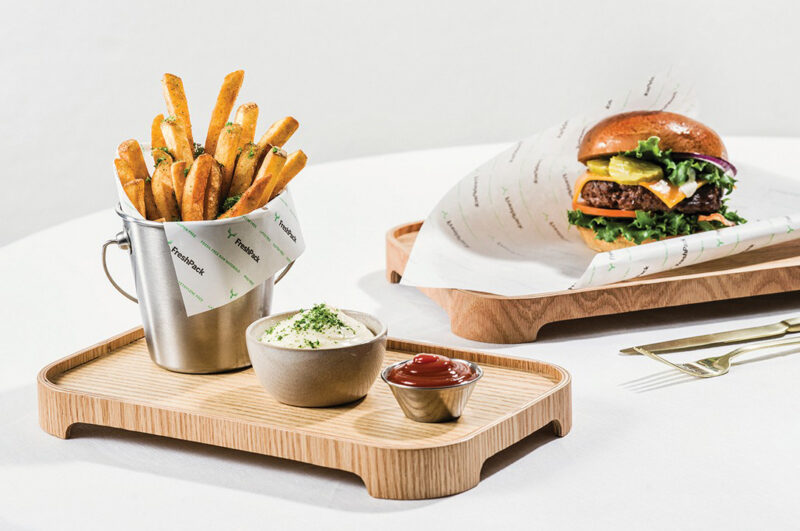
The paper wrapping of hamburgers, French fries or sweet rolls should keep all grease and moisture inside the packaging. In the Metsä FreshPack food packaging paper, this is taken care of by natural polymers and minerals instead of plastics.
In the public vote organised by the New Wood project, which showcases new wood-based solutions, the winner was the Metsä FreshPack food packaging paper. The packaging material is made of non-fossil raw materials and is moisture- and greaseproof.
Virpi Korhonen, Project Manager of the New Wood project, says the spectrum of t his year’s entries was broad, ranging from cosmetics to materials for interior decorating.
“The winner is a product in everyday use, and its many uses show the scale on which we can replace fossil materials on the global market”, Korhonen says.
Metsä Greaseproof Papers is part of Metsä Tissue, which belongs to the forest industry group Metsä Group, and is one of the world’s leading manufacturers of greaseproof papers. Its customer base consists, among others, of manufacturers who use the FreshPack material to make packagings for fast food chains, catering companies and bakeries.
Simo Schulz, Vice President, Business Development and Projects, at Metsä Greaseproof Papers, says that the product serves a broad customer segment. The consumption of takeaway food and food-on-the-go is seeing a significant increase everywhere in the world.
“The solution will not not be used by just a small group, but has the potential for a truly huge customer base. The amount of plastic waste from this sector is also huge, and this product is our way of reducing it,” Schulz says.
Protective features from natural raw materials
Food packagings cause a significant environmental load throughout their life cycle. Several food packaging materials in current use contain plastics or other barrier materials that include substances harmful for health, such as fluorochemicals. In addition, fossil-based packaging materials are a significant source of mixed waste.
FreshPack is made completely of bio-based raw materials such as wood. It contains no fossil-based materials, PFAS compounds, polyethylene, latex or gluten. Instead of plastics or other harmful barrier materials, the paper is manufactured using natural polymers and minerals.
“Wood-based raw materials make up 85 percent of the paper. The rest consists of natural polymers and minerals, which form the protective barrier. They provide the required grease and moisture resistance without the use of fossil-based materials,” Simo Schulz says.
The barrier refers to the properties which prevent or reduce the leaking of substances through the packaging material. In the case of food packagings, these properties include impermeability to moisture and grease.
The Metsä FreshPack packaging paper is moisture- and greaseproof thanks to a combination of natural polymers and minerals, but also due to a feature of the paper manufacturing process. The method of grinding the wood fibres ensures a high density to the paper.
The paper is also recyclable and biodegradable, unlike plastic-based products. A FreshPack sheet with no food residue can be recycled as paper, while a sheet with food residue can be recycled as biowaste, provided this is allowed in local sorting instructions.
Thin, yet durable
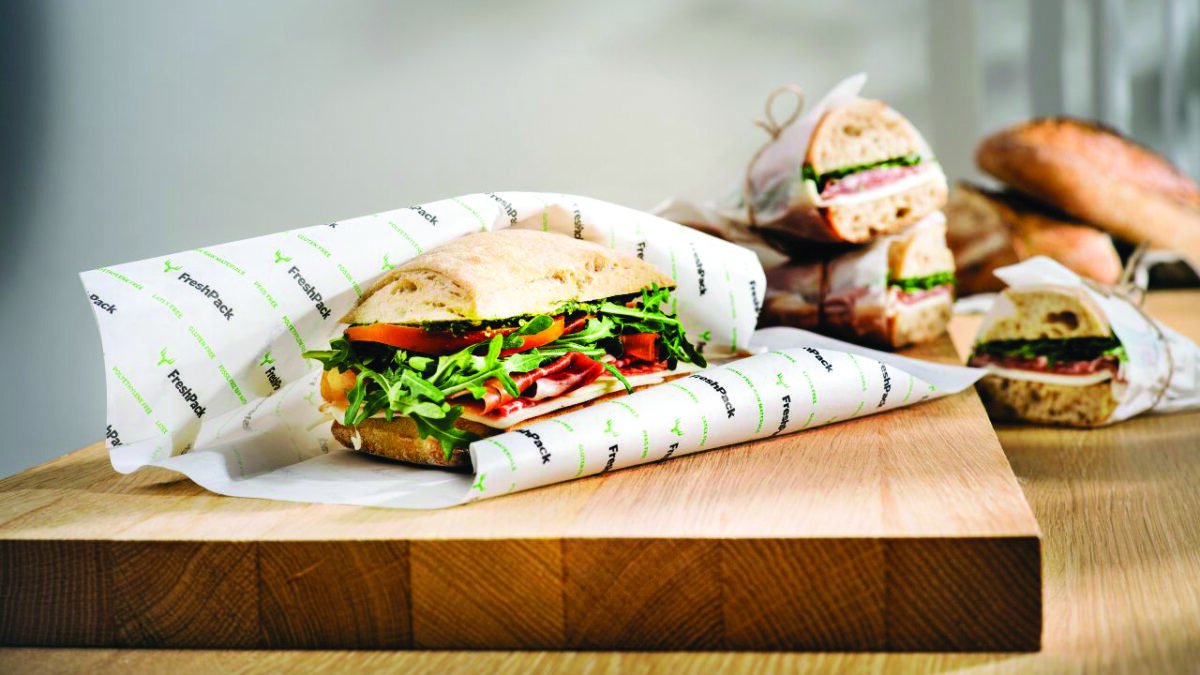
In addition to being moisture- and greaseproof, the paper is thin and lightweight, which means that a given amount of raw material yields more packagings than before.
According to Schulz, one of the biggest challenges in development has been combining the paper’s thinness with strength.
“The product was developed expressly for further processing into bags, pouches and sheets, for example. We’ve paid a lot of attention to ensuring that it will proceed smoothly through further processing lines. This, in turn, has required particular attention to paper machine process adjustments and raw material selection.”
So far, the transition to non-plastic packaging materials in the food sector has been slowed down precisely because bio-based materials are more difficult to process, in comparison to materials containing acrylates, to take an example.
”Another factor slowing development has been that fossil-based raw materials can provide better or longer-lasting moisture resistance,” Schulz says.
The development of FreshPack was strongly affected by legislation.
In the EU, the packaging industry is governed, among others, by the Single-Use Plastics (SUP) directive, which restricts the use of plastics, and the Packaging and Packaging Waste Regulation (PPWR), which aims at reducing packaging waste. In addition to this, food packaging papers must be suitable for contact with food.
“From the very beginning, we wanted expressly to use non-fossil raw materials to create a product that complies with both the current and the future legislative environment. At the same time, we want to respond to a need we see in the market: both consumers and international brand houses are increasingly looking for bio-based packaging materials,” Schulz says.
New Wood showcases wood-based innovations
The second place in the New Wood public vote was won by the lignin-based epoxy adhesive and coating by LignoSphere. The third most popular entry was the wood-based acoustic panel by Fiberwood. Both these products have a high added value and utilise sidestreams from the forest industry.
The winners of the public vote were announced during the National Forest Days event at the Clarion Hotel Helsinki Airport on 22 October 2026. The competition entries included eight novel wood-based products.
The New Wood project showcases wood-based materials and innovations. It is known especially for its competitions, public votes and for exhibitions which travel to various events in both Finland and abroad and which have welcomed visitors such as King Charles and European Commission President Ursula von der Leyen. The project partners include a wide range of businesses, research organisations and other actors.