Drones are changing forest fertilisation – boron fertilisation is on the rise
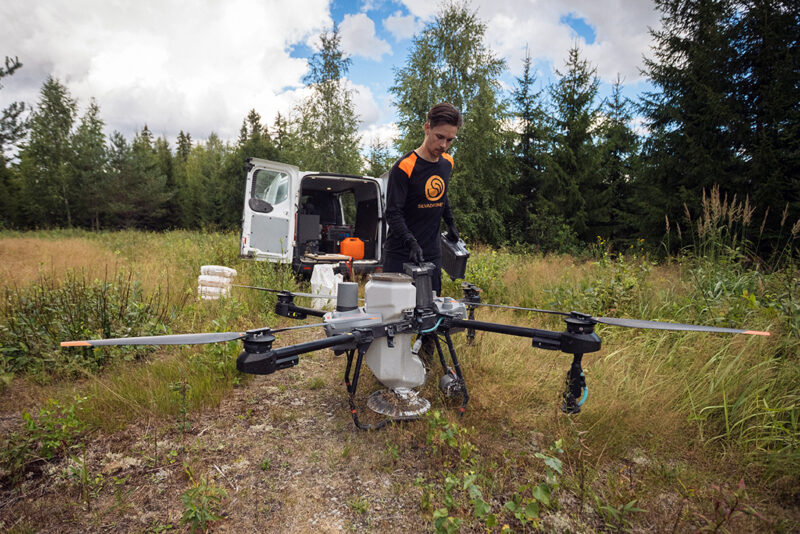
A large share of boron fertilisation in privately owned forests is now carried out using drones instead of helicopters or ground spreading. The change has taken place rapidly over the past couple of years.
Forests are mainly fertilised for two reasons: to increase tree growth and carbon sequestration, or to correct an imbalance of nutrients in the soil.
Growth fertilisation is typically carried out in mature managed forests and on mineral soils, with nitrogen used as the main nutrient.
Remedial fertilisation is used to correct growth disturbances in trees caused by nutrient deficiencies. Remedial fertilisation is carried out using boron and ash fertilisers. Ash fertilisation is used particularly on peatlands, while boron fertilisation is used on mineral soils.
“Fertilisation is important because if a forest is in poor condition due to a nutrient imbalance or some other reason, it is also more vulnerable to various secondary damage”, says Markku Remes, Senior Forest Management Specialist at the Finnish Forest Centre.
Forest owners can receive support from the Finnish Forest Centre for remedial fertilisation. This year, boron fertilisation in particular has attracted interest among private forest owners: more than 80 per cent of the area for which support has been applied for remedial fertilisation has involved boron fertilisation.
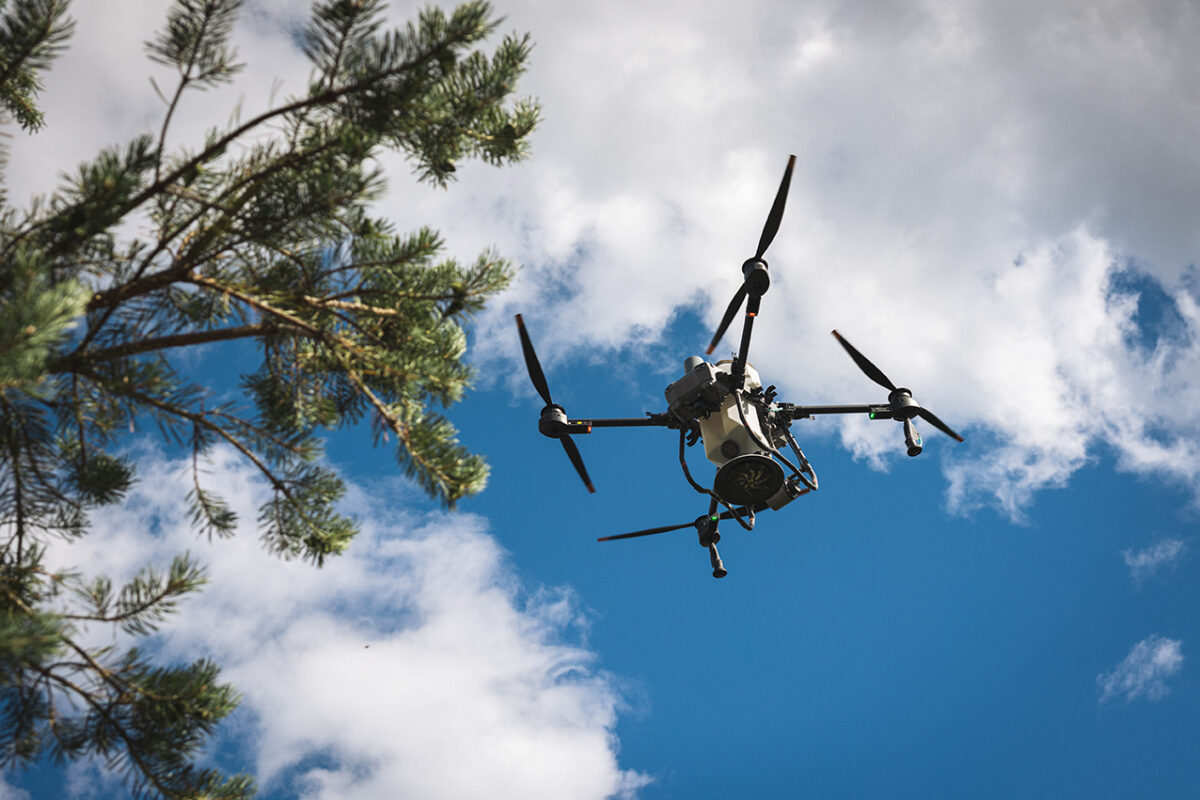
Drones are precise and efficient
At the same time, the use of drones, particularly for boron fertilisation, has also increased. Six years ago, the Finnish company Silvadrones Oy reportedly became the first in the world to develop drone-based boron fertilisation. The idea grew out of the founders’ studies in forest sciences and natural sciences at the University of Eastern Finland.
“Drone fertilisation is now becoming increasingly common in both forestry and agriculture elsewhere in Europe as well”, says Veli-Matti Lähteenmäki, Chairman of the Board of Silvadrones and one of the company’s founders.
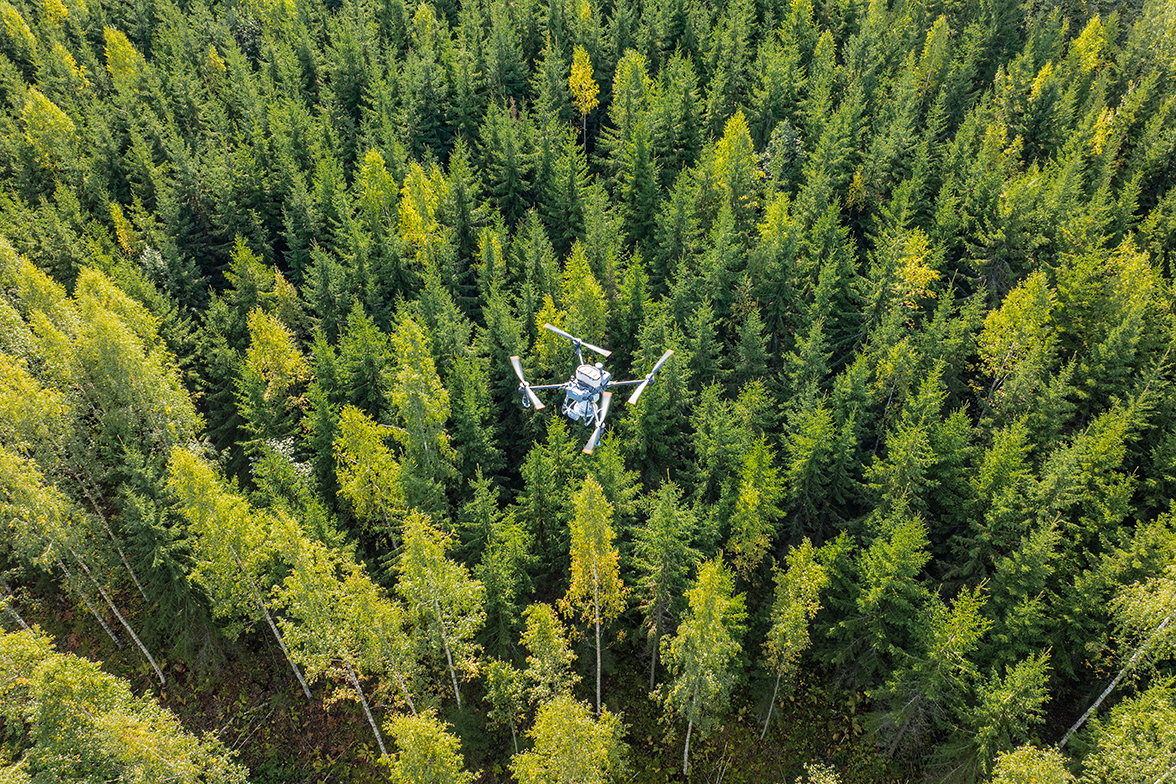
Drones can be used to fertilise both small and large forest areas with precision and efficiency. From the customer’s perspective, this also means greater flexibility, according to Lähteenmäki.
“Drones make it more economically viable to fertilise smaller forest areas as well. The method is ideally suited to Finland’s forest stands, which vary considerably in size,” Lähteenmäki says.
The use of drones has not affected the average size of the fertilised area. Over the past three years, it has been around 1.5 hectares.
“Drones and boron fertilisers have developed considerably, and as a result, boron fertilisation is becoming increasingly common. Less fertiliser is now needed per unit of area, and drones can carry increasingly large fertiliser loads at a time. Spreading has become faster and the cost of fertilisation work has decreased”, Markku Remes says.
As drones have become more widespread, the use of granular boron fertilisers has increased, while the share of liquid boron has declined. According to the Finnish Forest Centre, only five per cent of boron fertilisation is carried out using liquid fertilisers this year, compared with 21 per cent as recently as a year ago.
After boron fertilisation, picking berries and mushrooms in the forest is completely safe, and boron fertilisation does not require a waiting period before berries or mushrooms can be picked. Boron is a naturally occurring micronutrient that is already present in the soil.
Boron deficiency is particularly common inland
Why is boron fertilisation so popular now? According to Remes, there are several reasons.
“First, forest owners are more aware of growth disturbances and boron deficiency. In addition, the development of drone technology has reduced the cost of fertilisation. There is also good support now available for boron fertilisation.”
Boron deficiency occurs throughout Finland and in all tree species, but it is particularly common inland and in eastern Finland, Remes says.
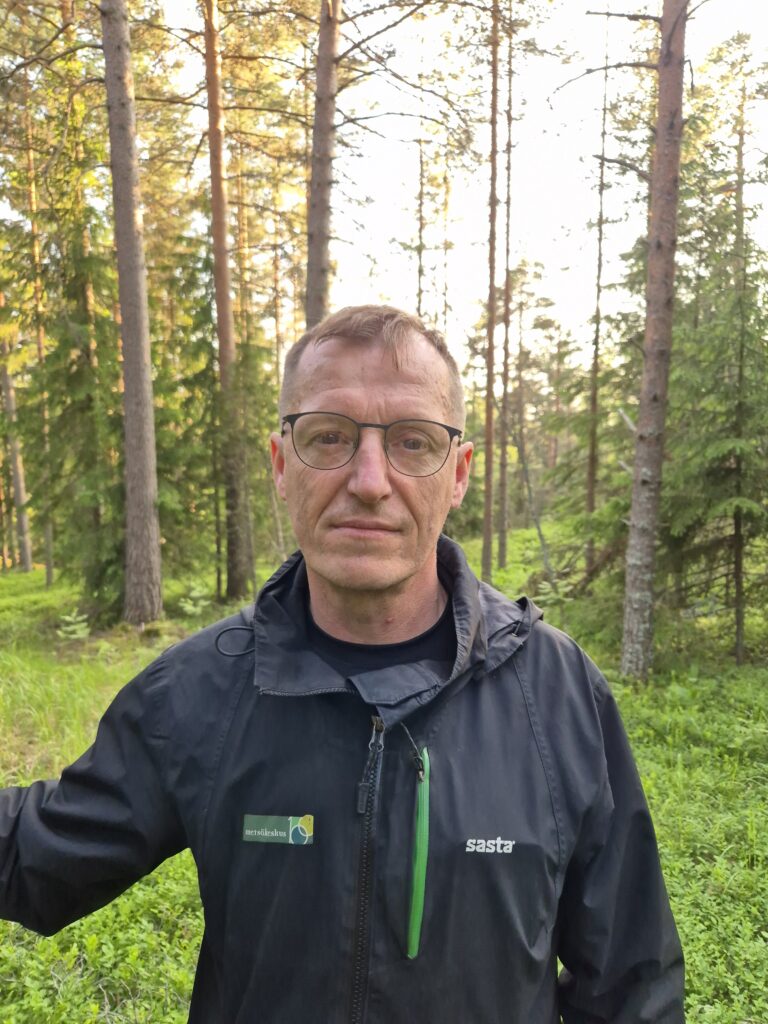
One reason is that Finland’s bedrock contains relatively little boron. Boron occurs in mineral form, from which it is released for trees to use only very slowly.
“Inland areas have particularly little boron because they are located far from the sea. Forests in coastal areas receive more boron from water vapour evaporating from seawater.”
Nutrient imbalances are also common on former agricultural land, which means that there may be little boron in the soil.
“In the past, slash-and-burn cultivation also caused a great deal of boron to be lost to the atmosphere, particularly in eastern Finland. Boron is also lost when trees are harvested”, Remes says.
Boron deficiency can be detected from the appearance of trees.
“For example, in spruce and pine, the terminal bud develops abnormally or may even die, causing the tree to branch, develop multiple leaders and become bushy. If this happens more extensively and repeatedly, there is clearly some kind of problem in the soil.”
Share of pine stands receiving boron fertilisation is increasing
The share of pine stands receiving boron fertilisation has more than doubled in two years. At present, 21 per cent of boron fertilisation on mineral soils is carried out in pine stands. The share of spruce stands has correspondingly fallen to below 74 per cent. Other tree species account for around five per cent of fertilisation.
According to Remes, the increase in boron fertilisation in pine stands is partly related to the fact that boron deficiency is now better recognised. Boron fertilisation has increased particularly in northern Finland, southern Lapland, North Ostrobothnia and Kainuu.
He says that lower fertilisation costs and higher levels of financial support have also increased interest in fertilisation.
“As the climate changes and the area of pine forests being regenerated increases, the need for boron fertilisation has also increased7”, Remes says.
The statistics used in the article are based on applications for remedial fertilisation support received by the Finnish Forest Centre between 1 January and 31 August 2026.