Seeing beyond the trees: New ways to measure forest biodiversity
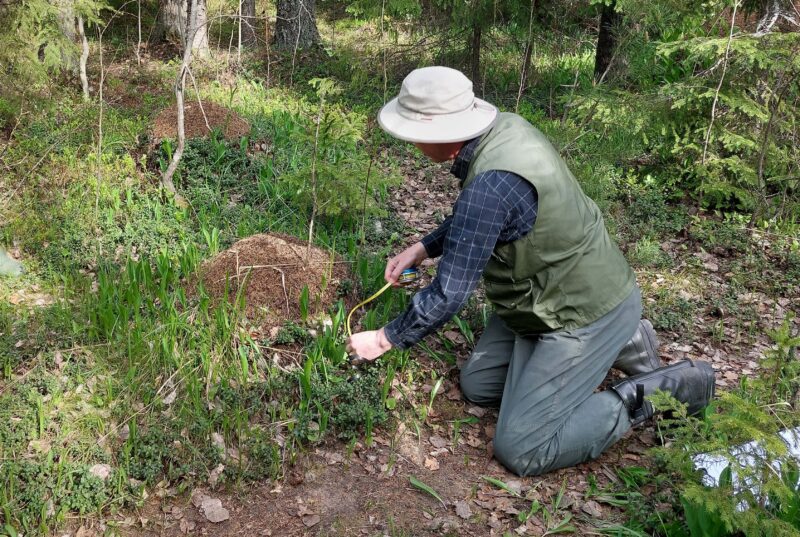
The National Forest Inventory has traditionally gathered data on the characteristics, growth and condition of Finnish forests. Now, researchers are testing whether the inventory could also collect data on other groups of organisms, from lichens to birds.
Forest biodiversity has for long been monitored in Finland as part of the National Forest Inventory (NFI). A new project, VMI-moni, led by the Natural Resources Institute Finland and the University of Jyväskylä is expanding the traditional NFI data on growth sites and tree stock to include information on other groups of organisms such as ants, birds, polypores, lichens and plants.
“We are now going to delve deeper into the forest. Our aim is to study not only the trees in their growing environments, but also the organisms that depend on those environments,” is how Minna Räty, Senior Research Scientist at the Natural Resources Institute Finland describes the project.
Launched in 2025, the three-year project develops and tests measuring methods which could be used in the future to assess forest biodiversity and the impact of nature management measures on biodiversity.
NFI provides data on the condition of Finnish forests
The NFI is a national inventory which monitors the condition and development of Finnish forests. It generates data on factors such as the size of forest area, volume of growing stock, tree growth, and the amount of deadwood.
The first NFI measurements date back to 1921. The inventory is based on statistical sampling, and the field measurements are currently implemented over periods of five years. During each period, approximately 60,000 sample plots are measured annually in different parts of Finland.
“The strength of the NFI lies in that data is gathered with uniform methods and comprehensively throughout Finland. The results of separate inventory rounds can be compared with each other, allowing us to build a picture of forest development over time. The data is utilised in both national and international decision-making and research,” Räty says.
New indicators for biodiversity
Forest biodiversity has been measured as part of the National Forest Inventory since the 1990s.
“So far, biodiversity assessments have used indicators such as the volume and type of deadwood, the area of old-growth forests, and the range of tree species. The share of broadleaved trees and the number of large aspens in forests are also commonly used indicators.”
The NFI has been able to produce estimates for these variables. The new measurements concerning various organisms do not automatically slip in as part of the NFI: at first, they will require extensive testing. Another aspect to consider is the cost of the new measurements.
”The first phase of the project has been very practical. Over the past two summers, we have tested what can be measured, what methods to use and how to implement the measuring as part of the NFI,” says Räty.
“Above all, we aim at finding measurement methods that are appropriate for long-term monitoring.”’
Measurements on ants were successful
Last summer, measurements were carried out on 513 sample plots, focusing on four groups of organisms: birds, ants, polypores and lichens, as well as certain plant species.
The work was completed by the end of August, and the results are still being analysed. However, some initial conclusions can already be drawn about how well the measurements worked, Räty says.
“As an example, measurements on ants seem to work well in the NFI as they are. Ant mounds have been measured earlier, about 20 years ago. The mounds found then were located again and their existence and condition were recorded.”
The ant mounds were classified according to whether they were active, abandoned, destroyed or lost. Any new ant mounds on each sample plot were also recorded. Their height and horizontal diameter were measured. Ant samples were also collected from the nests for species identification.
Nearly all polypores were identified
The survey of bird species was implemented using a birdsong application, which worked well overall.
“In early summer, when there is a lot of birdsong, the app was more reliable. Towards the end of summer birds become quieter, and the app did not identify the birds equally well.”
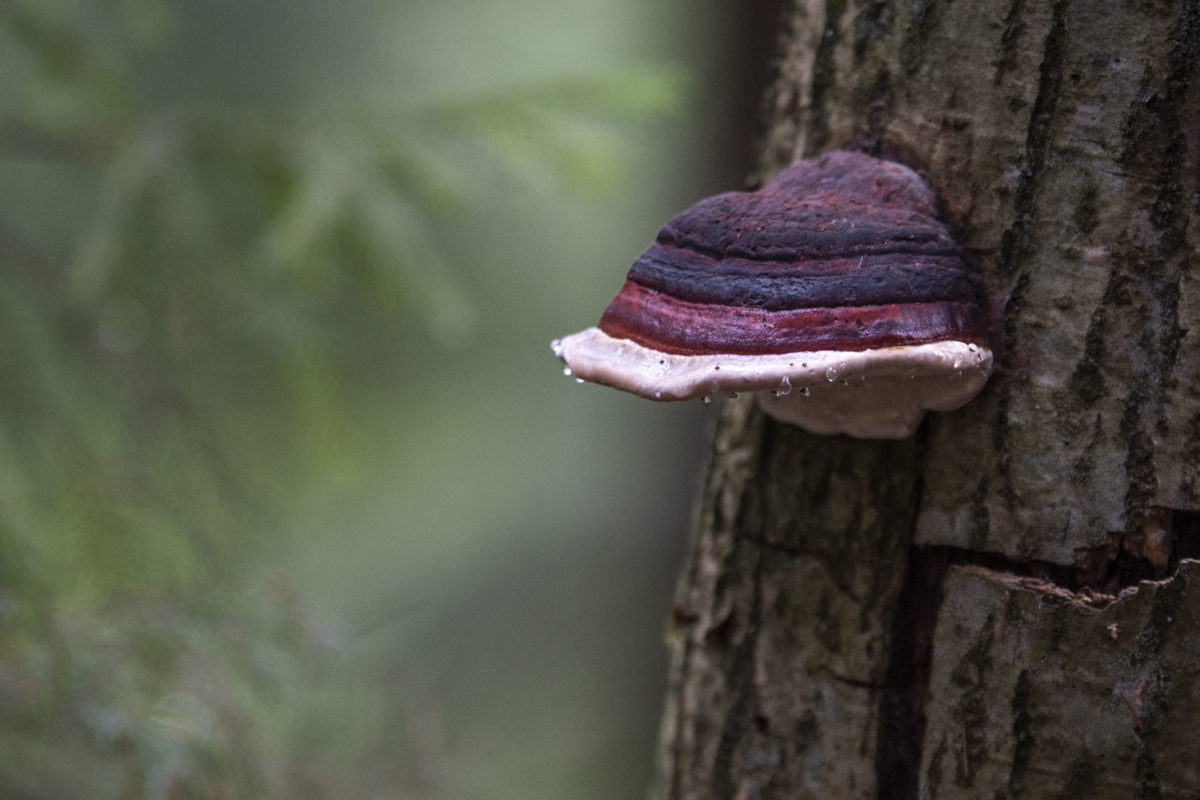
With polypores, photography proved to be a successful method. The researchers visiting the plots photographed all polypores observed on decayed wood on each plot, and the photos were shown to experts for identification after the visits. According to Räty, almost 100% of the polypores were successfully identified.
The next step is to examine, among other things, the types of sites where polypores were found and what species the data includes. Measurements on polypores are normally not carried out in commercial forests, which means that, if and when implemented, they could bring in completely new data.
“Measurements on polypores could help to calculate a polypore occurrence index, which would reflect the presence and abundance of polypores. The index, in turn, could be linked to factors such as the amount and quality of decayed wood and the tree stock on the sample plot” says Räty, describing what analyses can be carried out later.
The aim is to build long-term monitoring data
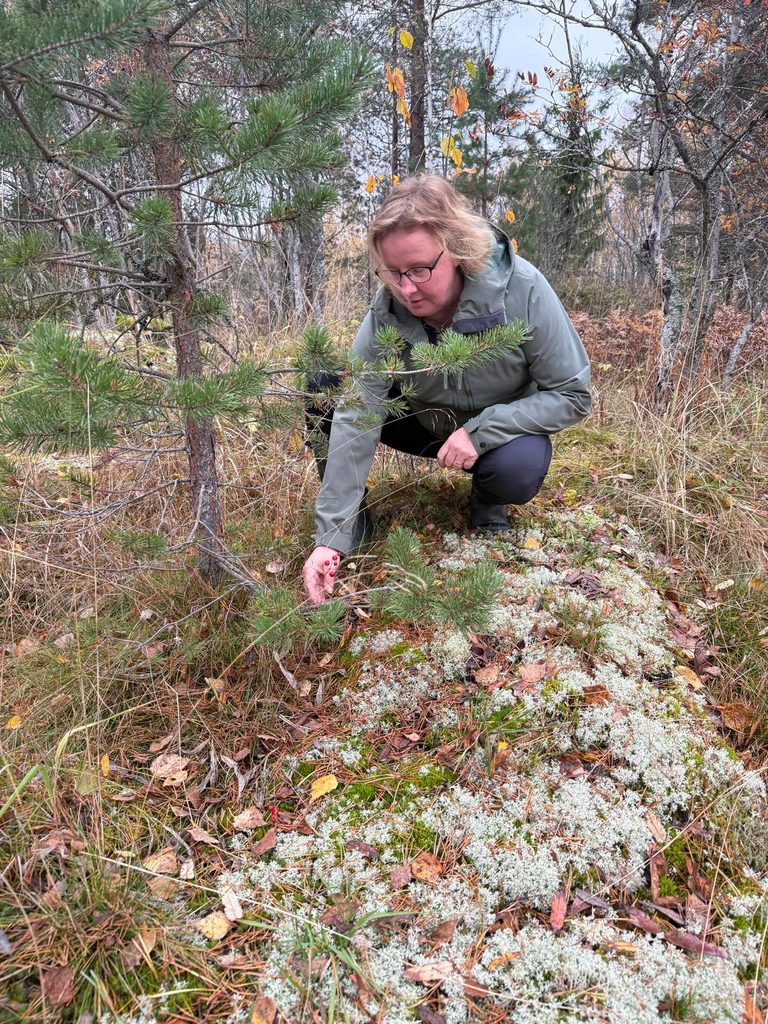
The measurements on vegetation included, for example, the coverage of bilberry; in other words, what share of the area of a sample plot is covered by bilberry. The plots were also photographed.
“It is quicker to take a photo than to make a field estimate. In future, it may be possible to base the monitoring on photos,” says Räty.
In long-term monitoring, a single measurement is only the starting point. With repeated measurements the accumulated results begin to form a valuable set of monitoring data.
For example, by monitoring bilberry, the researchers aim to build long-term time series that illustrate changes in vegetation in different parts of Finland.
“As we begin to see how the coverage of a certain plant species changes over time, this gives us monitoring data, and that is the goal we are after,” says Räty.
For ants, Räty says that useful monitoring data could include information on how colonies persist over a 20-year period and, ultimately, whether forest management operations are associated with the occurrence or destruction of ant mounds.
It is not yet known which of the measurement methods tested in the project will become a permanent element in the NFI.
To be adopted, the measurements must bring in enough added value, as well as be reliable, cost-effective and repeatable. Only then can individual observations begin to form a picture of forest biodiversity and its changes.
“Our aim is to make visible how operations carried out in forests, such as fellings or measures to promote biodiversity, affect forest nature and the groups of organisms living in them,” Räty says.
Funded by the Finnish Forest Foundation, the VMI-moni project started at the beginning of 2025 and will run until the end of 2027. The project is coordinated by Natural Resources Institute Finland and its other partner is the University of Jyväskylä.