More value out of wood – Forest Academy for EU Decision Makers looked for ways to boost bioeconomy
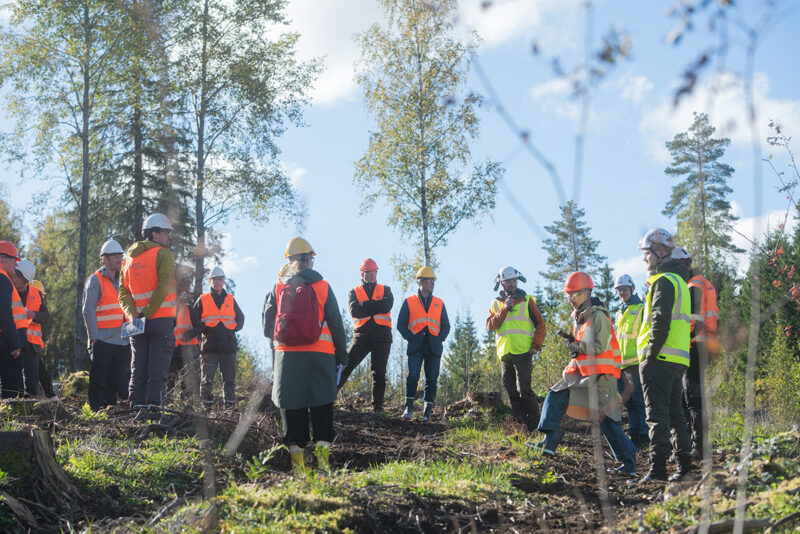
The Forest Academy for EU Decision Makers brought together thirty European decision-makers, providing insights into Finnish forest management and forest industry. The event strongly highlighted the importance of bioeconomy.
“One of the centrepieces of the bioeconomy strategy is to create lead markets for bio-based materials and technologies,” said Michael Losch, Coordinator for Bioeconomy at the European Commission, during the Forest Academy for EU Decision Makers.
Losch was personally involved in drafting the new bioeconomy strategy published by the European Commission a year ago. The goal of setting up an extensive market for bio-based materials is strongly linked to decreasing the dependence on fossil materials.
Fossil raw materials are used not only in energy production, but also in plastics, construction, textiles and chemicals, among others, as was pointed out by Losch.
“The idea is the substitution of fossil feedstock, increasing efficient circularity, and thereby increasing our resilience in the geopolitical situation. So this is really a win-win-win situation here.”
Bioeconomy strengthens competitivity and security of supply
The Forest Academy for EU Decision Makers was arranged in September in Southern Finland and the Päijät-Häme Region. The three-day event was attended by representatives from the European Commission and the European Parliament, as well as representatives from EU Member States and stakeholder groups of the forest sector.
Bioeconomy was on the agenda already on the very first day, 21 September. of the Academy. At the Hirvihaara Manor in Mäntsälä the participants could also visit the New Wood exhibition, featuring innovative wood-based products and solutions.
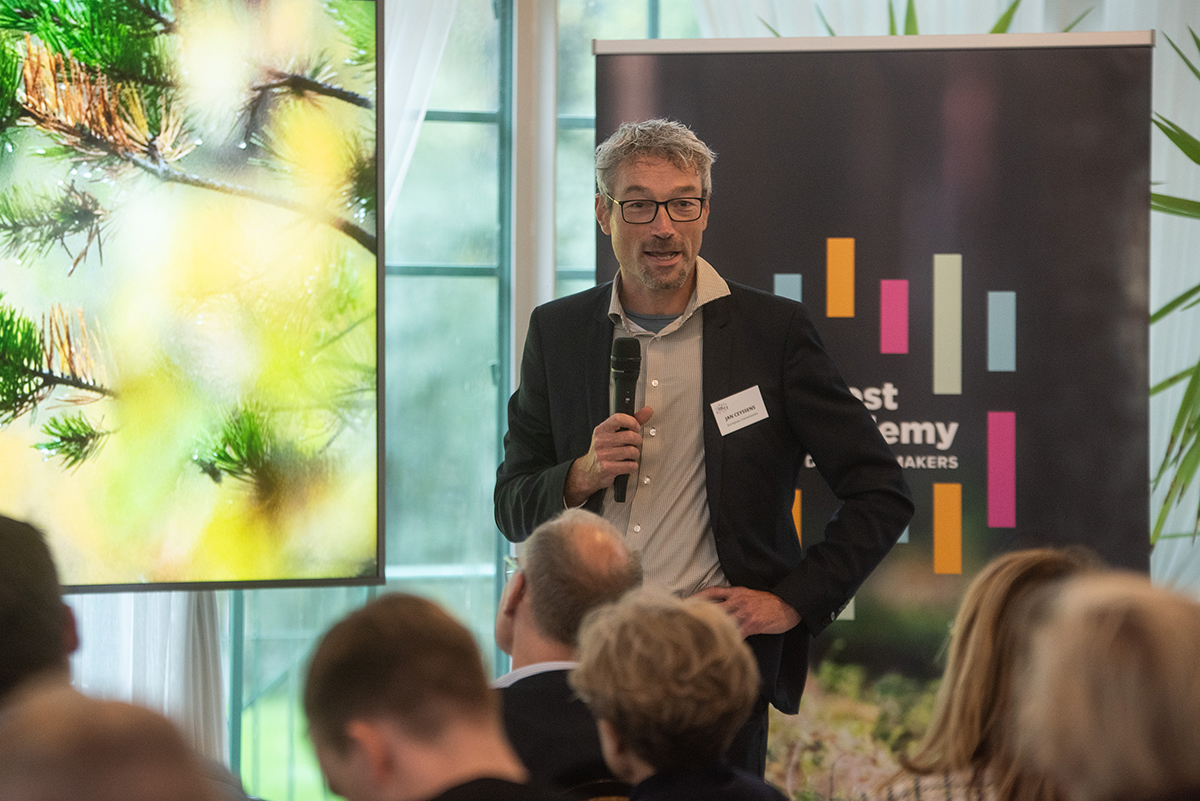
“Without healthy forests, there is no sustainable bioeconomy, and without viable bioeconomy, there is no long-term forest-based economy,” said Jan Ceyssens, Deputy Head of Commissioner Jessica Roswall’s Cabinet, in his keynote speech at the event opening.
According to the EU Commission representative, bioeconomy is of increasing importance for the EU’s competitivity and security of supply: even today, bioeconomy provides more jobs than the automotive industry, even in Germany, said Ceyssens.
Speaking at the opening, Finnish Minister of Agriculture and Forestry Sari Essayah also emphasised the importance of bioeconomy for the security of supply and strategic autonomy. In her speech, Essayah stressed that regulatory impediments should be removed, to enable the scaling up of the production and commercial utilisation of bio-based products.
According to Essayah, the availability of sustainable biomass of European origin must be ensured by finding a balance between environmental goals and financial profitability.
What hampers the growth of bioeconomy?
The four main goals of the EU bioeconomy strategy are scaling up innovations and investments, creating new markets for bio-based materials and technologies, ensuring the supply of sustainable biomass and harnessing global cooperation.
“We tried to make a new kind of strategy which is enabling and supporting, and not just coming with new mandatory targets and new regulation ideas,” said Michael Losch.
During a panel discussion on the second day, at Lehmonkärki in Asikkala, the Forest Academy participants were able to share their thoughts on the bioeconomy strategy. Some of the thoughts voiced dealt with the obstacles to scaling up forest-based innovations and the means of boosting bioeconomy.
Minna Mentzer, Business Development Director at Metsä Group, said that developing new bio-based products and the necessary value chains requires predictability of regulation. The value chain must be able to rely on the stability of regulation, because developing new products requires substantial investments.
According to Mentzer, technology itself is not a bottleneck that hampers the growth of bio-based solutions.
“We have piloted carbon capture, so the technology exists. It is there, and it can be implemented on a larger scale. What is missing is the market demand.”
In the opinion of MEP Beatrice Timgren (ECR), in order to further develop forest-based bioeconomy, all regulation affecting forests should take better account of the difference in risk levels in different countries.
“We need to look at the risk and put all the bureaucracy where you actually have high risk and less bureaucracy where you actually have the low risk, like Sweden and Finland.”
Added value from the timber we have now
The panel also discussed the supply of biomass and sustainable ways of increasing its value. Kelsey Perlman, Campaign Co-Coordinator of the European ENGO Fern, brought up the constraints set by ecology.
“We need to think about ways for the industry to set themselves a target of increased value for a metric cube of wood, and not increased value through increased harvest,” Perlman said.
“The discussion could be a little more wide-ranging in terms of the types of areas of the forestry market that we would like to see grow.”
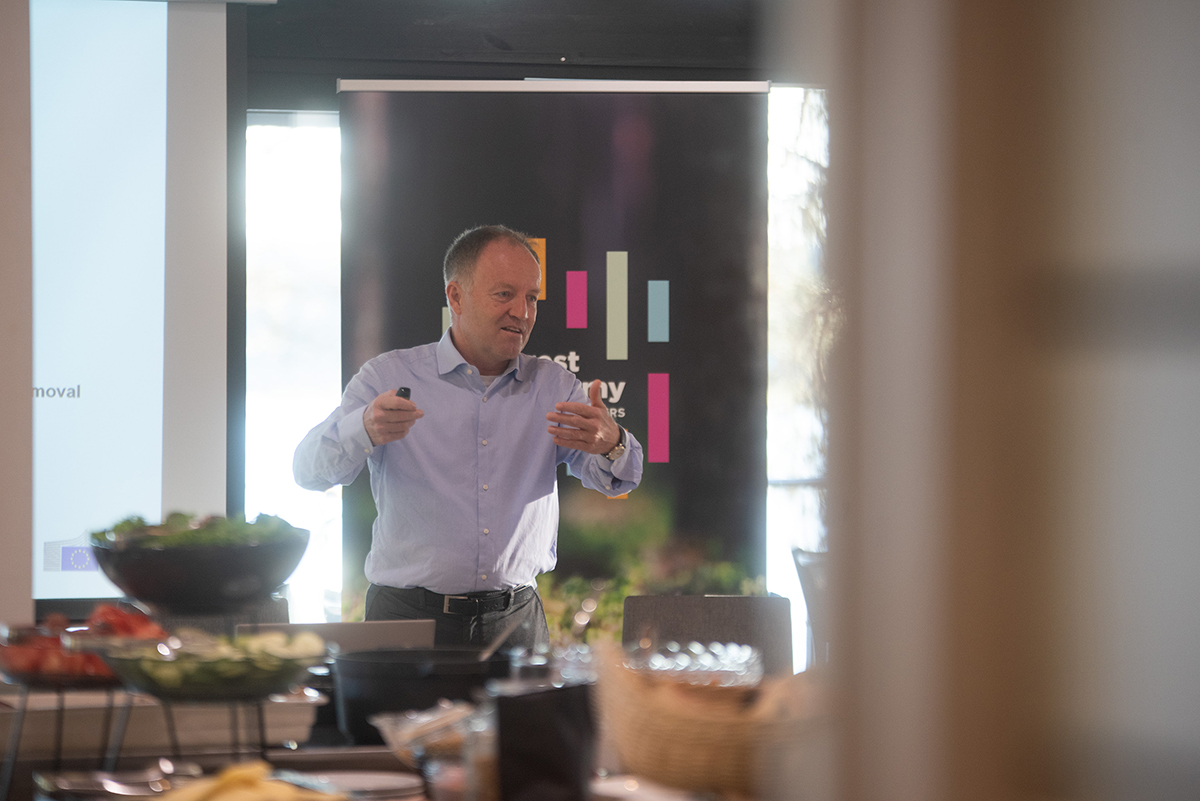
In the same way, Antti Asikainen, Executive Vice President (Research) at the Natural Resources Institute Finland, took up the need to increase the value added of biomass. Asikainen made reference to the opinion of the Finnish Forest Bioeconomy Science Panel, according to which more value should be derived from the biomass currently harvested in Finland, without increasing the felling volumes.
In particular, Asikainen mentioned the potential of mechanical wood processing and wood construction.
“Innovations like CLT and LVL have enabled the construction of skyscrapers out of wood. So I’m pretty positive that wood construction is something that we should still push forward in Europe.”
Carbon – a new source of income?
The Forest Academy participants could acquaint themselves with low-carbon wood construction also in practice during visits to the new, wooden head offices of both Versowood and Stora Enso.
At Versowood in Vierumäki, the participants were also informed of the new forest management certification prepared by the EU, which could open up a new model of carbon income for forest owners. It would also enable the measuring and certification of the carbon stored in buildings.
Christian Holzleitner, Head of Unit at the European Commission’s Directorate-General for Climate, described both at the Forest Academy event and in an interview with the forest.fi magazine his vision that the carbon funding should not be a separate market parallel to the forest sector, but part of the overall value chain of the forest sector.
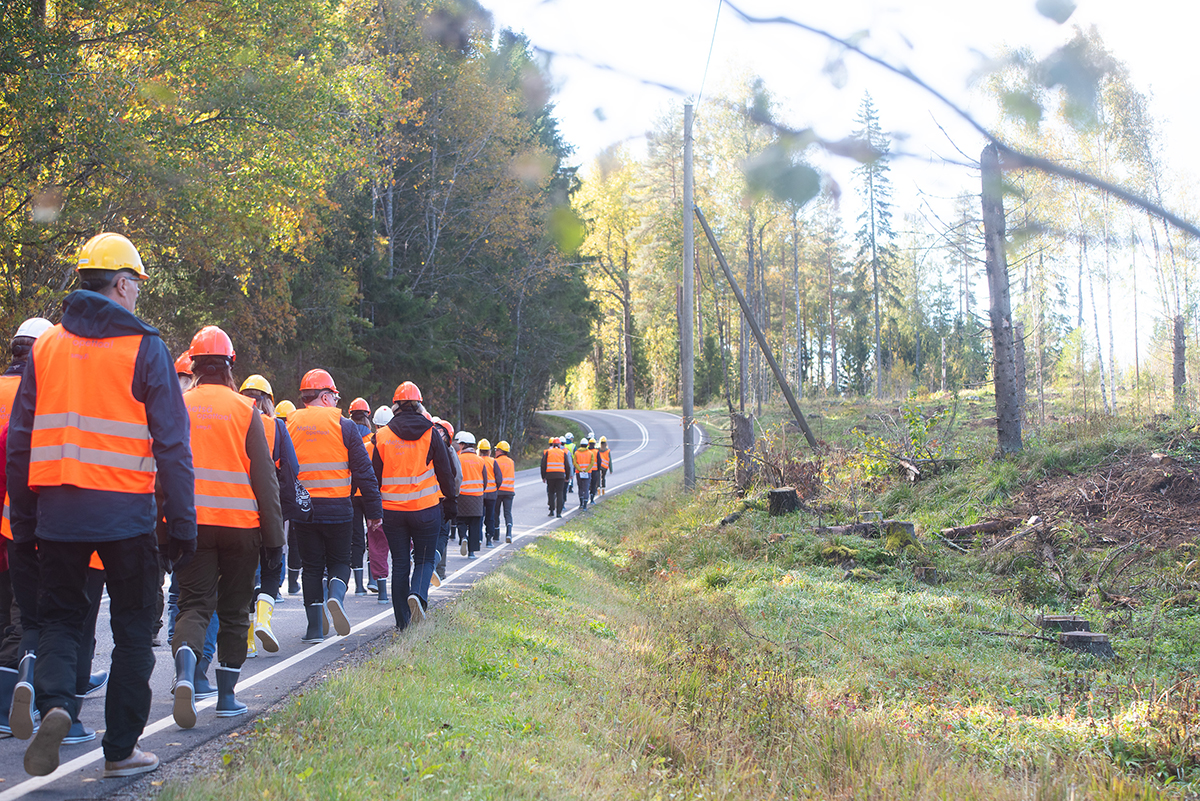
In addition, the EU decision-makers visited forest sites during the event, learning about forest regeneration and the possible impact of the nature restoration regulation on forests growing on eskers.
The Forest Academy for EU Decision Makers in September was the fifth in a series of courses jointly organised by Sweden and Finland. The practical arrangements were handled by the Finnish Forest Association.