Point of view | Markus Korhonen: The inventory of Finland’s state-owned old-growth forests moves toward protection decisions
Finland’s Metsähallitus is advancing its inventory of state-owned forests according to national criteria, with over 350,000 hectares scheduled for assessment by 2026. Extensive fieldwork, specialist analyses, and remote-sensing data create a solid evidence base for decisions on new protected areas and future use of state-owned forests.
In 2023, the EU published guidelines for defining and identifying primary and old-growth forests, and member states are required to protect them in accordance with EU guidelines. Finland then drew up national criteria in line with the EU’s biodiversity strategy, and the Government approved the requirements in a decision in principle in 2025. The inventory of Finnish state-owned land is conducted according to these criteria.
The criteria for old-growth forests consist of three main criteria and four supplementary criteria. For a site to be classified as an old-growth forest, it must meet all the main criteria and at least two of the supplementary criteria. In addition, factors such as the intensity of forest use and area limits are taken into account.
Evaluating the status of Finland’s state-owned forests
When identifying primary or “natural” forests, it is essential that active forestry has not affected the forest’s development and that it has been allowed to develop in accordance with natural processes.
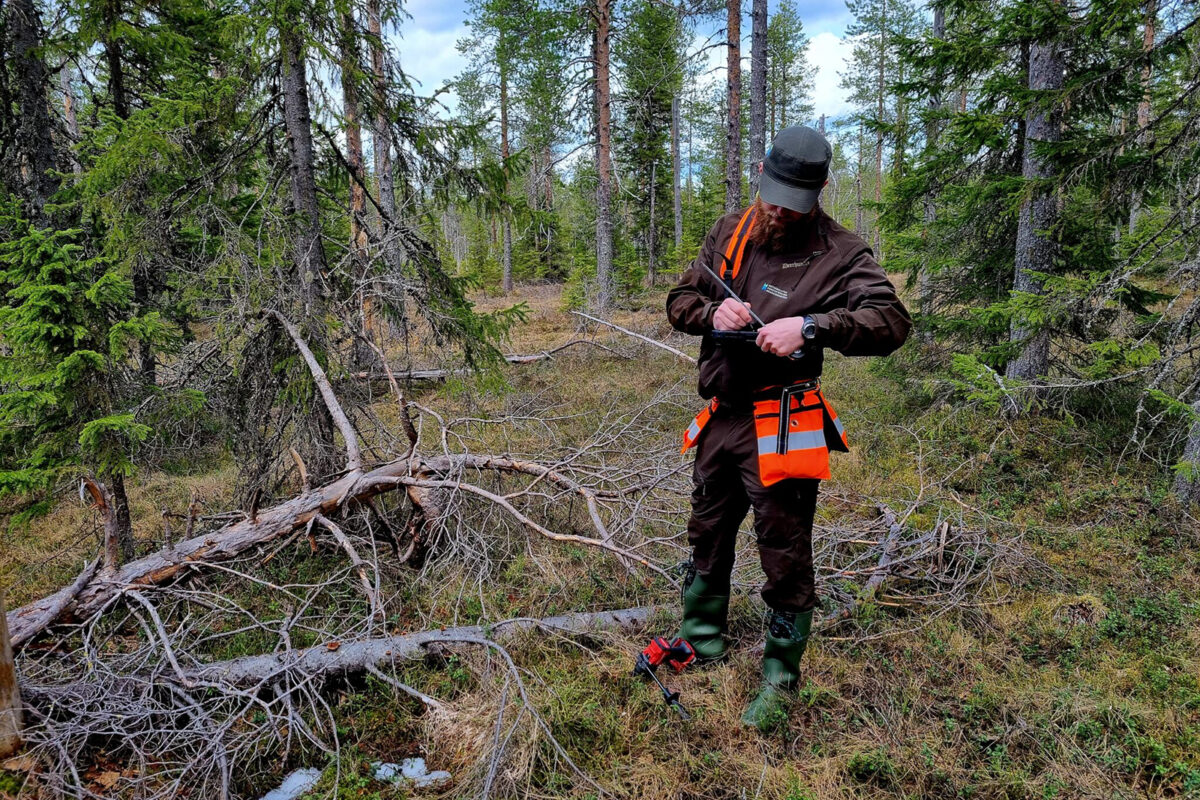
The area to be inventoried on state-owned land is approximately 350,000 hectares. Between 2024 and 2025, approximately 170,000 hectares will have been inventoried. To date, more than 38 person-years have been invested in field inventories. In addition to field inventories, other experts have also been involved. For example, species experts have mapped indicator species at selected sites.
In 2026, the inventory will continue in the northern Sámi homeland, covering over 100,000 hectares.
Remote sensing supports field inventory
The large area covered by the inventories requires the use of remote sensing data and historical information. The work must produce accurate results so that decisions based on the inventory are based on reliable and measured data. The sites to be inventoried have been selected based on information from Metsähallitus and volunteer nature surveyors.
Forest use has been active in Finland, and traces of this use can be seen in the terrain in many locations. Although the history of forest use can be verified in the terrain, remote sensing methods have not produced sufficiently accurate data to verify it at all sites.
Furthermore, the accuracy and reliability of remote sensing data are not yet sufficient to identify the characteristics of old-growth and natural forests in all forests that can be inventoried. Remote sensing could make the inventory more efficient than it is now, but at the same time, the reliability of the inventory results must be ensured.
Areas smaller than 10 hectares that meet the criteria are also taken into account
During the inventory, it was observed that the proportion of forests meeting the criteria for old-growth forests was higher than that of sites meeting the definition of natural forests. The use of forests has played a significant role in Finnish history, influencing the discovery of sites that meet the definition of natural forest in the inventory. In addition to private land, state-owned forests have also been utilized in various ways and for multiple purposes throughout Finland.
When the inventory is completed in 2026, the Board of Metsähallitus will submit a proposal to the Government on the protection of sites that meet the criteria under the Nature Conservation Act. According to the definition, these sites must be at least 10 hectares in size.
Sites smaller than 10 hectares that meet the definition of old-growth and natural forests will be included in Metsähallitus’ regional ecological network. Areas identified during the inventory that meet the criteria in Metsähallitus’s environmental guide will also be added to the regional ecological network, so they can be taken into account in planning state forest use. The sites in the regional environmental network are either out of use or subject to restricted use.
The new protected areas will strengthen the implementation of the EU biodiversity strategy in Finland.