Karoliina Niemi on managing Finland’s state forests: “Forestry is a balancing act between competing goals”
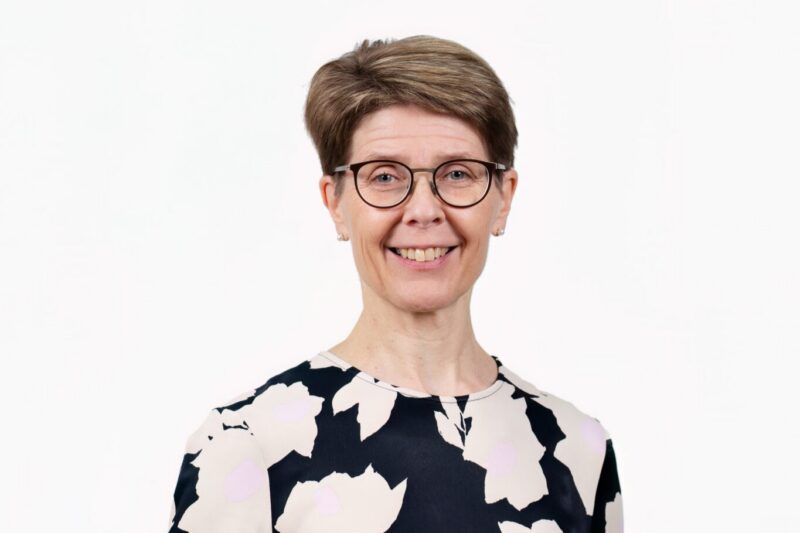
In European forest management today, what matters most is a strong grasp of the “big picture”, says Karoliina Niemi, Managing Director of Metsähallitus Forestry Ltd.
This means taking into account not only timber production but also forest biodiversity, the climate, and waterways. Wood from well-managed forests plays essential role in the further developing bioeconomy.
Forester and PhD Karoliina Niemi took over as Managing Director of Metsähallitus’s subsidiary, Metsähallitus Forestry Ltd, at the beginning of the year. Her interest in nature began when she was a child.
“My mother taught me to pick mushrooms as a child, and through that I also became interested in forests. Later, my entire research career was built around fungi, and they are still close to my heart,” she says.
Niemi is now responsible for the state owned vast commercial forest resources—approximately five million hectares. Her background in a family of forest owners and wood industry entrepreneurs reinforced her interest in the field.
“When you’ve grown up near the forest and surrounded by sawdust, the sector becomes part of your mindset from an early age,” she reflects.
At the forefront of forest policy
Niemi has exceptionally broad experience in the forest sector: ranging from academic research to working for the Ministry of Agriculture and Forestry and MTK (the Central Union of Agricultural Producers and Forest Owners), where she acted as a forest policy advisor. At the Finnish Forest Industries Federation, she worked as an EU Forest Manager and finally took on the position of Forest Director. Her previous role placed her directly in Brussels-based discussions on EU issues that are closely related to and affect forest sector in Europe.
“The most important thing is to carry out business operations while balancing various objectives. Alongside timber production, we take into account forest biodiversity, waterways, and climate as well as recreation, Sámi culture, and reindeer herding,” Niemi says.
Metsähallitus refers to its areas used for forestry as multiple-use forests. In these areas, the objectives run parallel to one another.
“It is precisely this simultaneous consideration of multiple objectives that makes the work particularly demanding and, at the same time, so interesting.”
In addition to legislation and forest certification, biodiversity measures in state-owned multiple use forests are strongly guided by Metsähallitus Forestry Ltd’s Environmental Guidelines. Together with forest management guidelines, it forms a comprehensive environmental framework.
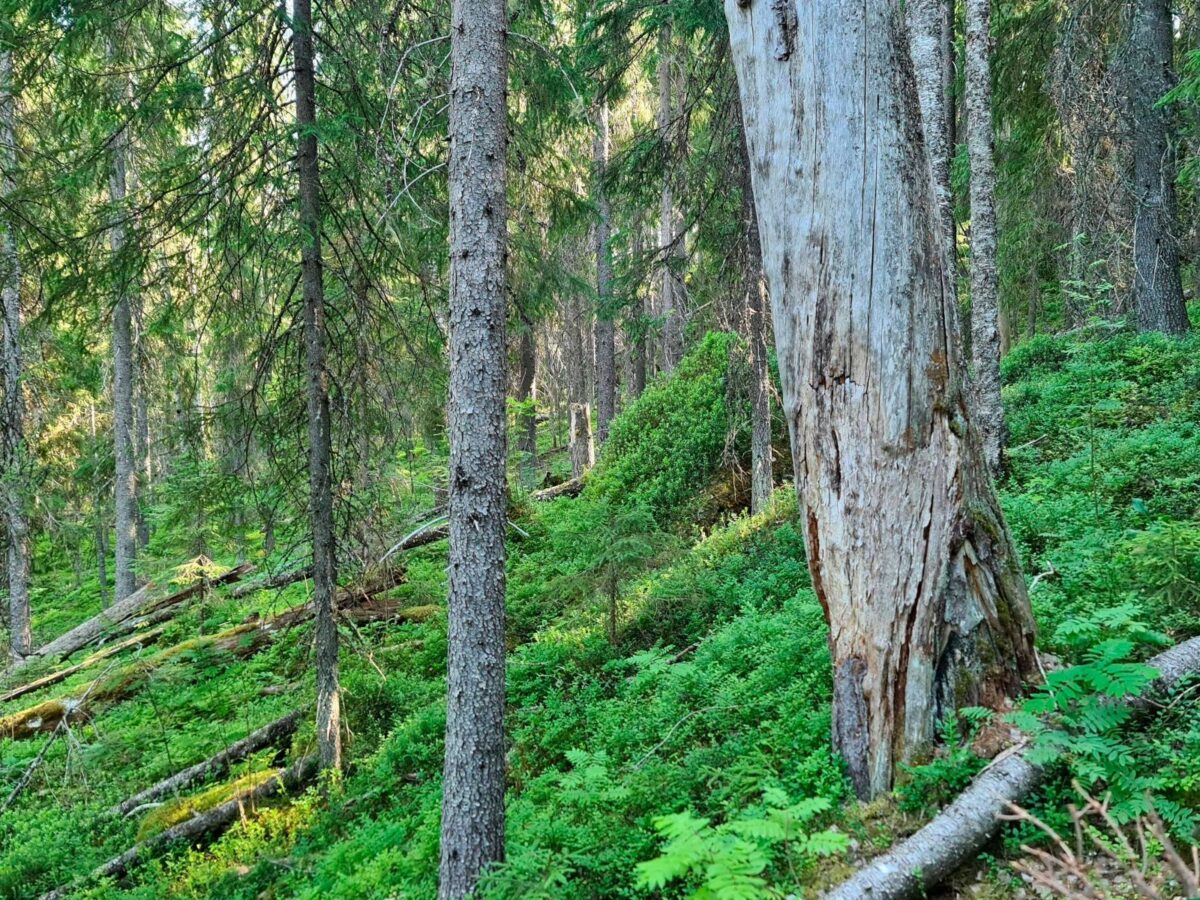
“For example, we actively increase the amount of deadwood; we do not collect existing deadwood but instead create future deadwood by leaving retention trees and artificial snags. As many as 4,000–5,000 species depend on deadwood,” Niemi explains.
Metsähallitus Forestry Ltd employs several species experts, and species surveys are conducted extensively, Niemi continues.
Water issues have expanded from individual sites to broader contexts
Water-related issues have become an increasingly important part of sustainable land use.
“The importance of water bodies and the impacts of land use on them are now seen much more broadly than 20 years ago,” Niemi says.
Metsähallitus is currently developing a new operational model for watershed planning, which is the organisation’s environmental goal for 2026. The model shifts the focus from individual point-source impacts to the functioning of the entire watershed.
According to Niemi, the watershed approach raises new kinds of questions.
“How do we find a common vision in areas with multiple landowners?”
In addition to forests, Finland is a land of waterways, and this is directly reflected in the daily forest management through various measures to reduce nutrient loading and prevent the transport of suspended solids.
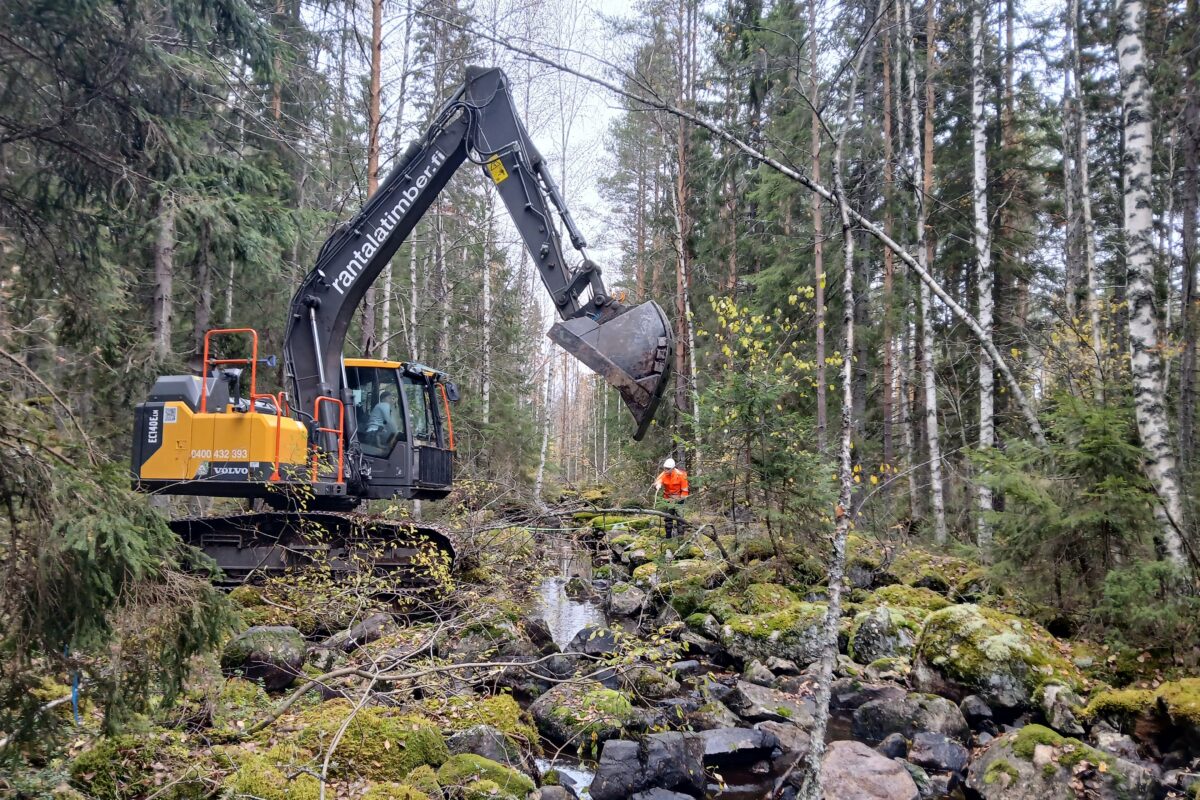
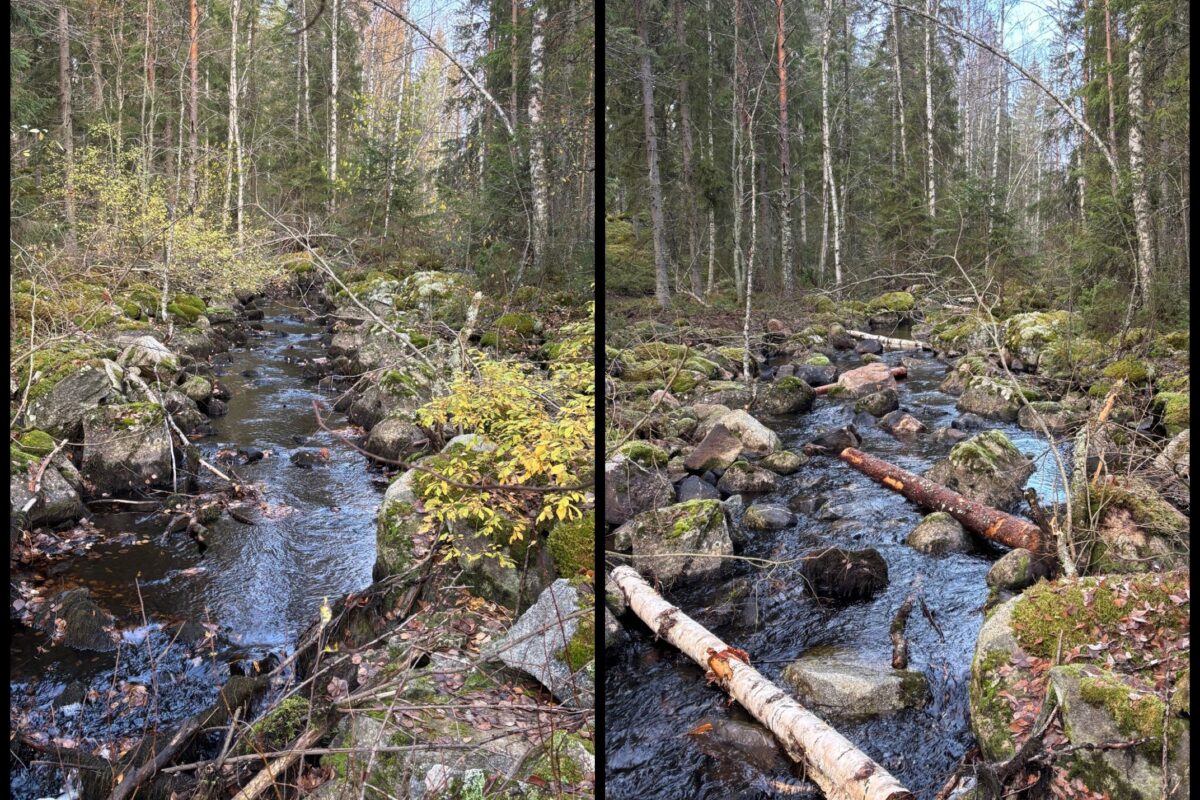
The condition of waterways affects everything from small streams to large lakes and, ultimately, the Baltic Sea. Last year, Metsähallitus Forestry Ltd established three new positions dedicated to stream management. Their primary role is to plan and implement restoration and management measures for stream and small waterbody ecosystems.
According to Niemi, one of the particularly significant themes at present is peatlands.
Drainage projects carried out in the last millennium have impacted water bodies. Now, increasing attention is being focused on how these impacts can be reduced as part of active forest management on peatlands and, on the other hand, by restoring low-yield sites to their natural state.
We must adapt to climate change—not just mitigate it
Niemi’s career has taken her from research to advocacy and on to leadership roles in the forest sector.
“Understanding political decision-making has been one of my most important lessons. Furthermore, global markets have a direct impact on the Finnish forest sector,” she says.
The progression of climate change raises new questions, particularly regarding adaptation to climate change.
“It is not enough to mitigate climate change. Now we must learn to adapt to it,” Niemi points out.
In practice, this means, among other things, more precise selection of tree species and forest management planning. Increasing mixed-species stands is necessary. However, the solutions are not straightforward.
“We still need to understand the site-specific conditions. Not all solutions work everywhere,” says Niemi.
Research guides future forest management
In state-owned forests, adaptation efforts are also being advanced through research. Pine is the dominant tree in state-owned forests, and therefore there is growing interest in the future adaptability of pine. It was precisely with pine that Niemi’s research career began.
There has already been much discussion about the Europe-wide decline of spruce due to climate-related stressors such as drought, heatwaves, storms, and pest infestations.
How might Scots pine (Pinus Sylvestri) adapt as the climate warms? This topic has been less studied, but now, at the initiative of Metsähallitus Forestry Ltd., a multi-year research project has been launched to investigate how pine fares in a changing climate, Niemi says.
“The research is being conducted in collaboration with researchers from the University of Helsinki and the Natural Resources Institute Finland, and its results can be applied to practical forest management,” she continues.
Decisions in forest management are made decades in advance, which is why research is so essential.
“Although public discussion has focused more on the threats to spruce, such as the European spruce bark beetle and root rot, pine also has its own risks. Basal canker is well known particularly in southeastern Finland, while Scots pine blister rust occurs in more north. In addition, shoot blight and entirely new species are part of a complex situation that requires continuous monitoring,” Niemi explains.
Climate change may alter the occurrence and spread of diseases and pests in ways that are not yet fully understood.
“We do not yet know all the effects of climate change on forests. That is why we now want to intensively study the adaptability of pine,” notes Niemi.
Finland’s unique position as a forest-rich country in the EU
Niemi describes Finland’s position as a forest nation within the EU as “unique.” This is also evident in EU advocacy, where she gained extensive experience in her role as Forest Director at the Finnish Forest Industries Federation.
“When Finland works within the EU, the fact that we are a forested country inevitably comes into play. For some member states, agriculture or the automotive industry is a key sector, but for us, as Europe’s most forested country, forests are a central part of the economy and everyday life,” says Niemi.
She points out that Finland’s strengths lie in its vital and well growing forests: there have been fewer droughts, forest fires, and forest damages than in many Central European countries.
Good, long-term forest management plays a role in ensuring this vitality, as does the cool climate.
Dialogue and openness are key strengths in forestry
Solutions to the future of forestry come from cooperation, not confrontation.
“Political situations vary. The most important thing is to ensure both the sector’s competitiveness and responsible forest management at the same time,” Niemi stresses.
“No single actor can solve the sector’s challenges alone. Open dialogue and a shared understanding of goals are now more important than ever,” she adds.
Finland’s strength is its flat hierarchy and effective dialogue: “Environmental organisations, stakeholders, and decision-makers can engage in even critical discussions, but in a constructive manner. That’s not a given everywhere,” Niemi says.
In her view, disagreement on forestry issues is not a problem. On the contrary, it can lead to constructive dialogue.
“As long as people are talking about forests, that’s a good thing. Different perspectives are part of the process, as long as the discussion remains civil,” Niemi concludes.