A private landowner sold nature values to a company in Finland – the deal sets an example for the European Commission’s ambitions
One of Finland’s first nature value deals has been concluded in North Karelia, where a private landowner sold the natural values of a peatland area slated for restoration to a company. The model is market-based, offering forest owners a new income stream while enabling companies to invest directly in biodiversity.
There had been very few nature value transactions transactions involving natural values between private landowners and companies in Finland prior to the deal struck in North Karelia. The parties involved in the transaction call the deal “historic.”
“The transaction opens up a way for landowners to generate market-based income from conservation and the production of natural values, and companies can take concrete steps toward corporate responsibility. Nature benefits from all of this,” comments environmental expert Heli Siitari at The Central Union of Agricultural Producers and Forest Owners (MTK)
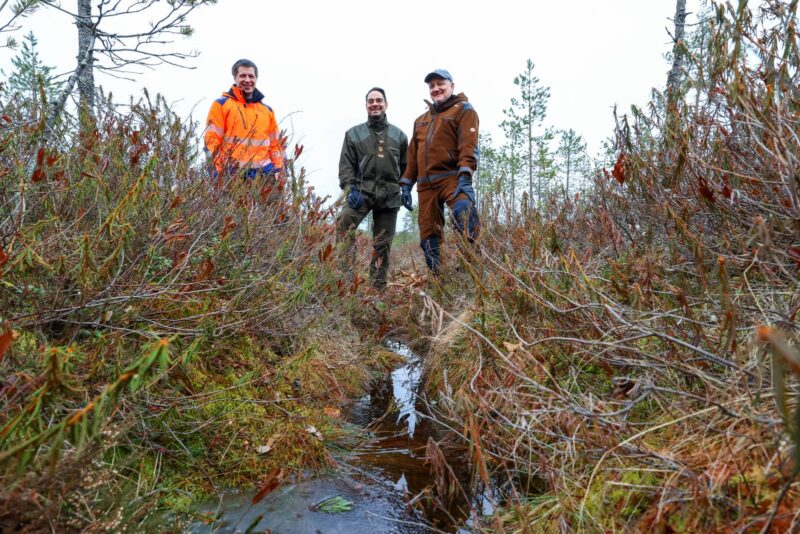
The bog site of the involved in the nature value trade is located in Kuikkasuo, Ilomantsi, where ditches dug decades ago have drained the peatland area, weakened the bog vegetation, and increased nutrient loading into the downstream water system.
“The ditches drain the water away, but the trees don’t grow. At the same time, nutrients are carried into the lake, whose water has darkened significantly since the 1970s,” describes Panu Kukkonen of the North Karelia Forest Management Association the initial situation of the nature value deal carried out as part of MTK’s LUMA project.
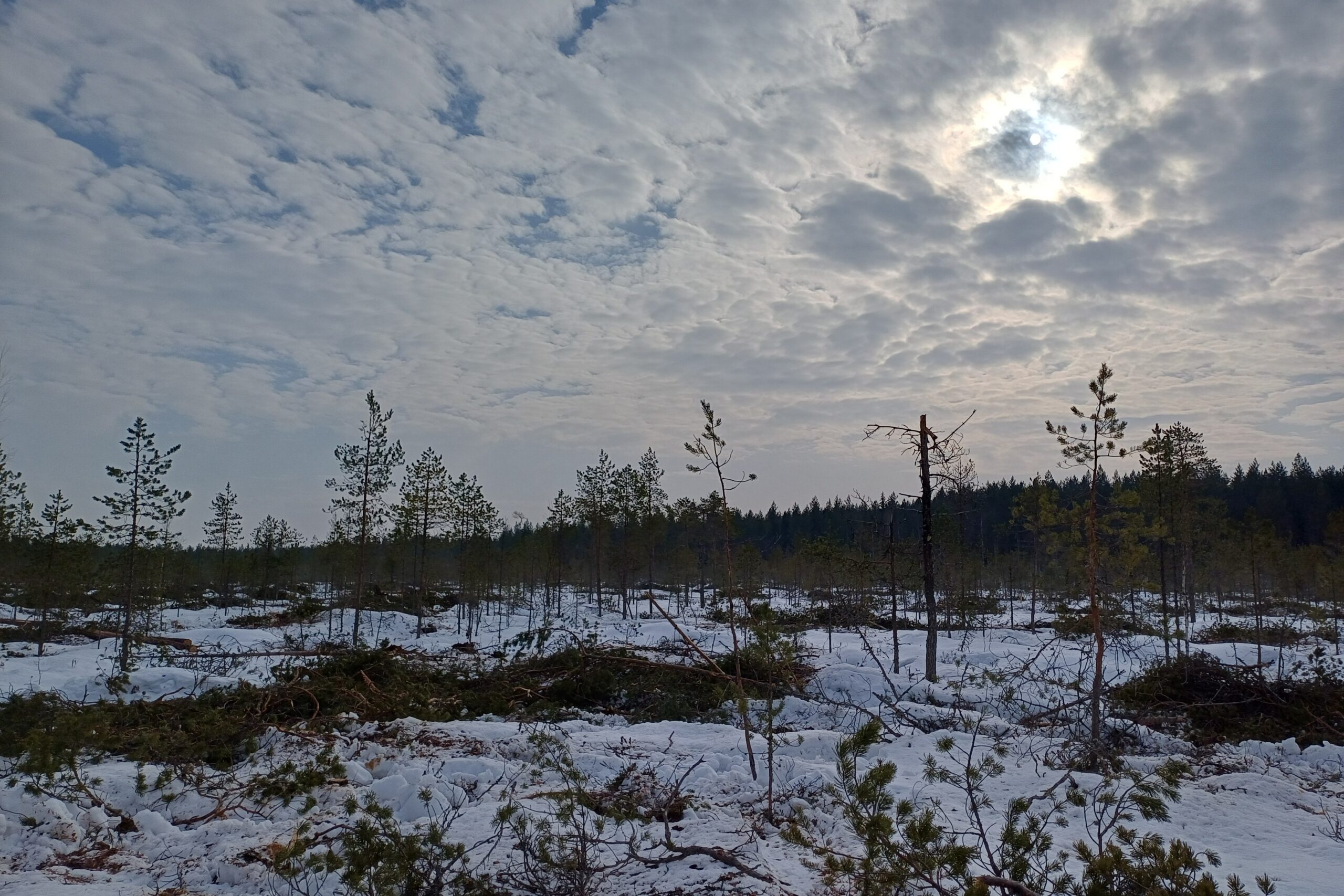
The implementation of the trade has been a long process. According to Kukkonen, the planning of the site and the mapping of natural values were carried out in late fall 2025, and the plan for generating natural values was approved through the regulatory process at the turn of the year 2025–2026. The tree stand management was completed in March 2026, and the water management restoration measures are scheduled to be implemented in late summer 2026.
The Central Union of Agricultural Producers and Forest Owners (MTK)
The Ilomantsi transaction sets an example
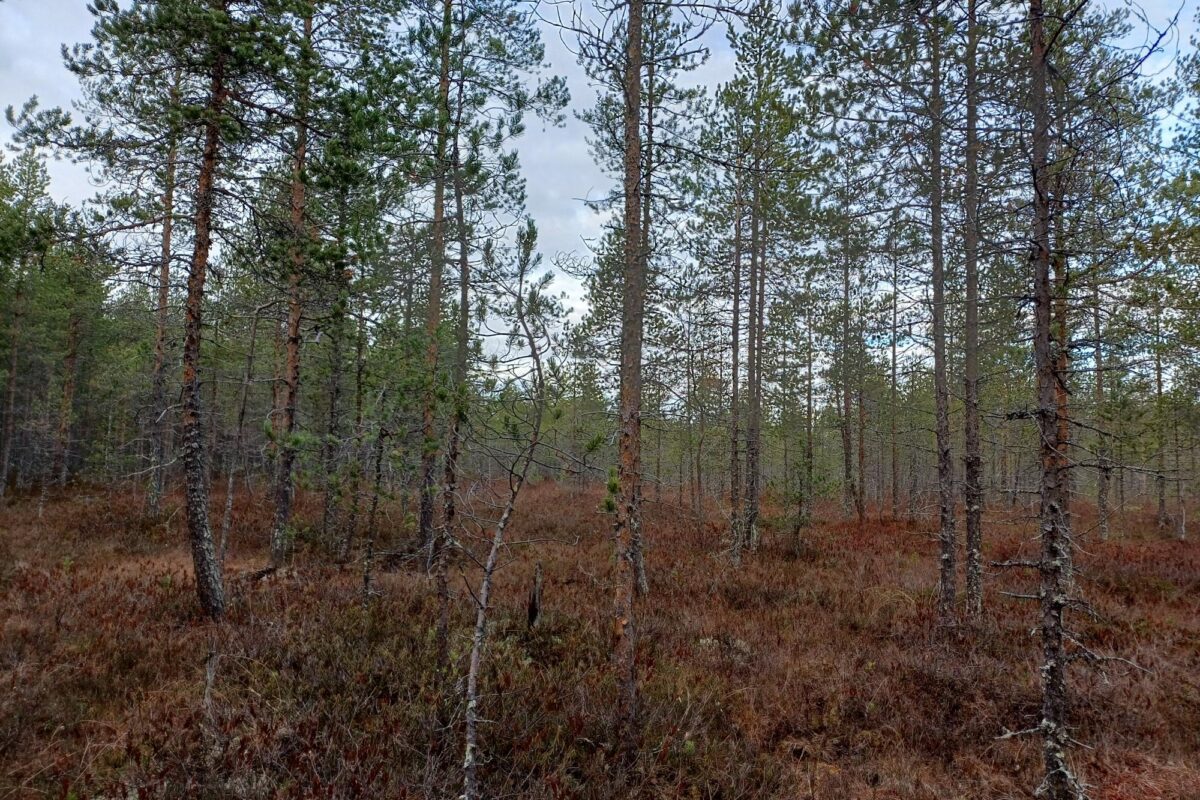
The site to be restored in Ilomantsi is a drained peatland area of approximately 12 hectares. The transaction was brokered by the North Karelia Forest Management Association, which, in cooperation with the landowner, was responsible for the planning and mapping of the site.
Siitari of MTK explains that nature value transactions are voluntary and can supplement the income stream from traditional timber sales.
In the transaction that has now been completed, the owner of the wetland site, Petri Purmonen, wanted to restore the peatland to a more natural state for the sake of both the landscape and water management—the nature value trade provided the framework for this.
The goal is an open, sparsely wooded bog that no longer pollutes the lake.
“I believe that now the area can be restored to its natural state so that, in the future, the song of birds can be heard by the lake—which will have clearer water than before—and future generations can visit the area, even to pick cloudberries,” says landowner Purmonen.
According to Kukkonen, the project serves as a model for future deals.
“The landowner gets the bog they want, water pollution is reduced, and the corporate buyer—in this case, the S Group—gains impactful and measurable conservation work,” says Kukkonen.
The Central Union of Agricultural Producers and Forest Owners (MTK)
Companies fund, landowners implement
In a nature value transaction, the landowner promotes biodiversity by restoring or protecting the site, and the company pays for the resulting nature values.
At the Ilomantsi site, the buyer is S Group, which has set a goal of restoring 500 hectares of natural value at the national level by 2035.
“We need the private sector to be more actively involved in nature conservation. This can be promoted through market-based solutions,” says Nina Elomaa, Head of Sustainability at the S Group.
“The first restoration sites in North Karelia and North Savo are part of this goal,” Elomaa continues.
The North Karelia Cooperative also emphasizes the project’s local significance.
“We want both the natural values and the euros spent on the project to remain in our own region,” explains Petri Vähä, Director of Communications and Sustainability at the North Karelia Cooperative.
A new source of income for forest owners
Siitari of MTK emphasizes that a market-based trading platform complements state funding channels, not replaces them.
As the nature value market develops, it can become a significant source of additional income for forest owners. At the same time, a new service sector is emerging around the market, where natural values are measured, verified, and priced.
Regional forest management associations play a key role in this, mapping sites, assessing their natural values, and facilitating transactions.
“Nature value trading offers landowners a way to generate market-driven income from conservation and the production of natural values. Companies, in turn, can take concrete steps toward corporate responsibility,” says Siitari of MTK.
The market is still taking shape
Nature value trading is still in its early stages in Finland. However, the deal in Ilomantsi shows that the model can work in practice.
In Finland, a unit of natural value for a specific area—the “nature value hectare”—developed by a large group of researchers, measures the natural values of each habitat. This unit is necessary to ensure that environmental impacts can be assessed transparently. Using the “nature value hectare” as the unit of measurement in nature value trading also facilitates the practical comparison of the impacts of measures taken at different sites.
Without common standards, it would be difficult for buyers to assess what they are purchasing—and for sellers to determine how sites should be priced.
Accurate price formation requires more completed transactions. Individual transactions are not yet sufficient to create a market; instead, a broader range of sites from across the country is needed.
The long time horizon poses a challenge
The effects of restoration often only become apparent years later, which can complicate companies’ investment decisions.
“We need more pilot projects and experience in restoring different habitat types,” says Elomaa of the S Group.
Finding a balance between the supply and demand for nature values is also key. If compensation levels remain too low, landowners will not participate. If prices rise too high, corporate interest may wane.
Part of the green transition
Nature value trading is part of a broader trend in which economic incentives guide the more sustainable use of natural resources. It does not replace conservation or public funding, but can complement them and bring in private capital.
There is also growing pressure behind this: Finland has committed to halting biodiversity loss by 2030, and this goal cannot be achieved without new funding mechanisms.
At the same time, nature-related risks for businesses have become a key economic issue. An estimated half of the world’s gross domestic product depends on nature.
“We need the private sector to be more actively involved in nature conservation. This can be promoted through market-based solutions, such as promoting nature value markets and creating incentives for ecological compensation,” says Elomaa of the SOK Group.
In January, Tapio Palvelut Oy, S Group, Finsilva plc, and LähiTapiola announced a pilot project for a market-based nature value transaction to restore a former open bog of approximately 12 hectares in Pielavesi, North Savo, owned by Finsilva – one of Europe’s largest private and independent forest owners. The buyer of the natural values is the S Group, and the broker for the natural value transaction is Tapio Palvelut Oy.
In this project, the subject of the nature value transaction is an approximately 12-hectare, drained barren bog covered with slow-growing trees that emerged as a result of drainage carried out in the 1960s. Restoration measures will involve plugging the ditches and removing most of the water-consuming trees. As a result of the restoration of the water balance, the marsh vegetation will begin to recover and the area’s natural values will increase.
“Biodiversity improves with market-based funding. Landowners are needed to contribute to natural values: for them, the natural value market opens up a new source of income and enables the combination of environmental and economic goals,” said Finsilva CEO Juha Hakkarainen in a press release.
“For the natural value market in Finland to take off on a broader scale, we need pilot projects like this involving real-world actors, where we can gain genuine experience with the various stages of trading,” says Marika Makkonen, a leading forestry business expert at LähiTapiola.
Finland involved in international development
Nature credit markets are also currently being developed at the EU level. The European Commission has published a so-called Nature Credits Roadmap, which aims to establish common rules for the market.
The EU-led promotion of biodiversity is based on the EU Biodiversity Strategy, which extends until 2030 and focuses on increasing protected areas and improving the state of nature.
Finland is actively involved in this development, and its domestic nature credit trading model that has now been launched has attracted international interest, particularly because of the emphasis placed on measuring and verifying nature values.
“The Ilomantsi project is just the beginning, but its significance extends beyond a single site. It demonstrates that nature value trading can be implemented in practice and that it can align the goals of landowners, businesses, and the environment,” concludes Siitari of MTK.