Study reveals widespread silent conservation in Finnish forests
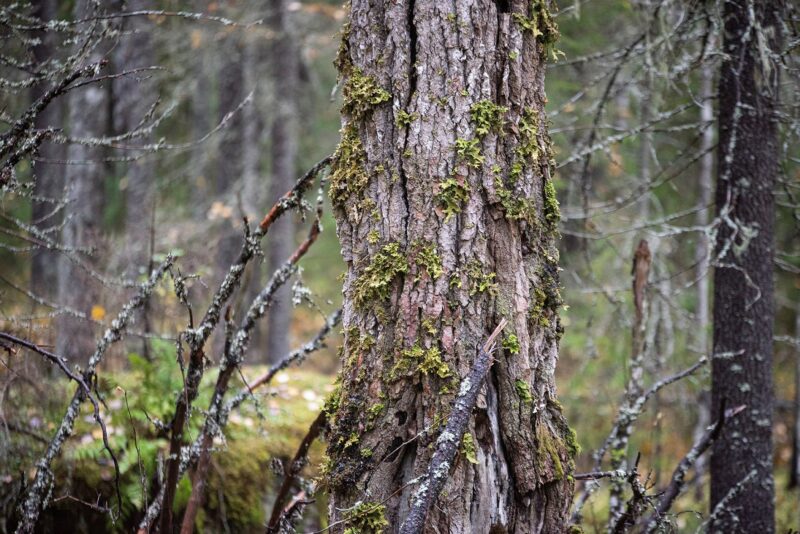
In Finland, private forest owners voluntarily leave large areas of forest outside forestry management without official conservation agreements or compensation.
According to a recent report by Pellervo Economic Research PTT, so-called silent conservation covers an estimated 1.1 million hectares of forest land. This is the first nationwide estimate of the extent of the phenomenon.
The study is based on a survey conducted in spring 2025, to which 853 forest owners responded, and was funded by the Finnish Forest Foundation. The results highlight a phenomenon that has long existed but has not previously been systematically identified or statistically recorded.
What does silent conservation mean?
In the PTT study, silent conservation refers to forest owners’ voluntary, uncompensated conservation decisions. These decisions exclude forest areas entirely from forestry management or allow only very limited management.
“Silent conservation is driven by various motives, such as nature values, economic factors, landscape and recreational values, and family and ownership-related reasons. This reflects the different goals of forest owners and the many values of forests,” says PTT forest economist Marjo Maidell.
According to PTT’s senior forest economist Jani Laturi, the most important message of the study for decision-makers is that silent conservation is a real and widespread phenomenon. Silent conservation also says something essential about Finnish forest culture.
“Many people want to manage their forests in ways other than those measured in euros. It is an invisible but significant part of Finnish forest management,” says Laturi.
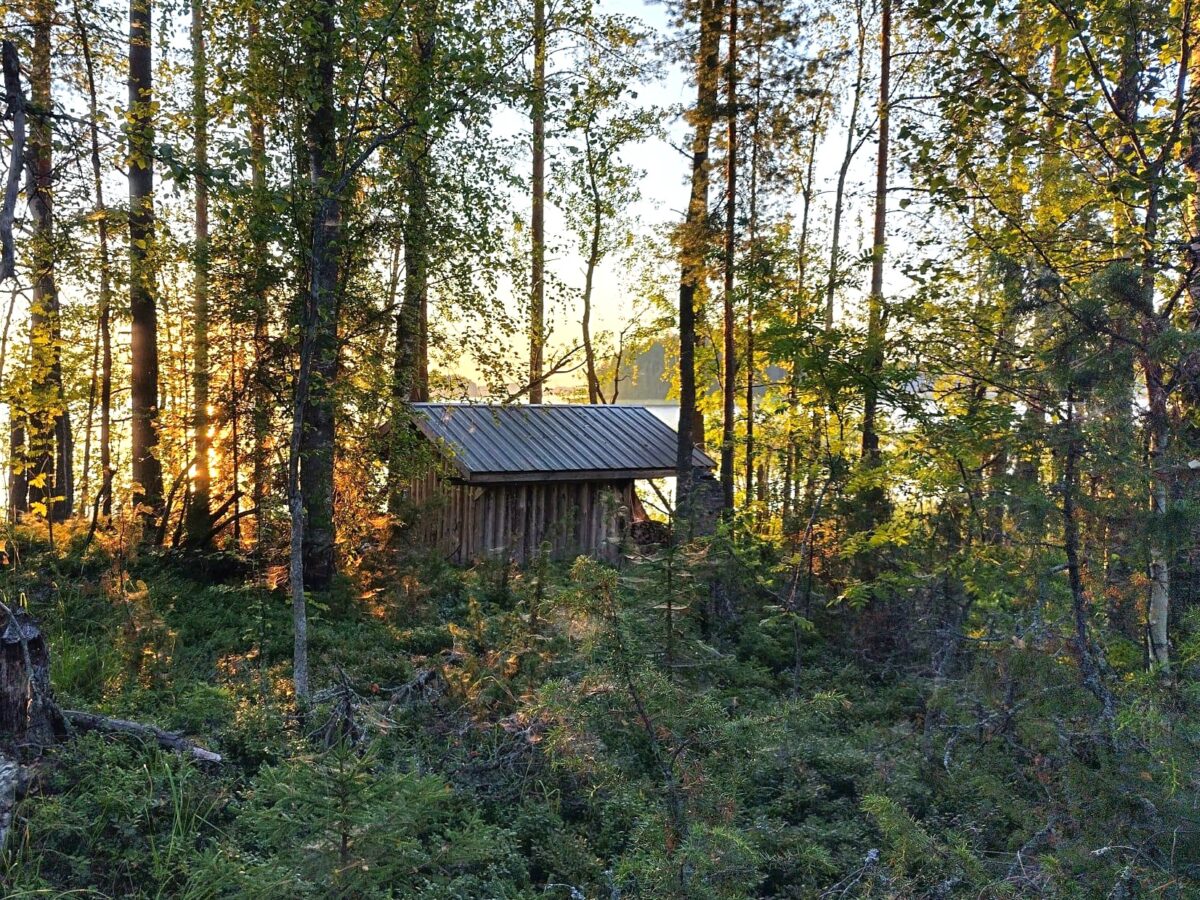
Common, but mostly small-scale
According to the PTT survey, 43 percent of respondents practiced silent conservation.
On average, this accounted for 8.3 percent of the forest area reported by respondents. When the results are scaled to the total area of private forests in the country, the total area of quiet conservation rises to approximately 1.1 million hectares.
About 70 percent of the area under silent conservation is subject to small-scale management. In practice, this means, for example, removing individual trees without the intention of selling them. The remaining 30 percent consists of areas that are completely excluded from forestry management.
According to PTT researchers, the study challenges the simple division between commercial forests and protected forests.
Maidell describes the activities of forest owners as a continuum, with many shades between conservation and efficient forestry.
“I was a little surprised, especially by the proportion of small-scale forest management. The activities of forest owners are not black and white,” Maidell describes in an interview with Forest.fi.

Small forest owners stand out
According to the study, silent conservation was relatively more widespread on small forest holdings than on large ones. Although silent conservation is not permanent on all sites, it is long-term on many holdings. Most respondents said they would continue silent conservation for as long as they owned the site or for at least ten years.
From an environmental policy perspective, silent conservation supports the preservation of biodiversity and the structural diversification of forests. It also complements statutory and contractual conservation, even though it does not appear in official conservation statistics.
Silent conservation is also linked to climate policy, as it affects logging decisions and, through them, forest carbon stocks and carbon sinks.
Untouched forest areas and small-scale forest management often indicate higher carbon stocks, but the exact impact on carbon sinks cannot yet be assessed.
“When we don’t know exactly what the sites are like, we can’t say directly what the impact on carbon sinks will be,” says Laturi.
Impacts on wood supply – but not unambiguously
Since the Finnish timber market relies heavily on private forests, voluntary restrictions on forest management serve as a factor regulating timber supply. However, the impact is not clear-cut. Some of the silent conservation is temporary or targets areas that are of little value to forestry or difficult to utilize.
According to Helena Herttuainen, Manager, Environment and Forestry, at the Finnish Forest Industries Federation (FFIF), the PTT study is valuable because it highlights a phenomenon that has long been part of Finnish forest ownership. The study challenges the so-called on-off thinking, which sees forests as either actively used or strictly protected.
“Silent conservation areas can be either completely untouched or subject to small-scale management. They safeguard biodiversity in a broad-based and cost-effective manner,” says Herttuainen.
“The study was unable to determine how much silent conservation affects the availability of wood. This would be an interesting topic for further research,” Herttuainen continues.
Conservation and forestry go hand in hand
According to Herttuainen, biodiversity is already being safeguarded in everyday forestry in many ways, including through buffer zones, increasing the amount of deadwood and deciduous trees, controlled burning, and protecting the most valuable sites.
At the same time, she believes it is important to remember that the availability of wood underpins the forest industry’s operations: approximately 95 percent of wood is sourced domestically. Significantly increasing the number of protected areas without targeting would reduce the availability of wood and undermine industry operating conditions.
MTK Forest Director Marko Mäki-Hakola emphasizes that silent conservation is not a marginal phenomenon.
“Forest owners already bear a very significant responsibility for promoting biodiversity and climate goals at their own expense. This must be remembered in decision-making,” Mäki-Hakola says in Maaseudun Tulevaisuus daily newspaper.
Based on the results of the PTT study, forest owners do not need additional external regulations to restrict logging.

MTK offers nature value trading
Silent conservation should not be confused with so-called gray conservation in forestry, Mäki-Hakola points out in an MTK press release. Gray conservation refers to a situation in which the use of agriculture and forestry is indirectly and ambiguously restricted. This done without official decisions or compensation.
According to MTK, nature credit trading currently offers great potential for conservation efforts.
In nature credit trading, an operator purchases nature credits from a forest owner. While in conservation agreements compensation often comes from state coffers, in nature credit trading, buyers can include municipalities, companies, and private individuals.
MTK’s updated nature credit marketplace, Luontoarvot.fi, will be launched in stages in 2026, starting in March. The platform brings together sellers, buyers, and brokers of nature credits, allowing landowners to offer sites with natural values —such as biodiversity areas or restoration targets—to interested buyers.
“Silent conservation will continue. Many sites could also be used for nature credit trading. When the right site meets the right buyer and the terms suit everyone, the outcome benefits all parties,” says MTK environmental expert Heli Siitari in a press release.
A European issue
Silent conservation is probably not just a Finnish phenomenon, but no similar national assessments have been made internationally. A special feature of Finland is the large number of private forest owners and the multi-objective nature of forest ownership.
“The results show that the overall picture of forest use remains incomplete if attention is focused solely on official conservation decisions and agreements. Silent conservation is part of forest use and conservation, even though it is not recorded in statistics,” says Jani Laturi of PTT.
The study also raises a question that is topical throughout Europe. How should voluntary, unofficial conservation be recognized, measured, and taken into account as part of forest, climate, and biodiversity policy?
PTT researchers note that the estimate is based on a survey and therefore involves uncertainty. Forest owners’ own assessments may not accurately reflect the true size or natural value of the areas.
“We cannot be sure that the survey covers all forest owner groups,” Maidell points out.
“We also did not assess the quality of the sites: whether they are forest land or wasteland, or what kind of natural values the areas have. These more detailed analyses were not carried out. It would be very good if this assessment could be refined in the future,” Maidell concludes.