These 8 innovations are already implementing the European bioeconomy strategy
On November 27, 2025, the European Union published a new bioeconomy strategy that emphasizes the importance of the forest industry in Europe’s green transition.
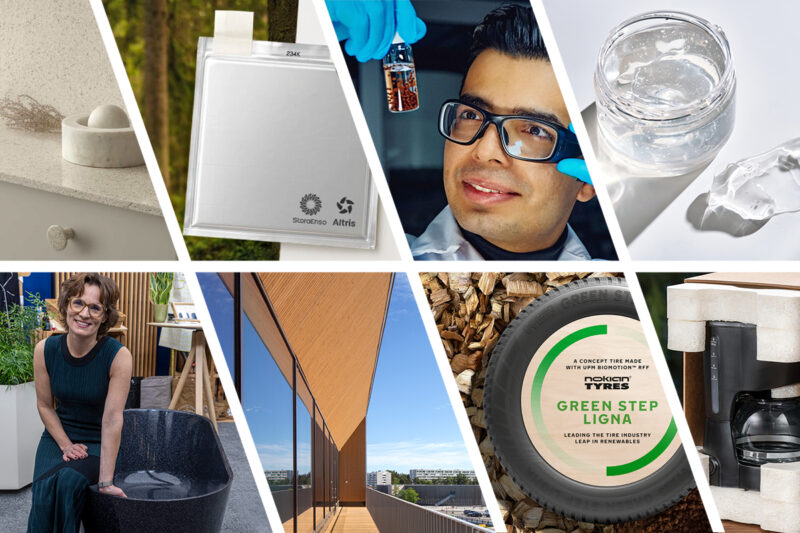
We have listed eight interesting innovations in the forest bioeconomy that already demonstrate that our forests are not just a source of raw materials, but the engine of the future for the entire European bioeconomy.
1. Wood-based textiles save water and chemicals
The Kuura textile made headlines when EU Commissioner Jessika Roswall appeared at the launch of the EU’s bioeconomy strategy in Brussels wearing a wood-based dress. Wood is no longer just used to make paper, but also party dresses. The Kuura textile developed by Metsä Group is a new wood-based and biodegradable alternative to cotton and synthetic materials.
A green transition in the clothing industry is essential, as the sector is one of the world’s biggest polluters. Textile production consumes enormous amounts of water and chemicals, and synthetic fibres increase microplastic emissions into waterways.
According to the WWF, the production of a single cotton shirt can require up to 2,700 litres of water. This amount is equivalent to one person’s drinking water needs for almost 3.5 years.
According to estimates, the clothing and textile industry accounts for up to 10 percent of global climate emissions, making the development of new biodegradable and recyclable materials crucial.
Metsä Group has been developing Kuura textile fibre at its demo plant in Äänekoski, Central Finland, since 2020. The company is now planning to build a large textile fibre factory in Kemi, northern Finland, which would create an estimated 250 new jobs. The factory would produce approximately 100,000 tons of Kuura fibre annually, which is equivalent to the production of up to 170 million T-shirts, according to Yle News.

2. Cellulose-based packaging foam replaces polystyrene foam
When you think about packaging fragile products, polystyrene foam is often the first thing that comes to mind. Many household appliances and other fragile products have traditionally been protected with fossil-based polystyrene, but it has a heavy environmental impact: fossil raw materials, poor recyclability, and a large carbon footprint.
Stora Enso has developed a sustainable alternative. Papira®, a cellulose-based foam material, is just as effective as polystyrene foam in protecting products, but it is made using only air and water – and contains no chemicals that are harmful to health. The material is completely bio-based, biodegradable, and recyclable in the way of paperboard, and its carbon footprint can be up to 70 percent smaller than that of plastic foams, according to the company.
Papira® is part of a broader Finnish innovation field that develops fibre-based packaging and plastic-free coatings for beverage and food packaging and cosmetic products.
For many years, Stora Enso has also been responsible for the box containing the iconic maternity package box, which has been distributed to Finnish families since the 1940s. The box, manufactured by Stora Enso, has always been and continues to be recyclable, renewable, and made from Finnish wood fibre.

3. Wood composite cuts the carbon footprint of countertops
Wood has been used as a material for furniture for centuries, but the Finnish company Woodio has taken it to a new level by developing the world’s first completely waterproof wood composite. The material offers a more ecological alternative to ceramic and stone-based solutions.
According to the company’s latest life cycle calculations, the carbon footprint of Woodio products is up to 80 percent smaller than that of comparable ceramic or stone-based products. The difference is even greater at the production stage: manufacturing a single Woodio sink generates on average 90 percent less emissions than producing a traditional ceramic sink.
“Woodio is an exemplary combination of design, sustainable development, and innovative technology, as evidenced by the large number of awards and positive media coverage it has received, as well as customer appreciation around the world. This is a good place to continue from,” says Erkka Lumme, Woodio’s new CEO, who started in November.
Woodio’s new-generation products have a lighter structure, the proportion of bio-based binding agents has increased to 50 percent, and the wood material utilizes sidestreams from the forest industry.
“The manufacturing process does not require extreme heat, and water consumption is minimal. Thanks to these factors, the environmental impact of the products is exceptionally low,” Lumme continues.

4. Lignin replaces fossil-based fillers in car tyres
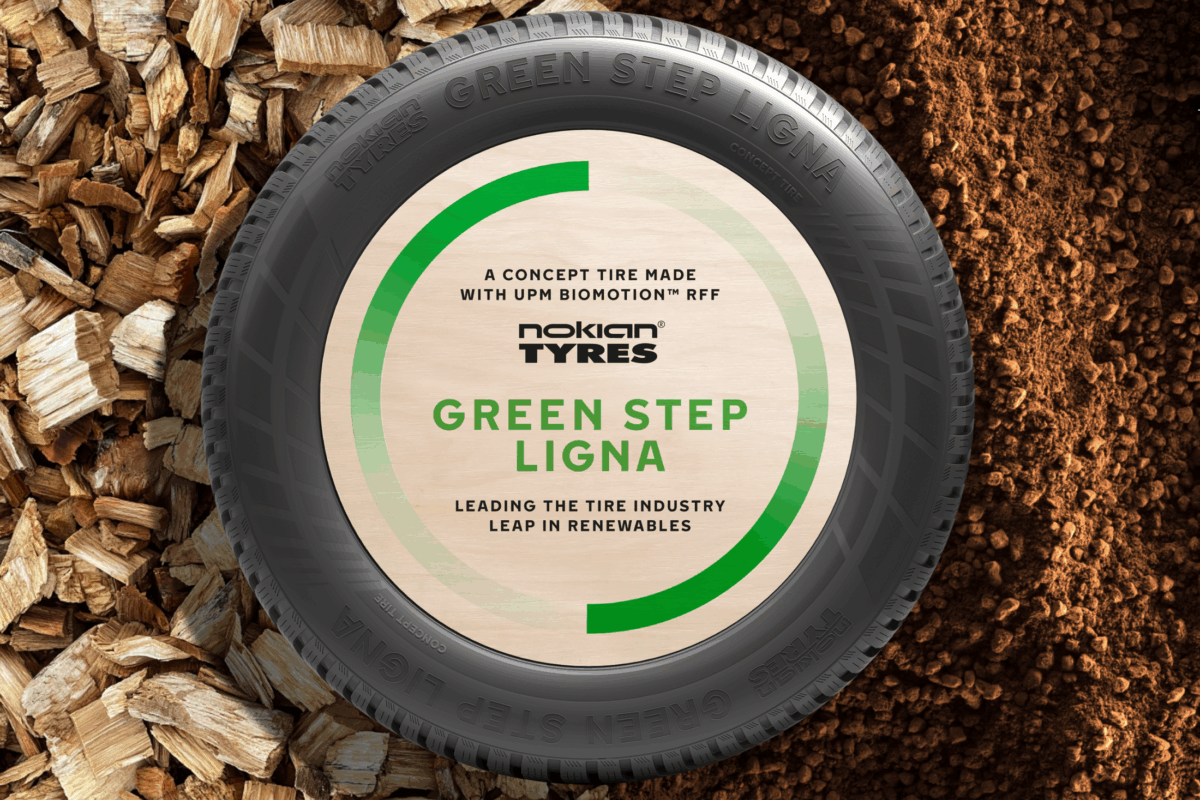
Fillers account for about one-third of the mass of tyres and have a decisive impact on their durability and performance. In the sidewall of Nokian Tyres’ Green Step Ligna tyre, fossil raw materials have been replaced with a lignin-based filler produced at UPM’s biorefinery in Leuna, Germany.
Lignin is a natural compound found in wood, which is obtained as a by-product of pulp production, among other things.
“UPM’s renewable BioMotion™ fillers represent a completely new class of renewable materials that can replace highly CO2-intensive carbon black and precipitated silica in various rubber applications, such as tyres,” said Petri Hyyryläinen, Strategy Director at UPM’s Biorefining unit, in an interview with Forest.fi.
Traditionally, car tyres have been a significant source of microplastics. According to the United Nations Environment Programme (UNEP), tyre wear is the second largest source of microplastic pollution in the oceans. It accounts for up to 28 percent of the total load.
“That is why this kind of innovation is an important step towards a cleaner environment. As a supporter of sustainable growth, I also see this as a significant export opportunity if all fossil-based fillers in tyres could be replaced with lignin in the future,” said Member of Parliament Pauli Aalto-Setälä to Forest.fi.
The Nokian Tyres Green Step Ligna concept tyre, developed by Nokian Tyres and UPM, won the 2025 New Wood competition, as the innovation is believed to revolutionize the entire tyre industry.
5. From the forest to the global cosmetics market
The cosmetics company Lavliér has patented a cosmetics manufacturing method based on a gel-like cellulose raw material produced from forest industry sidestreams, which the company says has the potential to revolutionize the global cosmetics market worth over $500 billion.
The natural base material developed by Lavliér reduces the chemicals used in cosmetics manufacturing by up to 80 percent. This makes the products simpler in terms of their ingredient lists, more environmentally friendly, and easier to manufacture.
Lavliér’s founder, Petro Lahtinen, PhD in chemistry, said in an article on Forest.fi in October that he believes the cosmetics industry is ready for radical change. The first products will hit the market in 2026, but the company’s sights are set on international cosmetics waste and reforming manufacturing practices across the entire industry.
Forest is the world’s only renewable raw material available on such a large scale, and its potential extends from textiles to fuels – and also to cosmetics.

6. Sustainable and fire-safe wood construction
The Finnish company Nordtreat Oy is an excellent example of how bioeconomy expertise outside the forest sector can strengthen the role of the forest industry in the green transition. Nordtreat’s bio-based fire protection makes wood construction safer and more sustainable.
The strict fire safety requirements for wood construction have long been a challenge in Finland that has limited the use of wood in demanding construction projects. While regulations have eased in recent decades, safety measures remain stringent compared to some other European countries. Nordtreat’s innovation responds to this need: it enables the use of wood in accordance with building regulations while preserving the natural beauty of the wood. This combination makes the product significant not only for architects and builders, but also for the entire forest-based bioinnovation ecosystem.
Nordtreat’s fire protection agents are water-based, pH-neutral, and do not contain any substances that are harmful to humans or the environment. When absorbed into the wood at a depth of 2–3 mm, they form a breathable film on the surface of the wood, which increases the durability of the fire protection and makes the surfaces easier to clean. In the event of a fire, the products affect the pyrolysis of the wood by creating a protective carbon layer on the surface. Wood treated in this way also releases water vapour when burning, which lowers the temperature of the combustion reaction and slows down the spread of fire.
Nordtreat’s solution shows that the forest bioeconomy value chain is not limited to traditional players in the forest industry. When a chemical company develops a non-toxic and fossil-free fire retardant, it highlights the value of forests in a new way – and opens up new export opportunities for the forest industry.

7. Super-light foam made from nanocellulose
The University of Oulu in Finland has developed nanocellulose foams from wood pulp that are suitable for a wide range of applications. Doctoral researcher Mohammad Karzarjeddi created super-light aerogel structures that consist of up to 99 percent air.
According to the researcher, aerogels can be used in water purification, as they absorb oils and solvents up to 280 times their own weight.
The materials can also be used to make smart packaging that reacts to moisture or temperature. In addition, foam structures are suitable for 5G and 6G mobile phone technologies because they have low signal loss.
There is a widespread need for new bio-based foam materials, as the majority of current foams and porous materials, such as polyurethane, are made from fossil raw materials and are difficult to recycle.

8. Sodium-ion batteries from salt, iron, and wood
Stora Enso is collaborating with the Swedish company Altris Ab to develop a new generation of batteries that could revolutionize the European energy market. Announced in August, the collaboration combines wood-based lignin and advanced sodium-ion battery technology to create concrete prototypes – the first of which were unveiled at The Battery Show Europe 2025 in Stuttgart, Germany, in June.
At the heart of the partnership is Lignode®, a bio-based hard carbon developed by Stora Enso from a sidestream of pulp production, which offers a sustainable alternative to traditional anode materials. Demand for batteries is expected to grow up to 14-fold by 2030, making responsible solutions even more critical.
“Bio-based materials play a key role in improving the sustainability of battery cells. Lignode has the potential to become the world’s most sustainable anode material, and the partnership with Altris supports our shared goal of sustainable electrification,” says Juuso Konttinen, Head of Stora Enso’s Biomaterials Growth business.
Finland already has strong expertise in bioenergy and biogas, which support energy self-sufficiency and emission reduction targets. Wood-based energy solutions and biogas produced from waste streams have become significant export commodities – and now Finland can also become an international pioneer in battery innovation.
