Wood can be used for many things – even car tyres: The New Wood 2025 competition highlighted top innovations in the bioeconomy

Imagine a car with tyres made with less fossil-based filler raw materials—using lignin, a natural compound derived from sustainably sourced wood, instead. This is already a reality.
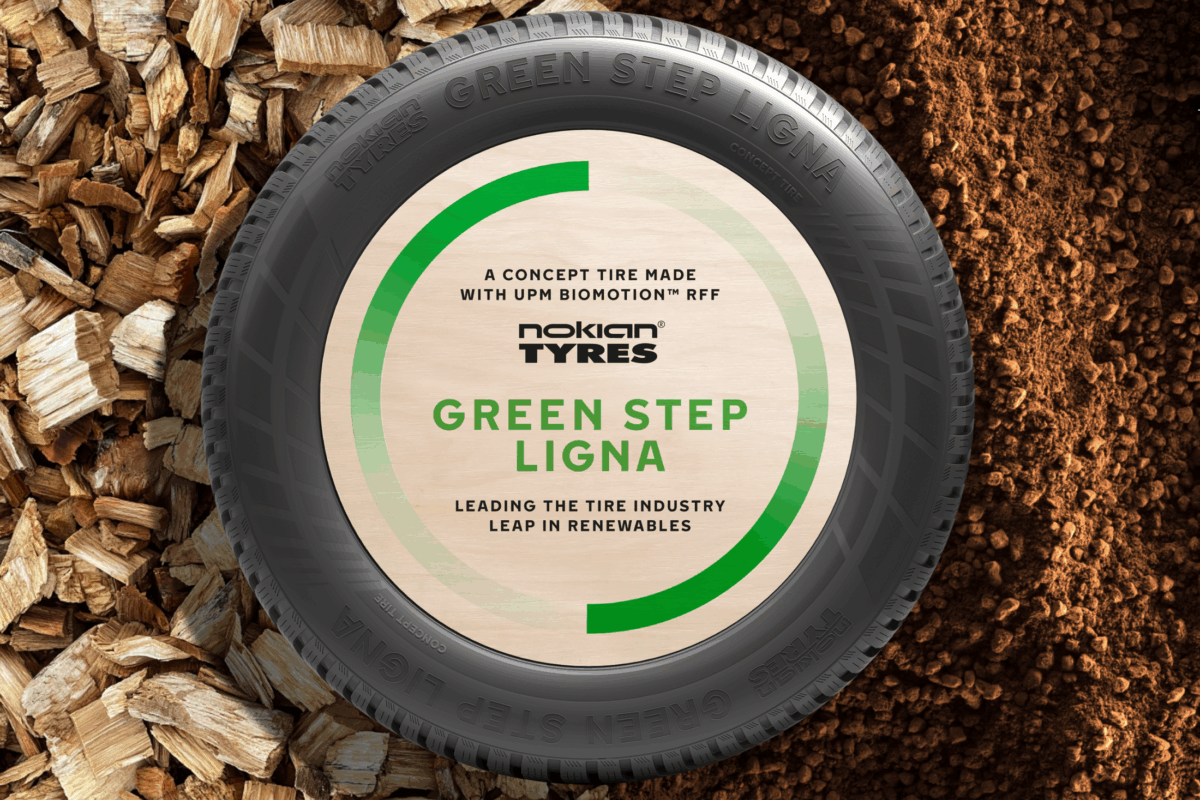
The Nokian Tyres Green Step Ligna concept tyre, developed through a collaboration between Nokian Tyres and UPM, was named the winner of the 2025 New Wood competition. Experts say this innovation has the potential to transform the entire automotive industry.
“Sometimes the most powerful innovations don’t alter the product itself, but the materials behind it—transforming it into something truly sustainable,” commented Pauli Aalto-Setälä, Member of Parliament, non-fiction author, and jury member of the New Wood 2025 competition.
Fillers make up about a third of the mass of tyres and have a decisive impact on their durability and performance. In the sidewall of the Nokian Tyres Green Step Ligna concept tyre, fossil raw materials have been replaced with lignin-based UPM BioMotion™ filler, which is produced at UPM’s biorefinery in Leuna, Germany. Lignin is a natural compound found in wood and available as a by-product of pulp production.
“UPM’s BioMotion™ Renewable Functional Fillers (RFF) are among several CO2-negative solutions set to be produced at UPM’s Leuna facility. They represent a completely new class of renewable materials that can replace highly CO2-intensive carbon black and precipitated silica in rubber applications,” says Petri Hyyryläinen, Strategy Director at UPM’s Biorefining unit.
From prototype to pollution fighters
UPM is investing €1,335 million to build the world’s first industrial-scale biorefinery in Leuna, Germany.
“The biorefinery will convert sustainably produced, certified hardwood into next-generation biochemicals, enabling an important transition from fossil-based materials to renewable materials across a wide range of industries,” continues Petri Hyyryläinen from UPM.
Although still a concept, the Nokian Tyres Green Step Ligna has the potential to significantly transform the tyre industry, according to the jury of the New Wood competition.
The innovation demonstrates how traditional fossil-based materials can be replaced with renewable, environmentally friendly alternatives in critical industrial applications. Fossil-based carbon black has long been the standard in tyre manufacturing. Replacing it with wood-based lignin reduces dependence on oil-based raw materials and lowers the carbon footprint of production.
As a committed environmentalist, Member of Parliament Pauli Aalto-Setälä highlighted that car tyres have long been a major source of microplastics. According to the United Nations Environment Programme (UNEP), tyre wear is the second-largest contributor to microplastic pollution in the oceans, responsible for up to 28% of the total load.
“That’s why this innovation is an important step towards a cleaner environment,” Aalto-Setälä stated.
“As a supporter of sustainable growth, I also see this as a significant export opportunity if all fossil-based fillers in tyres could be replaced with lignin in the future.”
A concrete step towards more sustainable transport
“With the concept tyre, we demonstrate the usability of the groundbreaking new raw material in tyres. Our concept tyre marks a leap towards the use of renewable materials not only for us, but the whole tyre industry. By prototyping this renewable material in our tyres, we aim to set new standards for environmental responsibility,” says Teemu Soini, Head of Innovation and Development at Nokian Tyres.
“The impact of UPM’s renewable functional (RFF) fillers is not limited to replacing fossil raw materials, but also has the potential to improve tyre properties, such as reducing rolling resistance. This makes the raw material even more attractive for large-scale use in the tyre industry,” Soini continues.
The jury of the New Wood competition praised the fact that the Nokian Tyres Green Step Ligna tyre represents a concrete step towards more sustainable transport and the materials industry. The innovation can serve as an example for other players looking for ways to combine performance and ecology.
“The lignin-based tyre material is an excellent example of how industrial side streams can be utilised in a truly impactful way by replacing fossil raw materials and at the same time strengthening the competitiveness of sustainable development,” says Markus Joutsela, Senior University Lecturer at Aalto University, who served on the jury.
“The collaboration between UPM and Nokian Tyres shows that responsible innovation happens when research, technology, and industrial scale come together,” Joutsela continues.
Wood challenges fossil fuels also in construction and packaging
The New Wood competition, now held for the sixth time, has established itself as a showcase for the Finnish bioeconomy. This year’s final focused particularly on the utilisation of industrial side streams – at the heart of the circular economy.
“The New Wood competition highlighted the utilisation of industrial side streams in particular. The lignin-based tyre material that won the competition and the wood fibre insulation that came in second are excellent examples of this,” says Martta Fredrikson, chair of the New Wood competition jury and CEO of the Finnish Forest Foundation.
Fiberwood Ltd., which came second in the competition, develops carbon-binding building insulation and acoustic panels from wood fibres and industrial side streams.
The built environment accounts for around 42 per cent of global carbon dioxide emissions, some of which are generated by the manufacture of rock wool and glass wool. Fiberwood utilises wood and natural fibre side streams from the forest industry to produce building insulation, acoustic panels, and packaging materials that replace mineral and plastic-based solutions. The company’s materials bind carbon and are recyclable or can be used for soil improvement.
Wood fibre innovations can increase the added value of the forest industry and the price per kilogram of exports up to threefold, while reducing the use of raw materials and alleviating challenges related to the availability of wood.
“The use of wood-based materials in construction products is an excellent example of how Finnish innovation can accelerate the sustainable development of he entire construction industry,” says Mari Pantsar, entrepreneur, docent, and one of the New Wood competition’s nine-member jury.
Third place in the competition went to the Films for Future (F3) project by LUT University and VTT Technical Research Centre of Finland, which is developing a cellulose-based coating to replace plastic coatings in cardboard packaging.
The bio-based coating facilitates recycling and supports the transition to fossil-free packaging based on renewable natural resources. The project involves a broad network of companies, and its goal is to strengthen international cooperation in the field and attract investment to Finland.
“We really need these new products as we move away from the fossil economy. Both large players and small entrepreneurs are creating new solutions – and this is also reflected in the award-winning products in the New Wood competition,” says Fredrikson, chair of the competition jury.
The ecological closure solution (Creamill & Grano) that made it to the finals of the New Wood competition was awarded an honorary mention by the jury.
“The wood pulp-based closure solution provides an alternative for various everyday needs, such as food storage. A true everyday hero!” says the jury chair.
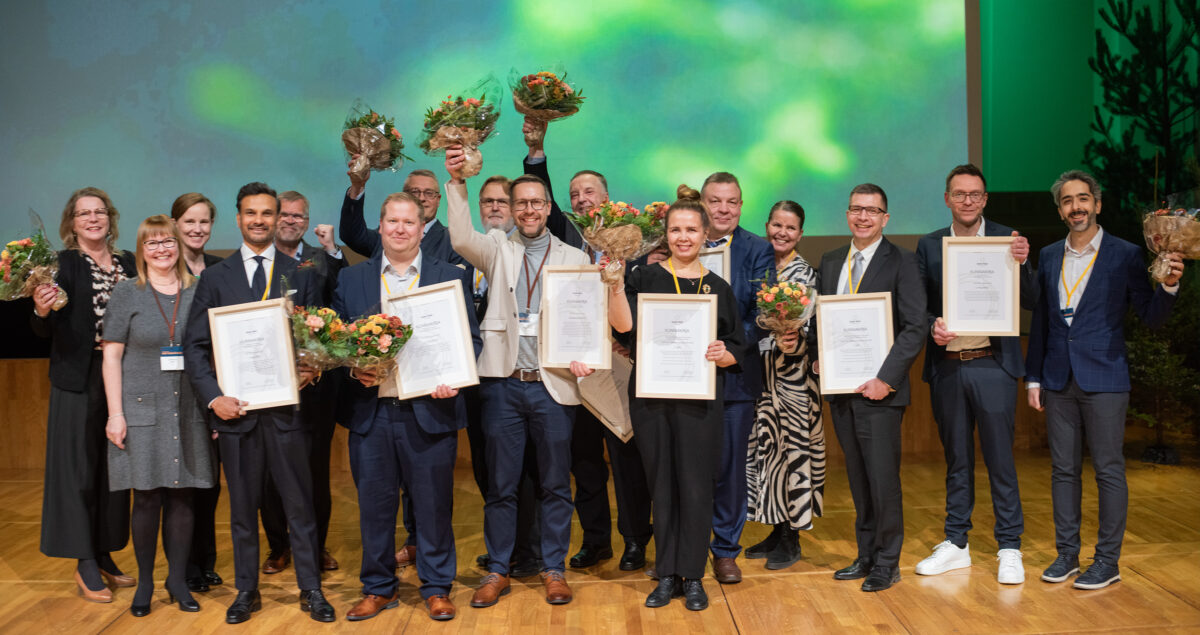
The winners of the New Tree competition were announced at the national Forest Days event on October 22, 2025, at the Finlandia Hall in Helsinki. The winner of the public vote was simultaneously revealed, having received a record number of over 1,800 votes. The winner of the public vote was a wood fibre-based bag developed by Tampere University of Applied Sciences (TAMK) and Natural Indigo Finland, with a print colour made from 100% waste coffee.
Forest.fi and New Wood are initiatives of the Finnish Forest Association.