Study: Forest logging restrictions do not benefit the global climate – they cost the EU a fortune
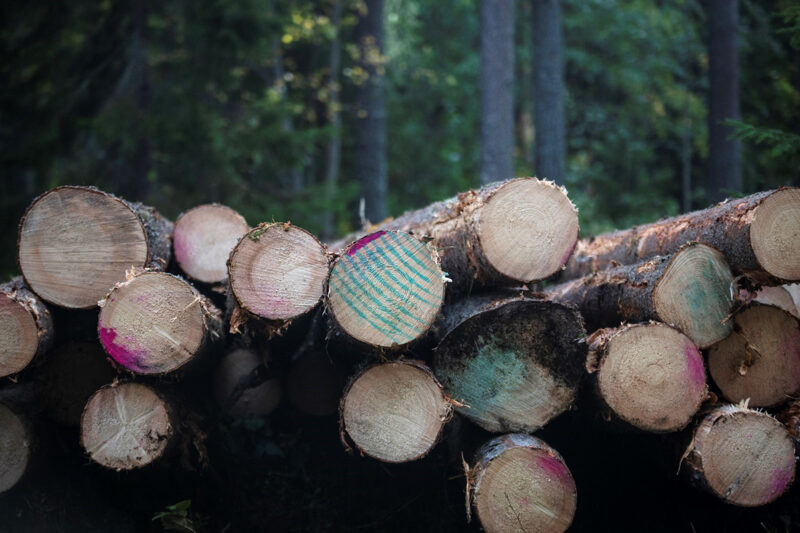
Restricting logging in the EU would cost a fortune, but the resulting benefit to the climate would be virtually nonexistent, Professor Maarit Kallio tells Audiomedia.
Implementing the EU’s carbon sink targets and biodiversity strategy for land use and forestry would cause a massive outflow of logging from the EU to other countries, Audiomedia writes.
“In practice, this would mean a massive transfer of income from EU countries to elsewhere, but almost no climate benefit compared to the costs,” says Maarit Kallio, professor of forest economics and policy at the Norwegian University of Life Sciences (NMBU), to Audiomedia.
According to Kallio, the EU’s LULUCF (Regulation on Land Use, Land‑Use Change and Forestry) sector climate and biodiversity policies, if implemented, would have a massive impact on European forestry.
“The targets are ambitious. However, implementing them is proving to be significantly more difficult than is often implied in political discourse. Nor have the global knock-on effects of the targets been assessed.”
Forest News reported as early as December 2024 on the preliminary results of the research project. Even then, it was observed that reducing logging in the EU would increase logging elsewhere in the world and cost the EU dearly.
“Achieving the LULUFC targets would multiply the risk of biodiversity loss elsewhere in the world,” Kallio told at the time on Forest News.
Forest carbon sinks must be expanded rapidly
As wood raw material production declines in the EU, processing, export revenues, investments and employment are expected to contract as well. The study forecasts a substantial transfer of income from the EU to non‑EU countries as production shifts elsewhere.
According to the analysis, the marginal cost of achieving emission reductions in this scenario could rise to more than 700 euros per tonne of carbon dioxide.
“By comparison, the price of a ton of carbon dioxide in the EU Emissions Trading System has been a fraction of this in recent years. If the same emission reductions can be achieved through other measures at a significantly lower cost, it raises questions about the cost-effectiveness of the policy,” Kallio notes in an interview with Audiomedia.
The European Union’s LULUCF sets strict carbon sink targets for member states for the years 2026–2030. According to Kallio, in practice, this target means that forest carbon sinks must be increased rapidly.
“According to a recent modeling study, achieving the LULUCF targets requires an immediate and sharp reduction in commercial timber harvesting volumes in the EU.”

Increasing carbon sinks in Europe alone will not help the climate
The magnitude of the reduction in logging volumes would be approximately 113–117 million cubic meters in 2030–2035 compared to market-driven trends. According to Kallio, this is not a matter of marginal fine-tuning, but a historic cut on the scale of forestry.
“If the policy leads to logging and revenues shifting outside Europe without significant global climate benefits, it is justified to ask whether the direction is correct. The responsibility for achieving the targets and for any potential consequences lies with the member states.”
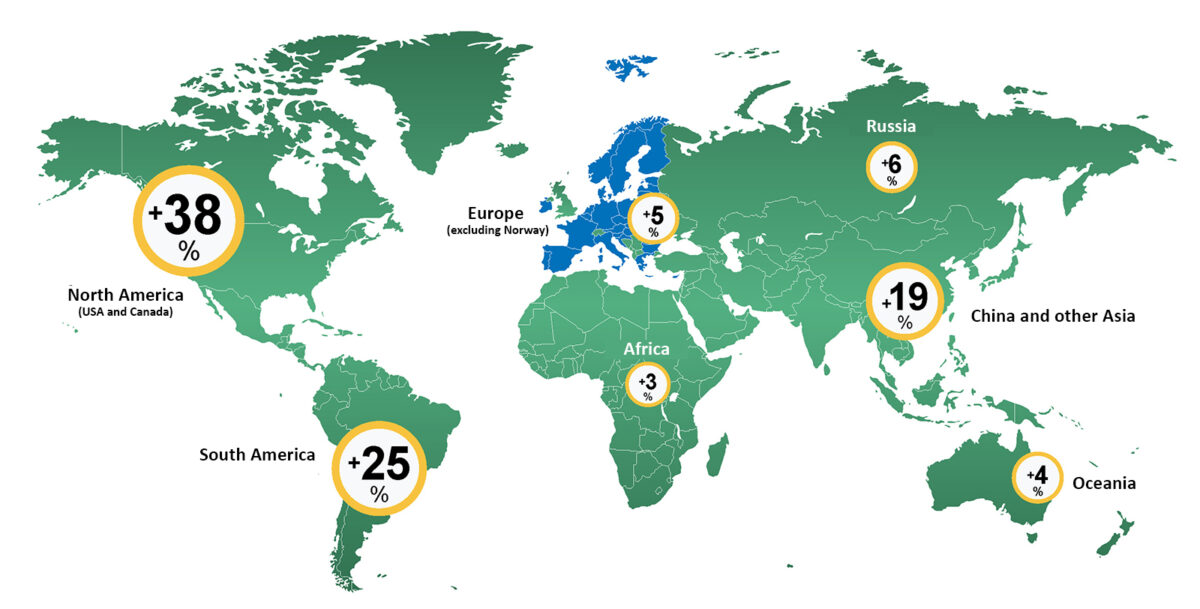
According to the study’s modeling results, about two-thirds of the EU’s logging reductions would be offset by increased logging elsewhere in the world. It won’t help the climate, even if the forest carbon sink were to grow in the EU.
”A significant portion of the logging not carried out in Europe would take place in North America, Brazil, Russia, Indonesia, Chile, and other major forest regions. From a climate policy perspective, this is a key problem. If logging simply shifts geographically, global emissions will not decrease significantly.”
If the use of wood decreases, it may increase the use of fossil or non-renewable materials.
“The climate benefit of wood does not come solely from the carbon sequestered in forests, but also from the fact that wood replaces concrete, steel, and fossil fuels,” Kallio tells Audiomedia.