Five things to know about mixed forests
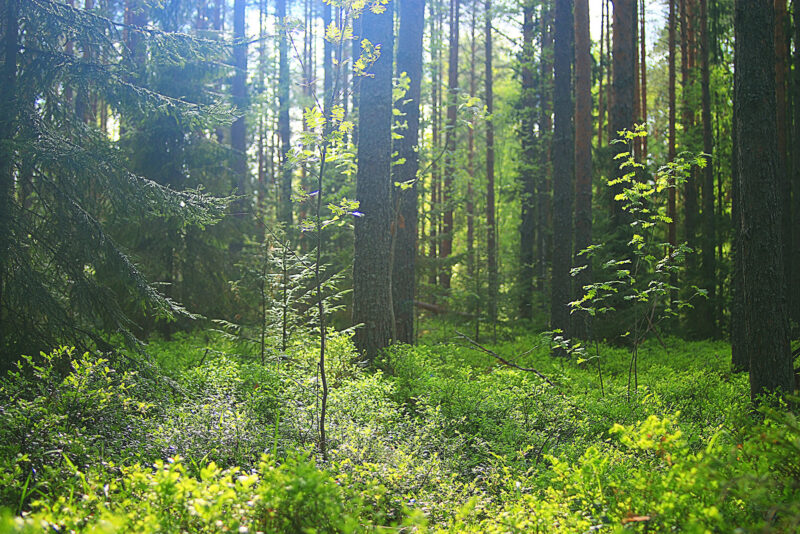
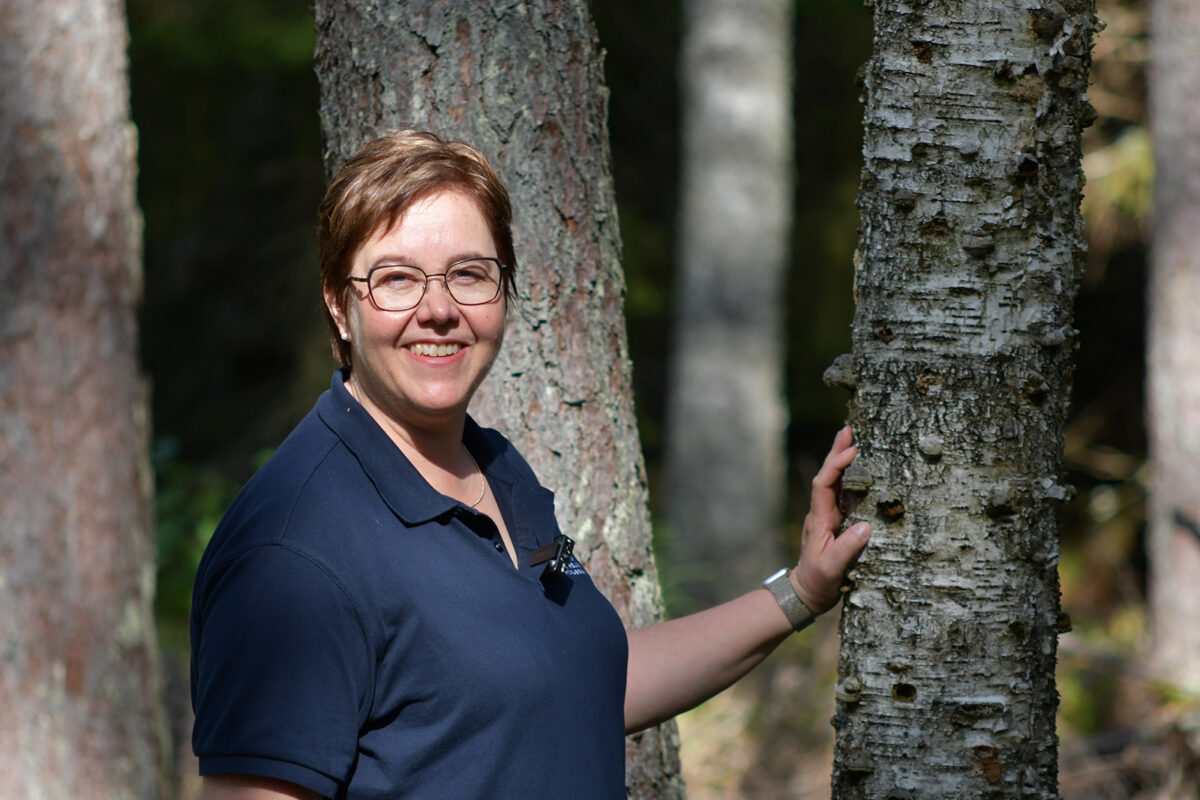
Mixed forests improve forest biodiversity and resilience amidst climate change. Saija Huuskonen, Development Manager at Metsähallitus, responds to five questions on forests of the future.
1. What counts as a mixed forest?
In Finland, a mixed forest refers to a forest where more than 25 percent of the area covered by trees – what is called the basal area – consists of other than the main tree species. In other words, the forest contains a minimum of two tree species, and none of them constitutes more than 75 percent of the tree stock.
The definition does, however, depend on the country, which make international comparisons difficult. In Sweden, for example, a forest is considered to be mixed when the main tree species only covers up to 65 percent of the basal area.
According to the National Forest Inventory, the share of mixed forests in Finland is about 31 percent, if any combination of two tree species is defined as a mixed forest. If, however, the forest is required to contain both conifers and broadleaves, the share of mixed forests is about 14 percent.
“Even if a forest does not meet the definition of a mixed forest, increasing the mix of species brings many benefits,” Saija Huuskonen says.
2. What benefits do mixed forests bring?
A mix of tree species creates more diverse environments for plants, insects, birds and fungi, and the undergrowth also becomes more varied. Litter from broadleaves in particular improves the soil structure and the circulation of nutrients.
Many pests, such as bark beetles, only favour particular tree species. Thanks to the broader spectrum of species in a mixed forest, damage never hits all trees but at least some of the stand will be spared. This also decreases the financial risk of the forest owner. Heterogeneous stands also work to slow down the spread of diseases such as that caused by the Heterobasidion fungus, which spreads via the root system.
A broader mix of species helps the forest to adapt to changing climate conditions and to maintain carbon sinks and storages. A diverse range of species also enhances the recreational and landscape values of the forest.
3. How do you grow and manage a mixed forest?
Previous recommendations in forest management advised that the share of broadleaves should be decreased while the stand was growing, which could lead to mature stands consisting almost exclusively of Norway spruce, for example. Today, the aim is to keep the stands mixed throughout the rotation period, which in practice means until the stand is harvested. Among other things, this reduces the risk of damage and improves biodiversity.
When growing a mixed forest, the initial stages are crucial. It is during the regeneration stage, the tending of young stands and the first thinning that decisions are made on which species will be allowed to grow and what sort of mix will be achieved. These decisions will have a long-term effect, because once the trees pass their young stage, few new ones will spring up during an even-aged forest management.
Maintaining a mixed forest requires active management. Among other things, it must be ensured that broadleaves have enough space to grow and that all crowns remain in good vigour throughout the rotation period.
4. Are mixed forests suitable on any site?
The objectives of Finland’s national forest strategy include, among others, the use of diverse forest management methods and the strengthening of biodiversity, both of which often mean the maintenance or increasing of mixed forests. In the same way, forest management recommendations have been updated so as to support the growing of mixed forests. In terms of practical forestry, this means that at the regeneration stage, mixed cultivation could be opted for, as well as the maintenance of mixed stands when tending young forests.
It is not practicable or even possible to create mixed stands everywhere. The forests we have today were created in line with management practices prevalent many decades ago, and increasing the share of mixed forests takes time. It is useful to create a broader mix of species on sites appropriate for growing several different species. There is less opportunity for this on sites with the poorest soils.
Huuskonen points out that increasing and maintaining mixed forests is more difficult in continuous-cover silviculture than it is in even-aged forest management.
”In continuous-cover silviculture and on richer soils, the stands tend to be overtaken by spruce, since the spruce can thrive even in shaded conditions, as opposed to broadleaves and pines that require plenty of light.”
5. What is the timber yield from mixed forests?
According to studies made in Central Europe, mixed forests consisting of certain species can give a better yield than single-species forests. In a mixed stand the species will grow more vigorously than they would on their own, because they make use of nutrients and water in different ways and at different depths.
Huuskonen says that studies made in Finland and Sweden have not found a similar increase in growth, and that research results from Central Europe cannot be directly applied in Finland. The results are affected by the range of species present, climate and forest management practices.
”We cannot necessarily claim that a mixed forest in Finland would increase carbon sequestration thanks to an increased yield, but it will work to ensure carbon sequestration under changing climate conditions, since the risk of damage is smaller.”