From wood to wardrobes and wheels – Aalto University Dean Kristiina Kruus: “We have a huge opportunity in cellulose-based innovation”
The EU’s updated bioeconomy strategy sets out a new roadmap for Europe’s forest-rich countries. It is more than a political guideline. It marks the beginning of an industrial transformation, with forest biomass and forest industry side streams at its core.
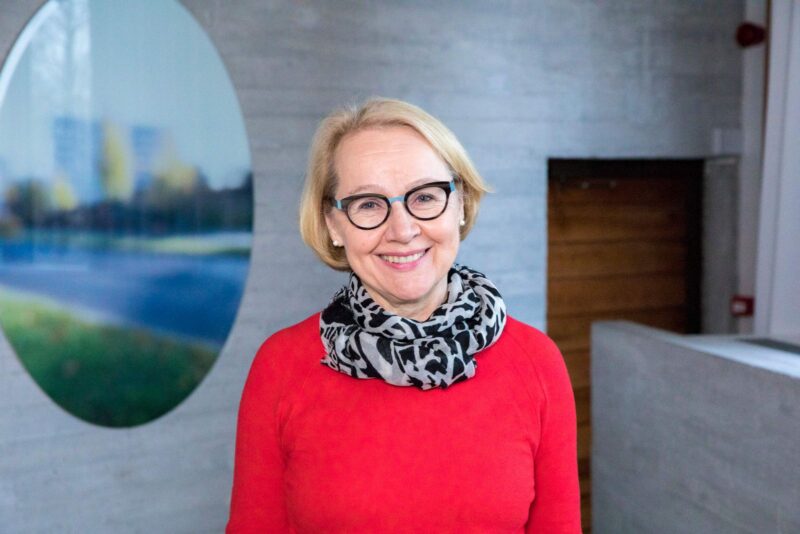
Kristiina Kruus, Dean of the School of Chemical Technology at Aalto University, sees this change as a turning point.
“For Finland, the most important thing about the new strategy is that the forest biomass-based bioeconomy is now clearly visible in the EU’s strategic guidelines,” says Kruus.
This strategic change at the EU level is exceptionally important for forest-rich nations, Kruus continues. Whereas in Central Europe the bioeconomy has traditionally been seen as an extension of agriculture, in the Nordics, the focus has largely always been on forests.
Forest biomass rose to the core of the EU strategy
Forests are exceptionally important to Finland. More than 70 per cent of the country’s land area is covered by forests, which form the basis of both the economy and culture. Forests provide renewable raw materials for industry, support employment, and are a key part of Finland’s bioeconomy.
“We have enormous forest bio resources. Per capita, Finland has the largest forest bio resources in Europe, which puts us in a very special position,” says Kruus.
The strong relationship between Finns and forests is also reflected in public policy: the sustainable use of natural resources is a natural part of Finnish society and decision-making.
According to Kruus, the EU’s new bioeconomy strategy, published in November 2025, will bring forest biomass to the fore more prominently, to the benefit of forest-rich nations.
“Sweden has a similar starting point, but in Norway, the oil and gas industry has long driven economic development, and building a wood-based bioeconomy has not been as urgent a goal,” Kruus explains.
Pulp is now used to make more than just paper
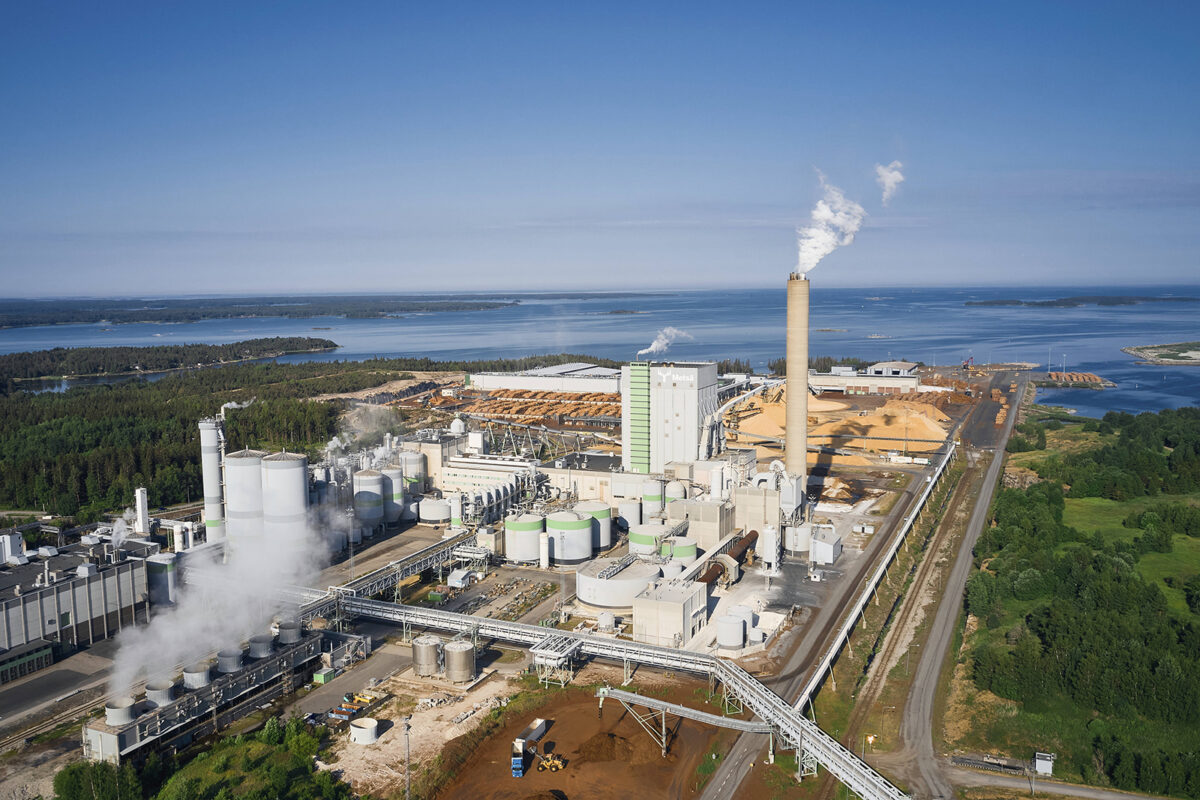
Finland’s forest industry exports still rely on pulp, but its use has changed radically. With the collapse of demand for paper in the mid-2000s, pulp production has been directed towards new products, especially packaging.
“Nowadays, pulp can and should be used for much more than just printing paper,” Kruus sums up.
The fastest-growing area is fibre-based packaging materials.
The growth of online shopping has increased the need for transport packaging, and the EU Plastic Waste Directive and restrictions on single-use plastics have boosted demand for fibre-based alternatives. Recyclable cardboard, fibre-based food packaging, and plastic-replacement solutions have become increasingly common. Fast-food packaging, disposable tableware, and even drinking straws are increasingly made from recyclable wood fibre.
Packaging is not a simple product, Kruus explains.
“The material must be resistant to grease, moisture, and gases. It must protect food, preserve freshness, and be recyclable. Combining these properties requires a lot of research and product development,” Kruus says.
In recent years, Finland has invested heavily in this area of research.
“Finland has a strong expertise base in the packaging industry and plays a significant role in the development of fibre-based packaging solutions, even though competition in the industry is fierce internationally,” says Kruus.

Sustainability does not happen by itself
Fibre-based packaging, which uses wood as its raw material, plays an important role in the transition from oil-based plastics. The EU wants to shift the industry towards bio-based packaging materials, such as fibre-based packaging, bio-based plastics, and chemicals. This policy directly supports the development of Finland’s forest and packaging industries.
According to Marjukka Kujanpää, Sustainability Manager for Stora Enso’s food and beverage packaging business, the choice of packaging materials can reduce the carbon footprint of packaging by more than 60 per cent.
“In some comparisons, emissions can be reduced by as much as 67–80 per cent when considering the impact of the entire life cycle of the packaging,” Kujanpää explains in an article on Forest News.
Kruus points out, however, that being bio-based does not necessarily make a product sustainable.
“Solutions must be economically viable, environmentally sustainable, and socially acceptable.”
The entire product life cycle is decisive: raw materials, manufacturing, use, and recycling. That is why the utilisation of side streams is also essential.
Biogenic carbon dioxide – a new raw material for the hydrogen economy
According to Kruus, the key to a forest-based bioeconomy is the efficient utilisation of side streams from the forest industry.
“All raw materials are limited. Even renewable biomass is limited. That is why all fractions must be utilised, and incineration should be avoided as much as possible,” he says.
One rapidly growing area of the bioeconomy is the development of renewable biofuels. In Finland, biofuel development is already well advanced, and Neste has become an international pioneer in the field. The company’s renewable fuels are derived from waste and residual raw materials, reducing dependence on virgin materials.
At this stage, a largely untapped opportunity relates to biogenic carbon dioxide (CO₂) produced by pulp mills.
Professor Kristian Melin of LUT University estimates that as the hydrogen economy develops, the value of biogenic CO₂ could rise rapidly. Capturing it could both promote climate goals and generate new business and exports for forest companies. In the future, biogenic carbon dioxide could also serve as a raw material for aviation fuel, he told Forest News.
Kruus notes that the aviation sector is difficult to electrify, so bio-based solutions may play a significant role as climate targets in the industry become stricter.
“Biogenic carbon dioxide is not just an emission, but a renewable raw material that can connect the forest industry and the hydrogen economy. As the hydrogen economy develops, this byproduct may also become a key part of the green transition in the aviation industry.”
Huge potential in textile fibers
In the interview, Kruus also highlights the textile industry, which is among the world’s most polluting. The industry consumes huge amounts of water, chemicals, and energy, and synthetic fibres such as polyester, which is made from oil, contribute significantly to microplastic emissions into waterways and oceans. According to estimates, up to 35 per cent of the world’s microplastics come from textiles.
According to the WWF, producing a single cotton shirt can require up to 2,700 litres of water—an amount equivalent to nearly 3.5 years of drinking water for one person. Studies show that the clothing and textile industry accounts for up to 10 per cent of global climate emissions, making the development of new biodegradable and recyclable materials particularly important.
Kruus believes that the wood-based textile fibre industry is set for strong growth. However, the development paths are long and require long-term research, piloting, and industrial scaling.
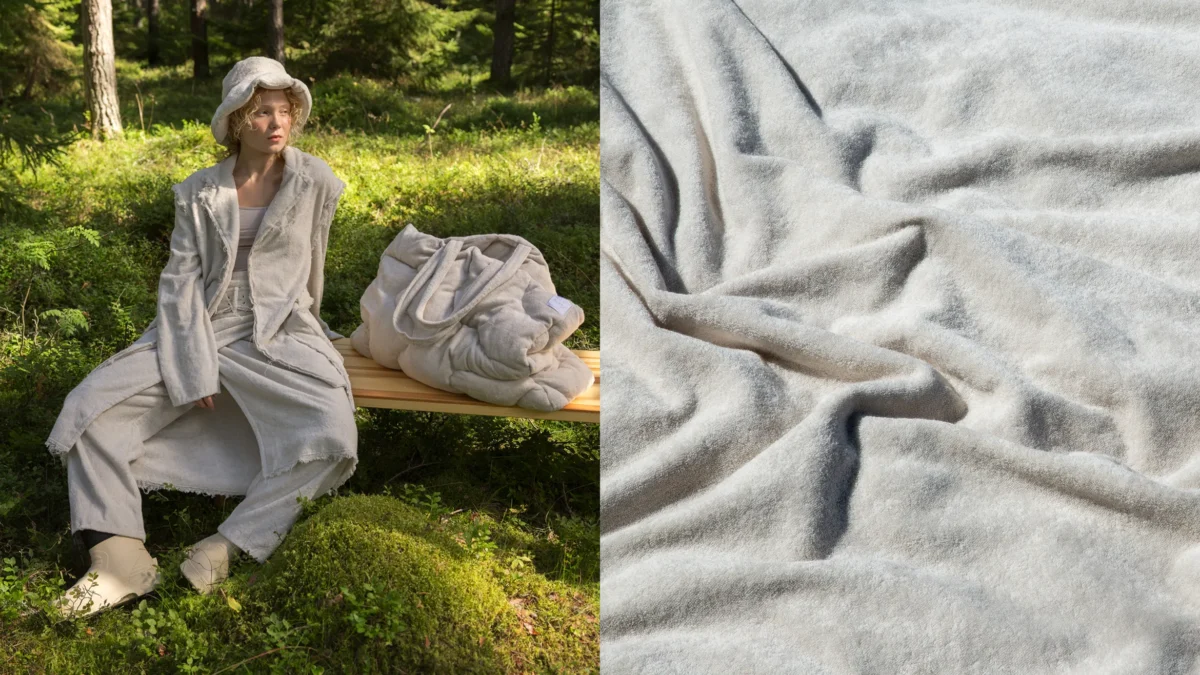
Finland is at the forefront of fibre innovation
Finland is already conducting internationally significant research and development work on wood-based textile fibres. For example, Spinnova, which originated at the Technical Research Centre of Finland (VTT), has developed a method that converts cellulose into textile fibres without the use of solvents, thereby reducing the need for chemicals and lowering the production’s environmental footprint.
Ioncell, a technology developed by Aalto University and the University of Helsinki, produces high-quality, recyclable, and biodegradable fibre from wood and textile waste.
Meanwhile, Metsä Group has been developing Kuura textile fibre at its pilot plant in Äänekoski since 2020. The process utilises modern dissolving pulp technology and aims to minimise chemical and energy consumption. The company is now planning a large textile fibre factory in Kemi, which would create an estimated 250 new jobs. The factory would produce approximately 100,000 tons of Kuura fibre annually, equivalent to up to 170 million T-shirts, Finland’s Yle reports.
Wood construction can bind carbon for centuries
When discussing the bioeconomy, wood construction has emerged as a central issue.
“Carbon stored in buildings can remain out of the atmosphere for up to hundreds of years. From a climate perspective, that is highly significant,” says Kruus.
Yet in international comparison, Finland has not positioned itself at the forefront of climate-conscious construction. Several countries — including the Netherlands, France and the other Nordic nations — introduced carbon footprint regulations for buildings earlier than Finland. Denmark has gone further still, setting emission limits that are considerably stricter.
According to Matti Kuittinen, Professor of Sustainable Construction at Aalto University, expanding wood construction would rank among Finland’s most consequential climate measures, comparable in impact to major emission reductions in the transport or agriculture sectors.
In an interview with Audiomedia, Kuittinen notes that Finland, in particular, lags behind in the construction of wooden apartment buildings. They account for only a few per cent of new apartment buildings domestically, whereas in many European countries the share stands at 10–20 per cent. In Sweden, the figure is even higher.

Education and research are the driving forces behind the bioeconomy
Kruus also highlights the role of education and research in promoting the bioeconomy. The bioeconomy cannot exist without top experts.
“All forecasts indicate that there will be a need for experts in this field in the future”, she says.
In Finland, research and innovation capabilities are being strengthened by the national 1,000 New Doctors pilot project, which will see 1,000 new doctoral researchers hired by universities in 2024–2025.
“This is one of the largest investments in education in Finland’s history, and its goal is to ensure the availability of skilled professionals in various fields, including the bioeconomy and green transition,” says Kruus.
Bioeconomy is not just the playing field of large forest industry companies. For example, new cosmetics and materials startups have emerged around lignin, a wood-derived material, and new innovations are constantly being developed, says Kruus.
“The opportunities in the industry are enormous. But they require a long-term approach, research, and investment.”