How bark beetles signal a warming risk for nordic spruce forests
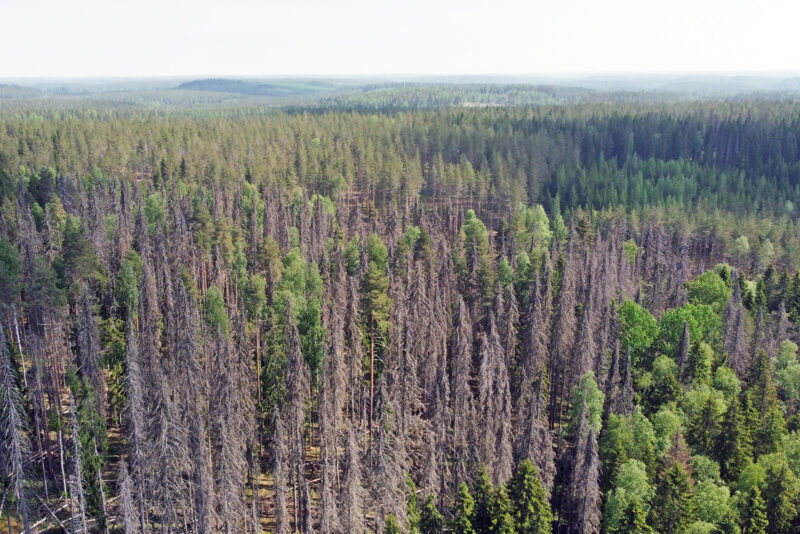
A study examining bark beetle impacts in southern Finland sheds light on how climate change is increasing risks in spruce forests and shaping future forest resilience.
When Colombian forest researcher John Pulgarín Díaz arrived in Finland in 2021 to begin his doctoral studies, he brought with him nearly two decades of experience studying one of forestry’s smallest yet most influential actors: bark beetles.
Although his early work took place in the diverse tropical forests of Colombia, his research in Finland at the University of Eastern Finland now focuses on a very different ecosystem.
A tiny insect with a big impact
Pulgarín Díaz first became interested in bark beetles during his undergraduate studies in Colombia at the National University of Colombia. While bark beetles are present in tropical forests, they rarely cause large-scale damage there, he stresses.
“In Colombia, bark beetles are not considered a major forest problem,” he explains.
“The high diversity of tree species makes it more difficult for outbreaks to spread across large areas.”
Finland presents a different picture. Large areas of production forest are dominated by Norway spruce (Picea abies), creating conditions where disturbances and environmental stress can rapidly increase vulnerability to bark beetle attacks.
The European spruce bark beetle (Ips typographus) is regarded as the most destructive insect pest affecting Norway spruce in Europe. While Finland has so far avoided the devastating outbreaks experienced in countries such as Germany, Austria and the Czech Republic, signs of increasing risk are becoming evident, Pulgarín Díaz notes.
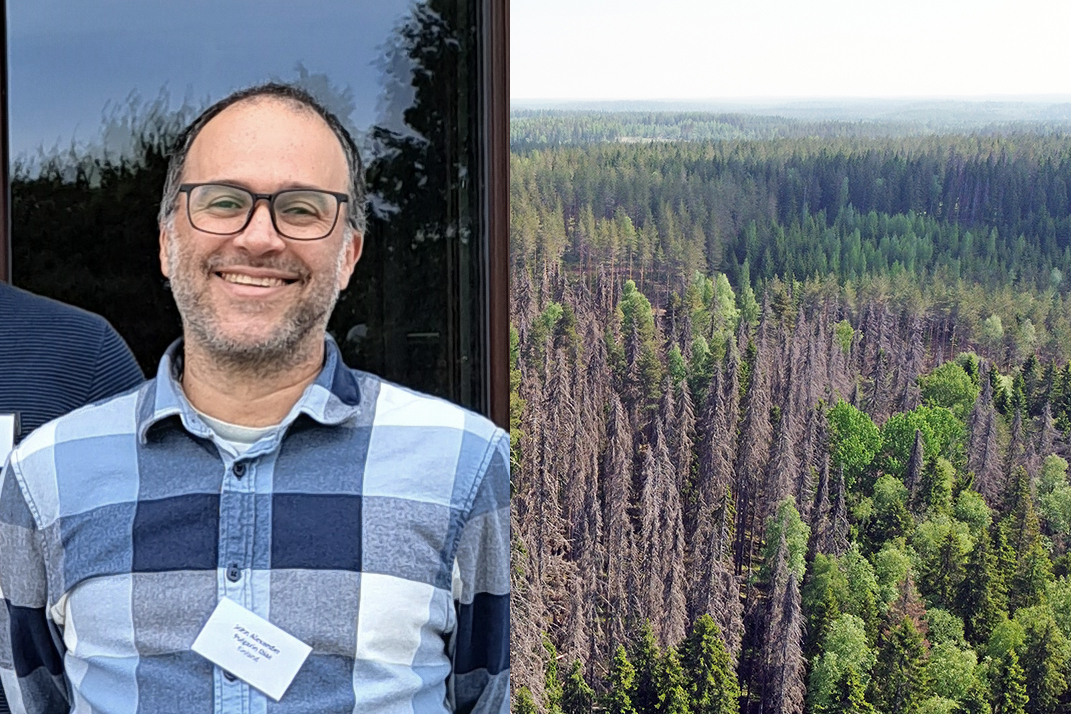
Climate change is shifting the balance
Pulgarín Díaz’s doctoral research examined bark beetle damage across southern Finland between 2012 and 2020. The results show that climate change is creating increasingly favorable conditions for bark beetle populations.
Two factors are particularly important.
First, rising temperatures accelerate bark beetle development and reproduction, allowing populations to grow more rapidly. Second, drought weakens trees and reduces their natural defense mechanisms, making them more susceptible to attack.
“When higher temperatures and drought occur together, they create ideal conditions for bark beetles,” says Pulgarín Díaz.
The research found that prolonged periods of hot weather significantly increase the probability of bark beetle damage. As heatwaves and droughts become more frequent under climate change, the risks are expected to rise further.
Emerging hotspots across Southern Finland
One of the most significant findings from the study is the emergence of bark beetle damage hotspots.
Bark beetle damage across Finland does not yet show strong nationwide clustering. However, certain areas have become persistent centers of infestation. Initially concentrated in southeastern Finland, Pulgarín Díaz says, these hotspots have gradually shifted toward southwestern regions, suggesting that the spatial pattern of risk is evolving.
To better understand why certain areas become bark beetle hotspots, Pulgarín Díaz analyzed salvage logging data from across southern Finland.
“The results revealed that older forest stands are particularly vulnerable to infestation, reflecting the preference of European spruce bark beetles for mature Norway spruce forests.”
The study also found that proximity to previously damaged stands is one of the strongest predictors of new infestations, highlighting how outbreaks tend to spread through the landscape rather than occur randomly.
“Damage tends to cluster,” Pulgarín Díaz explains. “Areas near previous infestations are much more likely to experience new outbreaks.”
In addition, the stage of forest development influences whether damage hotspots persist over time.
“This suggests that both stand age and forest structure play an important role in determining long-term risk.”
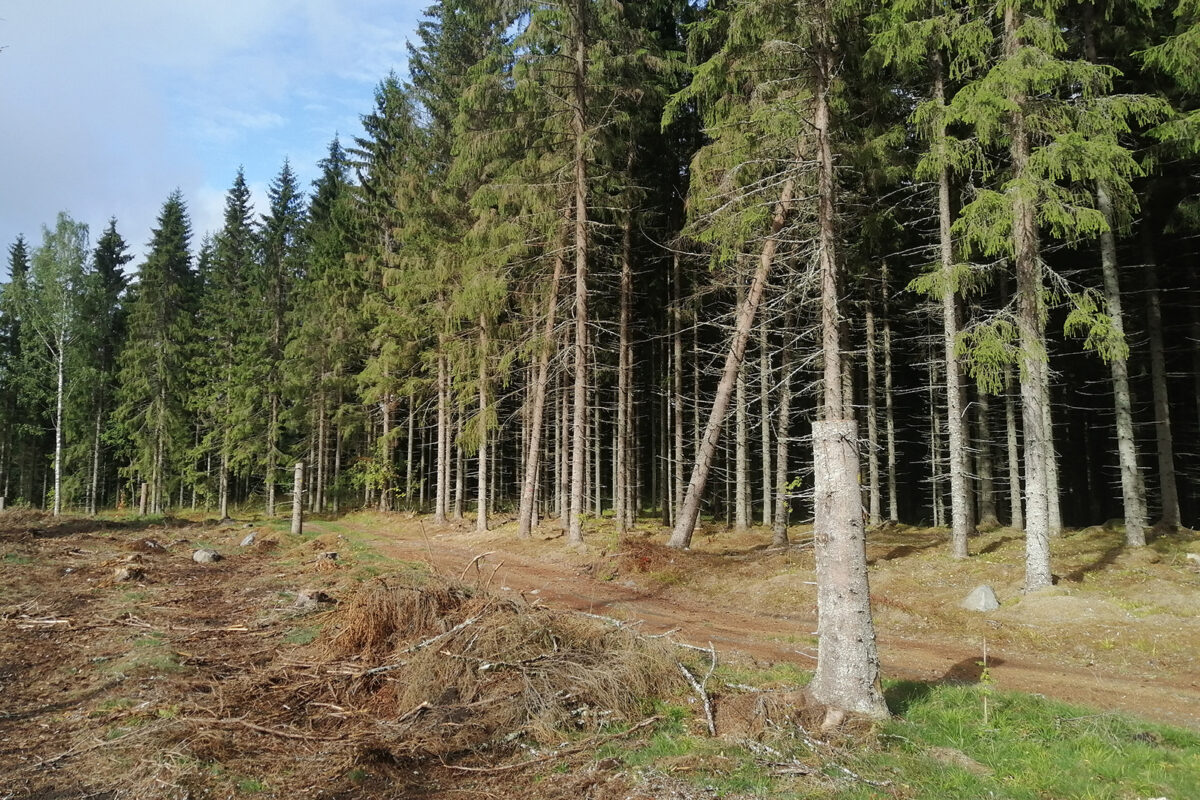
Disturbance creates opportunity
The research also confirms the important role of forest disturbances in triggering bark beetle infestations.
“Clear-cuts, partial harvesting operations and windthrow events can all increase vulnerability, particularly in spruce-dominated forests. These disturbances create exposed forest edges and place additional stress on remaining trees,” Pulgarín Díaz explains.
According to him, “hard edges” in a forest can weaken forest structure and create favorable conditions for bark beetles to establish and expand.
Such findings present an important challenge for forest management. While removing damaged trees remains essential for controlling beetle populations, some management actions may inadvertently increase risks in surrounding stands.
Could continuous cover forestry reduce risk?
The study highlights an ongoing question about the potential role of continuous cover forestry in improving forest resilience.
Unlike conventional forest management practices such as clear-cutting, continuous cover forestry maintains a permanent forest canopy and avoids large-scale stand-replacing disturbances – such as sharp forest edges as Pulgarín Díaz notes. This may, in theory, reduce some of the habitat conditions that can contribute to bark beetle outbreaks, although the effect likely depends on local species and site conditions.
“In continuous cover forestry, large disturbances are avoided,” says Pulgarín Díaz. “As a result, one of the key drivers of bark beetle damage may also be reduced.”
However, he cautions that evidence from Finland remains limited. A lack of long-term comparative data means that definitive conclusions cannot yet be drawn about the effectiveness of continuous cover forestry in reducing bark beetle damage.
“Nevertheless, growing interest in alternative management approaches is likely to increase research efforts in the coming years,” Pulgarín Díaz continues.
Mapping future risk
A major contribution of the research is the development of spatial probability models capable of identifying areas most vulnerable to bark beetle damage.
Using nationwide forest data covering approximately 11.4 million hectares of production forest in southern Finland, the models combine information on forest structure, management history, landscape characteristics and climatic conditions.
The resulting risk maps can help forest owners, forest professionals and policymakers identify vulnerable stands before severe outbreaks occur.
Such tools are becoming increasingly important as climate change alters the conditions under which forests grow and disturbances develop.
Preparing Finland’s forests for the future
The challenge facing forest managers today is balancing economic considerations with long-term ecological resilience. While clear-cutting may sometimes appear financially attractive, large disturbances can increase vulnerability to pests and climate-related stress in the neighborhood.
Pulgarín Díaz believes that adapting forestry practices to a changing climate will require a broader landscape perspective, combining effective monitoring, proactive planning and increased forest diversity.
As climate change continues to reshape northern ecosystems, bark beetles are emerging as more than just a forest pest. They are becoming an important indicator of forest health and resilience.
The lesson from this research, Pulgarin Diaz says, is clear: safeguarding Finland’s forests will require understanding not only the trees themselves, but also the complex ecological relationships that determine how forests respond to a warming world.
Forest owner’s guide to bark beetle risk
As climate change increases the likelihood of bark beetle outbreaks, proactive forest management is becoming increasingly important.
According to researcher John Alexander Pulgarín Díaz, regular monitoring is one of the most effective tools available to forest owners. He notes that stands should be checked carefully during warm and dry periods, when trees are under stress and less able to defend themselves against attack. Early detection is critical, as quickly identifying and removing infested trees can help prevent new hotspots from developing.
“Forests located near previous infestations deserve particular attention, since bark beetle damage often spreads outward from existing outbreak areas,” says Pulgarín Díaz.
Building resilience over the longer term requires a broader perspective. Research suggests that extensive spruce-dominated landscapes may become increasingly vulnerable as the climate warms. Increasing tree species diversity, maintaining varied forest structures and incorporating climate-related risks into forest planning can all help reduce future damage.
Management practices that minimise large disturbances may also strengthen forest resilience by limiting the conditions that favour bark beetle establishment and spread.
“Especially after dry springs and warm summers, it is essential to check the forests,” says Pulgarín Díaz.