Nordic design meets the requirements of the circular economy
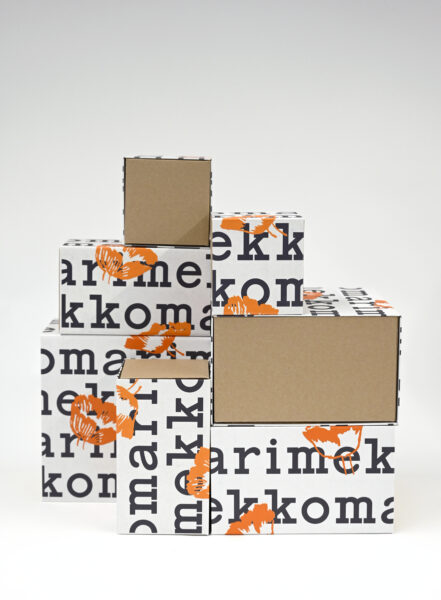
Sustainability is no longer just an added value in design, but has become a necessity. Stora Enso and Marimekko have collaborated to create a gift box that combines the requirements of the circular economy with design.
Traditional gift boxes are often short-lived: they protect the product during transport but easily end up as waste immediately after opening. Plastic, padding, and tape can also make recycling difficult. Both consumers and companies have begun to pay more attention to the environmental impact of packaging.
Marimekko and Stora Enso have examined gift packaging from this perspective in a joint project aimed at developing a wood-based packaging solution. The collaboration resulted in a series of gift boxes that combine Marimekko’s visual identity with Stora Enso’s fiber-based materials.
The packaging collection was unveiled in 2024 to mark the 60th anniversary of Marimekko’s famous Unikko pattern. The starting point was the idea that packaging can be more than just a temporary protective cover for a product.
The packaging is made of corrugated cardboard, the raw material for which is certified Nordic wood. The material is lightweight and recyclable, and the packaging is designed so that no separate padding or plastic is needed. For example, plates, mugs, and vases stay in place with folds without any extra materials, and the boxes can be assembled without tape.
Some of the packaging also has carrying handles, so it can be used like a shopping bag. The idea is to make the packaging easier to reuse instead of throwing it away immediately.
Visually, the packaging is based on Marimekko’s Unikko pattern. Four boxes of different sizes form a unified series designed to function as both transport and gift packaging.
The collaboration received recognition in 2025 when the project was awarded the Red Dot Design Award. The packaging series also won the ScanStar award the year before.
From Stora Enso’s perspective, the project is an example of the use of fiber-based materials in consumer packaging. The packaging is manufactured in Finland and elsewhere in Europe.
For Marimekko, the project is linked to the company’s long tradition of design. Founded in 1951, the company is known for its patterns, one of the most famous of which is Unikko, designed by Maija Isola in 1964.
The collaboration reflects a broader change in how packaging is viewed. It is no longer seen merely as protection during transport, but as part of the product’s life cycle and the circulation of materials.