Artificial intelligence reshapes private forestry – data brings accuracy and better returns
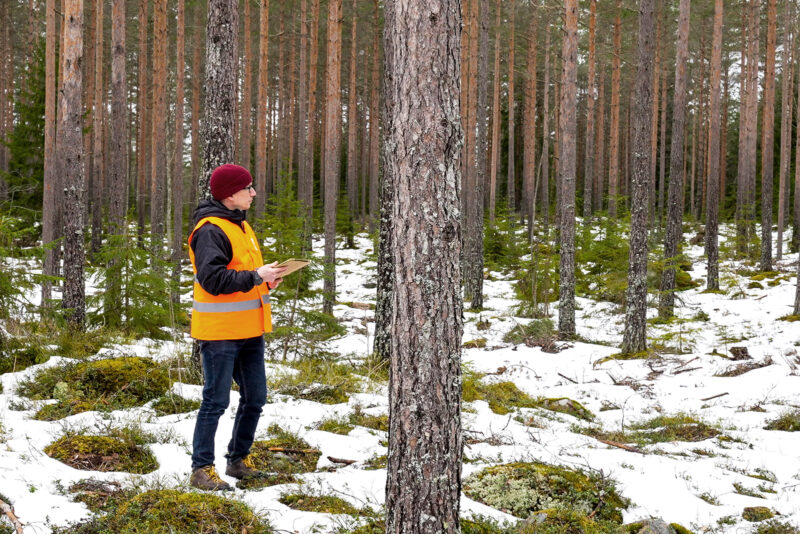
Artificial intelligence is already embedded in many parts of the forest sector, but its impact on private forest owners has so far remained modest.
According to experts, the most transformative applications – such as automated forest management recommendations – are only now approaching practical use. However, this will change rapidly.
Within the next five years, AI is expected to make decision‑making significantly more precise and strengthen the role of forest owners. Instead of relying solely on expert visits or periodic inventories, owners will be able to decide which stands to harvest or manage first based on continuously updated analyses. At the same time, forestry companies will increasingly rely on data and algorithms in everything from forest assessment to harvesting logistics and industrial maintenance.
“Artificial intelligence does not make forestry mechanical or automatic. On the contrary, it helps us account for the unique characteristics of each stand more accurately than before,” says Antti Kaartinen, Lead Expert in Stora Enso’s Precision Forestry project.
What does artificial intelligence actually do in forests?
AI in forestry covers a wide range of tools: advisory chatbots based on language models, remote‑sensing analytics, predictive models for forest planning, and stand‑level tree stock assessments. Their common strength is the ability to process vast datasets and turn them into actionable information.
“The role of AI is to support people, not replace them. It helps focus fieldwork, gather essential information and ensure that all relevant factors are considered. Final decisions are still based on human expertise,” Kaartinen notes.
AI helps detect and prevent insect damage
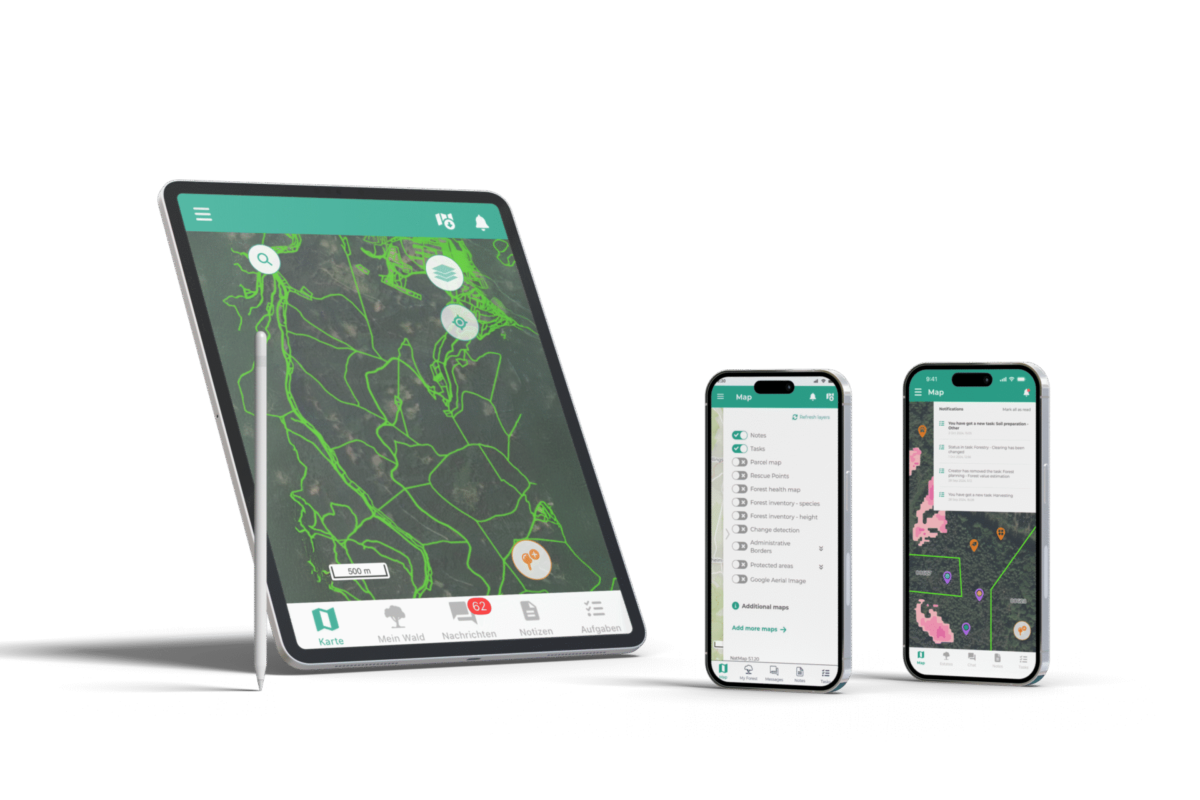
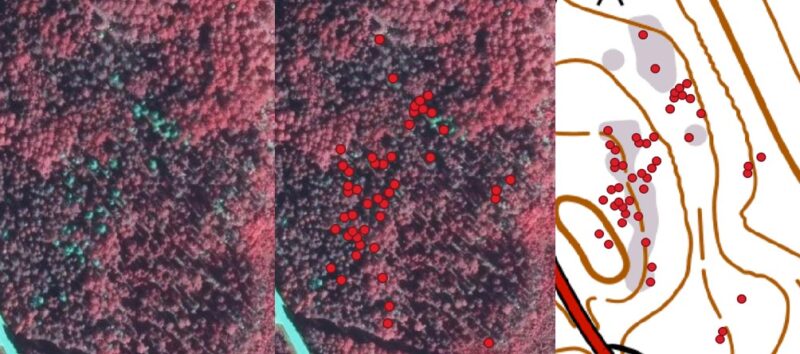
Climate change is increasing the risk of bark beetle outbreaks in Finland. AI applications now combine remote sensing, laser scanning and aerial imagery with existing forest inventory data, enabling early detection of stress signals in forest stands – often before visible damage appears.
“The better the initial data, the more timely and accurate the recommended actions will be. Thinning, regeneration and maintenance become more targeted, and in the long-term forest owners will see improved returns,” Kaartinen told Forest.fi
Stora Enso’s Precision Forestry project uses AI to identify insect damage and support proactive management.
“We are still in an observational phase, but we will increasingly be able to identify risk areas and predict damage,” Kaartinen says.
Metsä Group, together with Finnish company CollectiveCrunch, has developed an application that provides private forest owners with frequently updated maps of bark beetle damage. Updated several times each summer, the data helps detect outbreaks early and monitor their progression. The same tools also support assessments of storm damage.
AI assistants for forest owners are on the way
According to Kaartinen, forest owners will soon have access to AI‑based assistants or chatbot services offering round‑the‑clock guidance on forest management timing, costs and regulations.
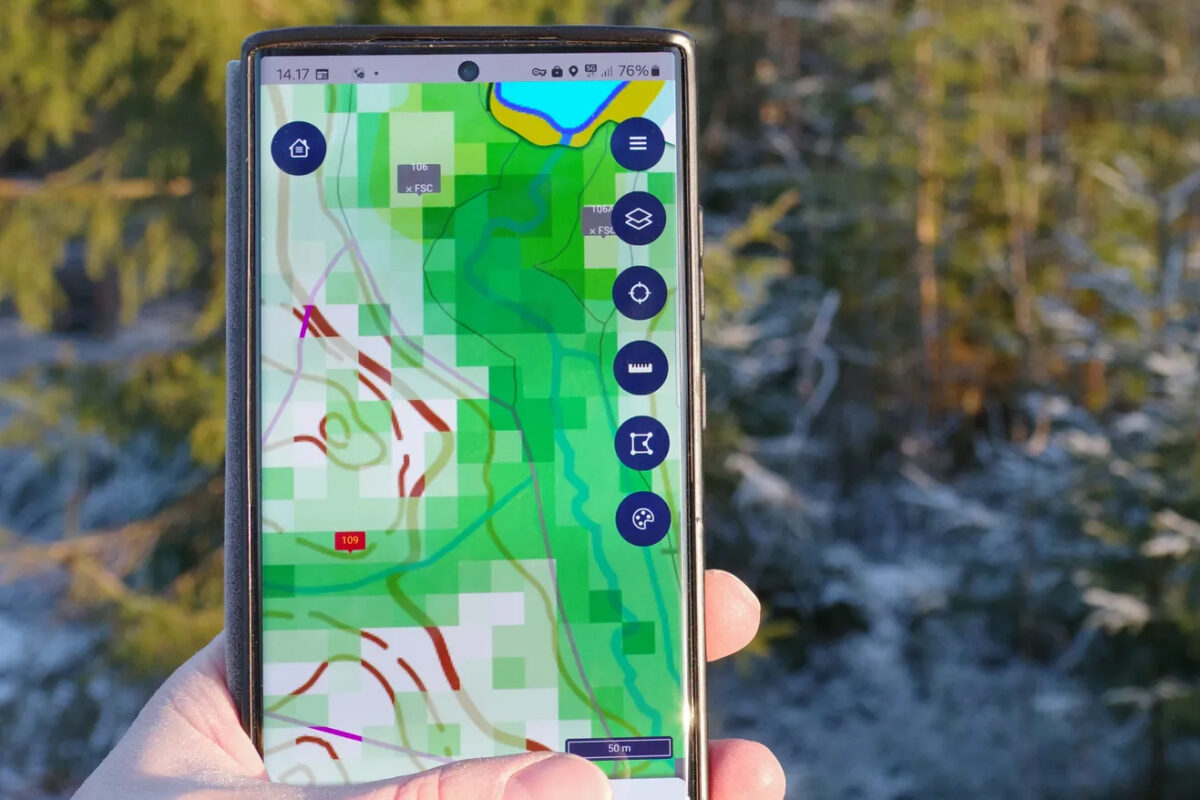
Owners can ask whether a particular stand should be thinned now, whether conservation requirements apply, or which stands require seedling stand management. In practice, a forest owner could select a plot on a map and ask the AI what to do next. The system will combine forest data, weather forecasts, cost estimates and legal requirements to generate a management recommendation.
Similar applications are already in use in Sweden. In Finland, they are expected to become available within the next couple of years.
“These tools do not replace experts, but they speed up advisory work and ensure more consistent decision‑making,” Kaartinen emphasizes.
Seedling stand management and risk forecasting
Remote sensing and AI detect dead trees, insect damage, storm and snow damage and other changes more effectively than field observations alone. The “hotspots” identified by AI guide experts directly to the right locations, saving time and enabling timely action.
AI is also being developed to support seedling stand management. These tools can estimate the difficulty and cost of management work without a site visit. In the future, forest owners may see clear cost estimates for each plot.
Regeneration planning, soil preparation, species selection and planting densities can also be refined with AI.
“The goal is to plant the right species in the right place. When trees grow in optimal conditions, forests are more resilient to pests and other damage,” Kaartinen says.
More accurate forest assessments and better economic forecasts
AI already helps companies update forest resource data more accurately than ever. This improves forecasts of timber volumes, harvesting opportunities and assortments, supporting financial planning and reducing surprises during harvesting.
In timber sales, AI‑based assessments reduce uncertainty for forest owners by providing clearer information about stand characteristics. However, Kaartinen stresses that final sales revenue will always be based on measured values.
Environmental benefits and smarter operations
AI can also help plan operations to minimize soil damage and avoid sensitive areas. More accurate monitoring of carbon sinks can improve transparency and strengthen public trust in forestry.
The use of AI is expanding beyond forest owner services. In a recent interview with TiVi magazine, UPM’s Chief Information Officer Turkka Keskinen noted that the company has multiple AI projects underway across its operations. Learning algorithms already support logistics and industrial maintenance: automatic license‑plate recognition speeds up transport flows, and sensor data enables predictive maintenance.
In the future, AI will play a growing role in operational optimization. UPM is already using AI to assess the timing of electricity production and consumption, and to support wood procurement by identifying suitable price levels and purchase windows. According to Keskinen, this development is long-term, and the most significant benefits will emerge gradually.
“Artificial intelligence brings precision, predictability, and individuality to forestry. It doesn’t change the fundamental principles of forest management, but it takes them to the next level. For the forest owner, this means better information, better decisions — and, in the long run, better returns,” Kaartinen summarizes.