Fast food and bakery products stay fresh in moisture- and greaseproof packaging paper
Uusi puu – The New Wood Project shows what wood can do. The project promotes wood-based innovations and provides information about them.
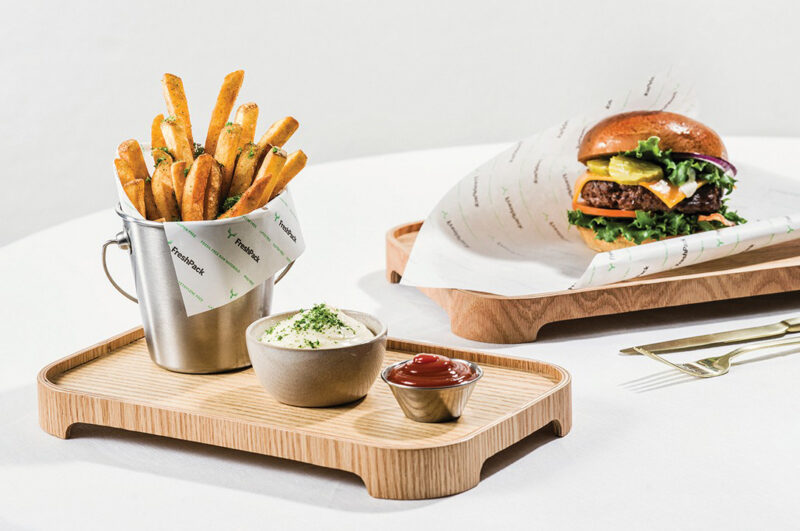
Metsä FreshPack is a moisture- and greaseproof food packaging paper made from fossil-free raw materials that preserves the flavour, texture and appearance of food.
As urbanisation increases, takeaway and on-the-go food consumption becomes more common. This increases the need for food packaging materials.
The environmental impact of food packaging is significant throughout its entire life cycle, from raw materials to end-of-life treatment. Many food packaging materials currently contain plastic and/or other barrier materials that use, for example, fluorochemicals that may be harmful to health. In addition, fossil-based packaging materials generate large amounts of mixed waste.
Metsä Greaseproof Papers has developed Metsä FreshPack, a moisture- and greaseproof food packaging paper used, for example, for packaging fast food and bakery products. The paper protects food products and is designed to preserve their quality and hygiene.
FreshPack packaging paper contains no fossil-based raw materials, PFAS compounds, polyethylene, latex or gluten. According to the company, plastic and harmful barrier materials have been replaced with safer alternatives.
The packaging paper is an innovation based entirely on renewable, non-fossil raw materials. The material consists of fresh fibres, natural polymers and minerals. Wood-based raw materials account for nearly 85 per cent of the material.
FreshPack supports the key principles of the EU Packaging and Packaging Waste Regulation (PPWR), particularly material reduction and recyclability. It reduces the amount of packaging waste and mixed waste.
According to the company, the product has passed a laboratory recyclability test with the highest rating. If there are no food residues on the product, it can be recycled in the paper waste stream. A FreshPack sheet containing food residues may be suitable for recycling with biowaste if permitted by the local biowaste treatment process.
Based on pre-testing, the unprinted product is industrially compostable and home compostable. In particular, the bag may compost more slowly than a single-layer paper because it is folded into multiple layers.
FreshPack’s thin material reduces material consumption compared with, for example, traditional box solutions. Reducing the use of plastic helps prevent microplastics from entering waterways and the natural environment.
Forest.fi and New Wood are initiatives of the Finnish Forest Association.