Forest sector bioeconomy expertise took centre stage in Brussels – EU Commissioner Roswall launched a new bioeconomy strategy wearing a dress made of wood pulp
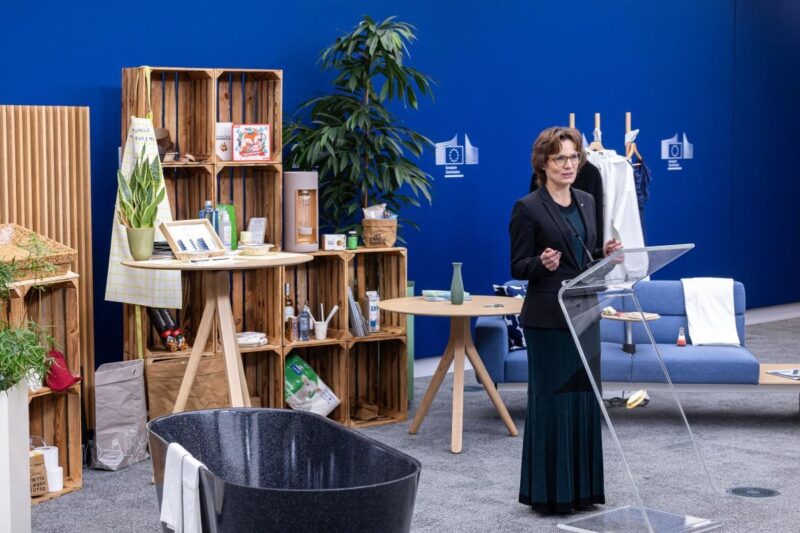
The EU’s new bioeconomy strategy gave forestry innovations exceptional visibility in Brussels. EU Commissioner Jessika Roswall presented the strategy to international media wearing a Finnish wood‑fiber dress, with a wide array of bioproducts showcased behind her.
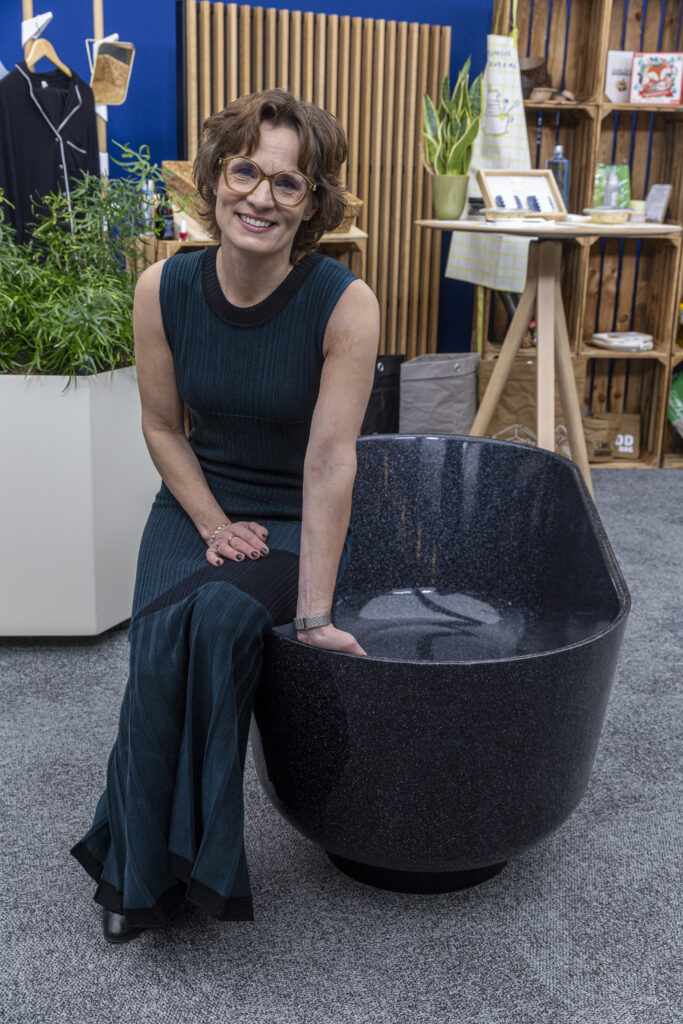
Roswall’s dress is made from Metsä Group’s Kuura textile, which is a biodegradable, wood-based alternative to cotton and synthetic fabrics.
“The EU Commissioner even pointed out to the media: ‘I am wearing wood’,” Kaisu Karvala, Director of EU Affairs at the Finnish Forest Industries Federation, tells Forest.fi.
Karvala describes the event as a significant turning point for Finland’s bioeconomy. According to her, it was not just a symbolic gesture.
“For the first time, the EU recognises us as part of the solution to moving beyond fossil fuels. It is now clear that even dresses can be made from the side streams of our forest industry. We are an alternative to fossil-based products.”
The change is remarkable compared to the previous EU term.
“Last term, we were still complaining that the legislation was quite strict. Now we are being asked to showcase our products as the new strategy is launched,” Karvala says.
Forest industry at the heart of the green transition
The Finnish Forest Industries Federation believes that the new bioeconomy strategy will strengthen the forest sector’s role in the green transition.
By 2040, the EU aims to use bio‑based materials widely in plastics, packaging, textiles, chemicals, building materials, fuels, and carbon capture technologies. Finland’s forest sector already shows concrete results in these areas.
The strength of the new bioeconomy strategy lies in its focus on pioneering markets.
“The EU’s bioeconomy strategy is an important guiding document for the development of the bioeconomy in the EU. For the forest industry and Finland, it is important to exploit the opportunities offered by the bioeconomy because the forest industry accounts for well over 50 per cent of the total bioeconomy in Finland. This is one of the highest shares in Europe when compared to other member states,” stated Maarit Lindström, Chief Economist at the Finnish Forest Industries Federation, in a press release.
According to Lindström, the importance of the Nordic forest value chain is reflected in the strategy’s priorities. The strategy also emphasises that a sustainable bioeconomy and sustainable forest management go hand in hand.
Finnish products on display in Brussels
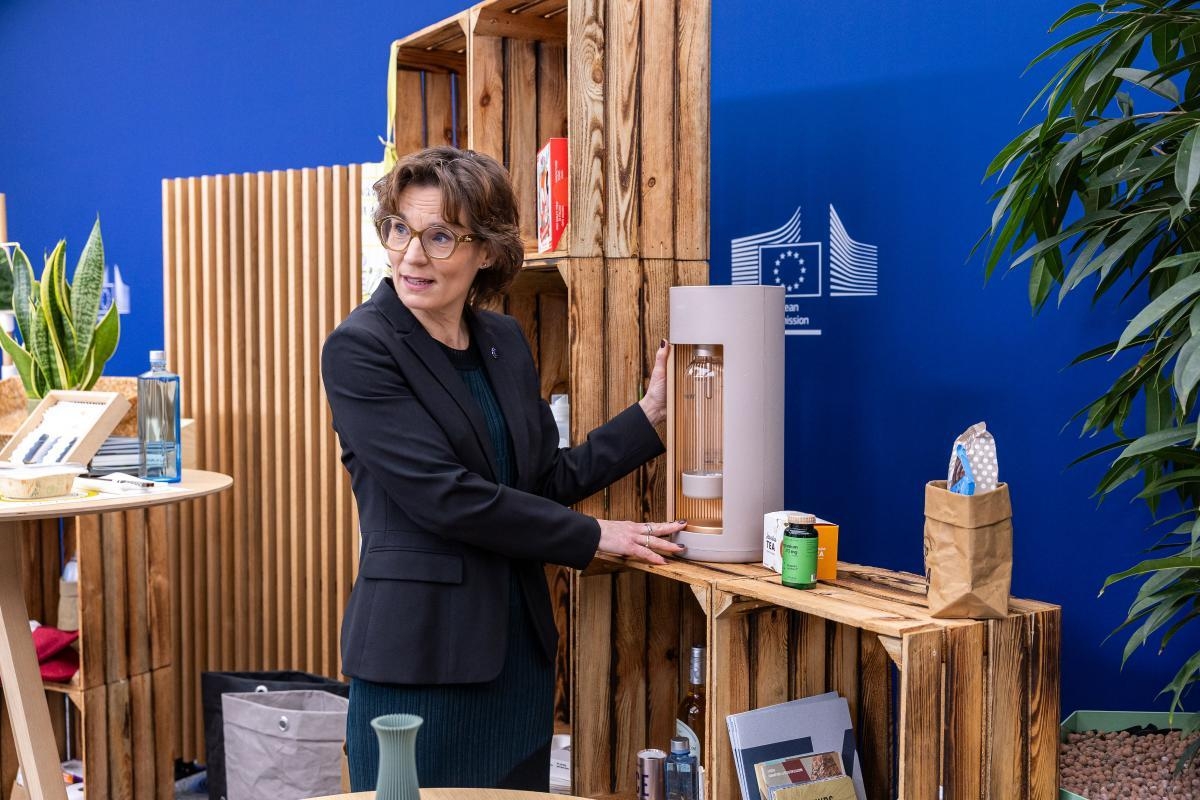
At the launch of the EU’s bioeconomy strategy on November 27, 2025, a wide range of Finnish wood-based innovations were presented: textiles, biochemicals, and even a bathtub made of wood composite.
“It is an important message that Finnish wood-based products were highlighted in the launch of the strategy. It shows how central the forest-based bioeconomy already is in Europe’s green transition,” Lindström said.
Lindström added that there is now an apparent effort within the EU to take bioeconomy innovations from the laboratory to industrial scale and to market.
“Scaling up is a critical stage in the breakthrough of innovations. In addition, supporting renewable materials in public procurement and product legislation is a step in the right direction.”
According to Kaisu Karvala, Finland’s visibility in the EU bioeconomy has increased rapidly. The country has a strong foundation and a solid reputation, but further growth depends on scaling up production volumes. Karvala expects the EU to play a role in supporting this transition.
“Lead markets may be needed to create demand for renewable materials in the EU—for instance, by requiring products to contain a minimum share of renewable raw materials or by setting clear incentives,” Karvala notes.
Read more: forest.fi/article/von-der-leyen-explored-finnish-bioeconomy-innovations-in-brussels/