The EU concluded two major free trade agreements that will affect forest industry
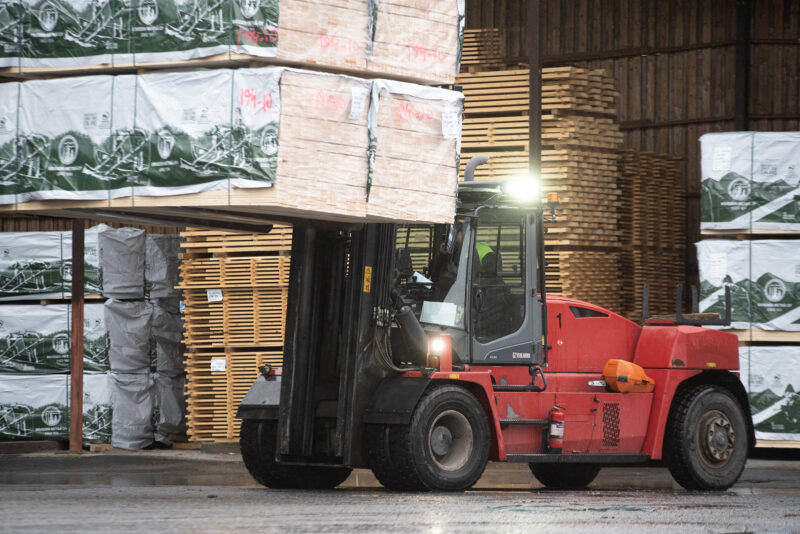
The free trade agreements concluded by the European Union with South America and India open up opportunities to increase exports.
The free trade agreements with several South American countries and India concluded by the European Union will remove obstacles from exports of forestry products. This is because tariffs on these products will be reduced in stages and ultimately removed completely.
“The removal and reduction of tariffs will naturally offer forest industry companies the opportunity to increase exports to important markets,” says Maarit Lindström, Director and Chief Economist at the Finnish Forest Industries Federation.

The European Union announced in February that the agreement with the Mercosur countries will come into effect provisionally, pending its eventual approval by the European Parliament.
Immediately after the EU–Mercosur agreement comes into effect, duties on pulp (7–16 percent) will be removed. The duties on paper and paperboard (12–16 percent) will be removed in stages within ten years. The agreement helps the flow of commerce by removing technical obstacles.
The Mercosur countries are Argentina, Brazil, Paraguay and Uruguay. Negotiations between the EU and the Mercosur countries on this, the most sizeable trade agreement in the EU history, took 25 years. The result is a free trade area with over 700 million consumers.
In 2024, the EU’s imports from the Mercosur countries exceeded EUR 56 thousand million, while its exports to them were EUR 55.2 thousand million.
The EU recently also concluded another significant free trade agreement. The agreement concluded with India in January will affect one quarter of the world’s population and of global GDP. It will reduce tariffs and administrative costs, thus making commercial transactions easier and faster. The agreement has generally been seen as a response to global competition, especially with the USA and China.
Agreement with India will eliminate tariffs
According to Lindström, India has traditionally imposed high tariffs on forest industry imports.
The import duties on chemical forest industry products imposed by India vary between 5.5 and 11 percent. The new agreement will remove duties on pulp, paper, paperboard and printed matter completely within 7–10 years. On mechanical forest industry products, India currently imposes duties of roughly ten percent.
”Most products will be duty-free as the agreement comes into effect, and the rest will follow gradually within 5 to 7 years,” says Lindström.
The EU is India’s biggest trade partner. The annual value of the trade between the EU and India is about EUR 180 thousand million. It is hoped that the new agreement will double the EU’s physical exports to India within six years, as most of the tariffs will by then be removed. The population of India is 1.45 thousand million.
Also interviewed for this article was Juha Ruippo, Director, trade policy and international relations at the Central Union of Agricultural Producers and Forest Owners.
Read more: New Wood exhibition brings Finnish forest bioeconomy innovations to London