Restoring peatlands can provide both climate mitigation and economic opportunities – new research challenges old estimates
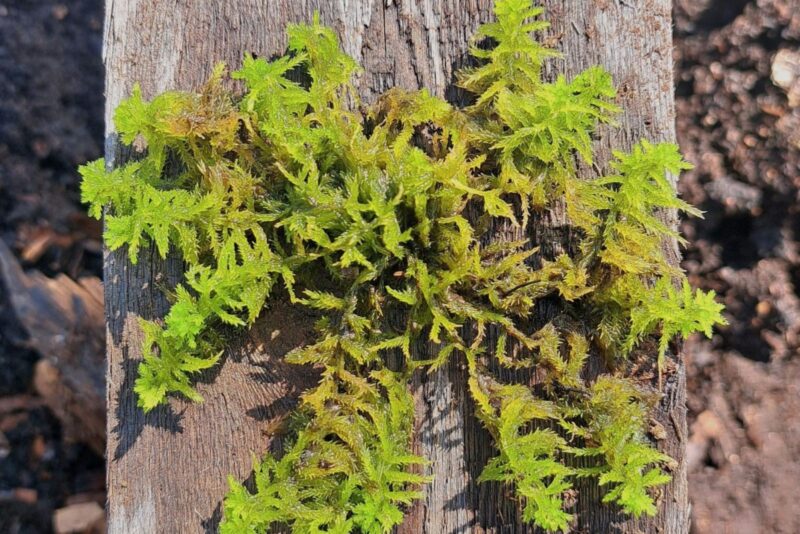
The rapid recovery of Sphagnum mosses can reduce methane emissions from peatlands and increase carbon sequestration in just 10–20 years.
Restoration of peatlands has been considered important for biodiversity, but its climate impact has been controversial: do restored peatlands increase methane emissions so much that the benefits are not reached?
The results of modelling research by Teemu Tahvanainen, a university lecturer in plant ecology at the University of Eastern Finland, challenge this assumption.
“My results suggest that methane emissions have been significantly overestimated in previous studies,” says Tahvanainen.
Focus on typical Finnish peatlands
A peatland forest is a forest growing on peatland. Most peatland forests managed for commercial forestry have been drained at some point. In peatland restoration, the ditches are either dammed or completely filled with peat.
This allows more water to spread over the bog, the natural vegetation returns, and the tree cover is reduced either naturally or by logging. The EU Restoration Directive requires that a significant portion of drained peatlands among degraded habitats should be restored to their natural state.
In Finland, every second hectare of peatland has been drained, mainly for agriculture and forestry. Tahvanainen’s research focused on nutrient-poor, acidic bogs dominated by Sphagnum moss – representing the type most common in Finland.
“These are not special types of mires, but most typical Finnish mire nature,” says Tahvanainen.
According to Tahvanainen, Sphagnum mosses are the key to restoration. They reestablish quickly after restoration, forming a thick layer of moss that will begin to accumulate new peat.
“Sphagnum moss layer acts like a machine to bind carbon and slow down the decomposition of other plant material.”
Europe’s peatlands: a major climate lever
In Europe,peatlands cover an estimated 59 million hectares of which almost half are degraded. This makes Europe the second highest greenhouse gas emitter from drained peatlands with close to 600 Mt CO2e loss per year.
Restoring them may be one of the fastest and most cost‑effective climate actions available. The EU’s Nature Restoration Law identifies peatlands as a priority ecosystem because their restoration could rapidly cut emissions, while also improving biodiversity, water quality, and resilience to drought and flooding.
Methane emissions at a fraction of the level of previous estimates
Previous estimates of methane emissions from Finland’s restored peatlands were based on measurements from natural, wet open peatlands. These waterlogged peatlands are vital wetland ecosystems where constant saturation slows decomposition, allowing the long-term preservation of thick carbon‑rich peat layers.
According to Tahvanainen, however, this peatland type does not reflect the conditions found in restored forest peatlands.
“Restored peatlands often do not develop into very wetpeatlands, but rather into hummock bogs with thick moss layer. In such conditions, methane emissions tend to be lower,” Tahvanainen explains.
Modelling results of the study suggest that methane emissions from restored forest peatlands may only reach to a quarter to a fifth of the level that had been previously estimated. At the same time, carbon sequestration increases as the Sphagnum moss layer recovers.
Climate benefits visible in just ten years?
In about half of the sites examined in Tahvanainen’s study, restoration began to gain a cooling effect after just ten years. Climate benefits of restoration appeared as even better when compared with an alternative scenario where forestry practices continued as usual—meaning the peatland stayed drained and was managed for timber production.
“When we take into account the soil emissions caused by alternative management of forest rotation, it appears that restoration can produce significant climate benefits in less than 20 years,” Tahvanainen says.
Over the time frame of the EU and Finland’s climate targets, the impact is considerable with between 2 and 6 tons of annual carbon dioxide equivalent mitigation per hectare over a 100‑year period.
Restoration is not suitable for all peatlands
Tahvanainen emphasises that restoration may not be a wise solution for all drained lands.
“If the bog has changed significantly and there is no bog vegetation left, recovery will be slow. Restoration is best suited to low-yielding peatlands, of which there are hundreds of thousands of hectares in Finland,” says Tahvanainen.
These areas are often unprofitable for forestry but have great potential for climate and nature.
Sphagnum moss – a climate factor and a surprising export product
Sphagnum moss also has economic benefits. In Finland, Sphagnum moss is considered a common bog plant, but around the world it is also recognized as a valuable raw material and even as expensive niche product as such. It is used especially in growing media for orchids, bonsai trees, and terrarium plants, where clean, airy, and water-retaining material is essential.
“In Japan, garden centres sell 150-gram packages of Sphagnum moss imported from New Zealand for 10–20 euros,” Tahvanainen says.
According to Tahvanainen, Sphagnum moss grows remarkably quickly in test areas constructed at abandoned peat mining sites, mirroring what is typically seen in restored bogs.
“Under the right conditions, an area can be fully covered by a thick layer of Sphagnum moss in just five years,” he notes.
The economic potential is significant: if market and processing chains were developed to supply specific niche markets, the annual yield per hectare could be worth hundreds of thousands of euros. At the same time, sustainably cultivated Sphagnum moss could deliver some of the ecological benefits of restoration—it captures carbon, improves water regulation, and creates habitats for bog‑dependent species.
“Sphagnum moss shows that restoration can provide nature-based solutions for climate action, biodiversity action, and economic opportunities,” Tahvanainen says.

Clear trend, early data
Tahvanainen notes that measurements of methane emissions from restored bogs are still limited, and long‑term data are only beginning to accumulate.
“This is the best overall estimate we have at the moment. I hope my research will soon be outdated as new data becomes available,” he says.
One conclusion is already clear, however: “At least for ordinary Finnish bogs, there is no reason to assume the worst. The potential of restoration should not be underestimated,” Tahvanainen concludes.
*Tahvanainen, T. (2026) Restoration of forestry-drained oligotrophic peatlands can bring climate change mitigation within a few decades. Restoration