Can AI and robotics unlock large-scale propagation of elite forest trees?
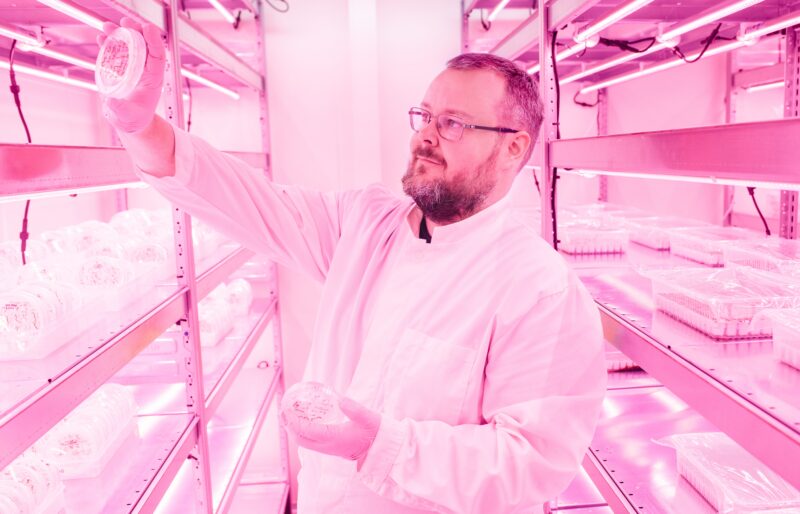
A Finnish startup is using artificial intelligence, machine vision and robotics to automate one of the most labour-intensive stages of forest tree vegetative propagation, potentially helping breeders deploy improved genetics more rapidly and at greater scale.
In brief
- Finnish startup Lauka Biotech is developing AI, machine vision and robotics to automate somatic embryogenesis, helping breeders produce improved planting stock at much larger scale.
- The company’s first commercial system is an embryo germination robot. A second robot, which will move plantlets from the laboratory to greenhouse production, is under development.
- Automation could increase production volumes, lower costs and generate data for quality control. The method complements seed production, which is especially useful after large-scale wildfires.
- Commercial use is still at an early stage: more than 100,000 plantlets have been produced using robotics, and the technology has been tested successfully on radiata pine in New Zealand.
Forest tree breeding programmes have delivered substantial gains in growth, wood quality and resilience. Yet moving those gains from breeding programmes into commercial forestry remains challenging.
One of the biggest bottlenecks is producing large numbers of genetically selected individuals efficiently enough for operational deployment.
Finnish startup Lauka Biotech believes artificial intelligence, machine vision and robotics can help bridge that gap.
The Savonlinna-based company is developing automated systems for somatic embryogenesis, a propagation technique that enables large numbers of genetically identical plantlets to be produced from selected elite trees.
While researchers have refined somatic embryogenesis for decades, commercial adoption has remained limited by labour-intensive laboratory processes. Tiny embryos must be selected, handled and transferred manually under sterile conditions, requiring highly trained personnel and significant amounts of repetitive precision work.
Lauka Biotech’s goal is to automate these stages and make large-scale production of improved planting stock more cost-effective.
“The key challenges in scaling production are linked to stages where individual plantlets are selected, handled and transferred manually,” says Mikko Tikkinen, CEO of Lauka Biotech, a company spun out of a research collaboration between Finland’s Natural Resources Institute (Luke) and South-Eastern Finland University of Applied Sciences (Xamk).
“Laboratory work requires highly skilled personnel, and the repetitive, precision-based tasks are demanding for workers,” Tikkinen adds.
According to him, automation could significantly increase production volumes while lowering plantlet production costs compared with conventional methods.
“Automation can accelerate the deployment of improved genetic material in operational forestry,” Tikkinen says.
“Breeders and producers prioritise different traits in their programmes. This technology makes it possible to utilise those characteristics more efficiently and on a much larger scale.”
Automating somatic embryogenesis with robotics
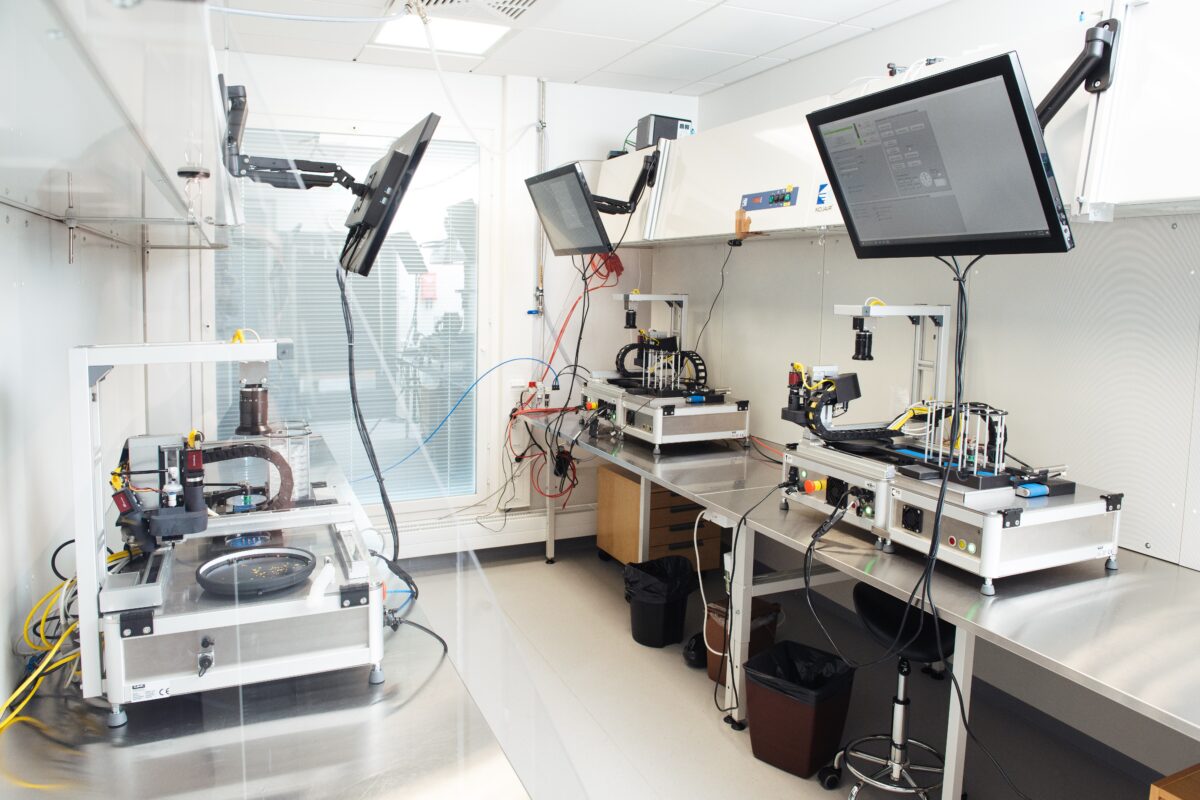
Lauka Biotech’s first commercial system is an embryo germination robot designed for somatic embryogenesis production.
Using machine vision, the robot identifies embryos that have reached the appropriate developmental stage, picks them from cultivation vessels and transfers them to fresh growing media for further development. The system simultaneously positions each embryo correctly to support optimal growth.
“It sounds simple, but the work takes place under aseptic conditions and the objects being handled are living plants at a very early stage of their life cycle,” Tikkinen says.
Developing the technology required combining biological requirements with robotics, machine vision and sensor technologies.
“Embryos vary in size and shape, so identifying them requires precise hardware and software trained for specific plant species,” he explains.
How automation and AI improve plant production
Automation’s value extends beyond labour savings. Because every embryo handled by the system can be tracked digitally, producers gain access to detailed production data that can support quality control, process optimisation and earlier detection of cultivation problems.
Each embryo processed by the system generates information that can be used to improve production performance and consistency.
“Data and its accuracy are essential,” Tikkinen says.
“It can be used to improve both the performance of the equipment and our customers’ production processes.”
Tracking individual embryos and plantlets may also help identify production issues before they affect larger batches of planting stock. Changes in cultivation conditions or declining tissue culture performance, for example, could potentially be detected at an earlier stage.
Towards fully automated forest tree propagation
The company is now developing a second robotic system designed to transfer young plants from laboratory conditions into greenhouse production.
“The goal is to begin testing the system with customers within the next few years,” Tikkinen says.
The longer-term vision is to automate all key stages of somatic embryogenesis, from embryo handling to plantlet transfer. The company is developing solutions that can be integrated into existing production facilities without requiring major infrastructure investments.
While automation is expected to reduce the amount of repetitive manual work, Tikkinen does not see it as a threat to employment. Instead, he believes it will change the nature of the work.
“Personnel can focus on more demanding tasks, while supervising several automated systems simultaneously,” he says.
Expanding robotic tree propagation internationally
The technology was originally developed for handling spruce embryos but has since been tested on other tree species.
Lauka Biotech’s first international collaboration began in New Zealand in 2023. The project involves New Zealand’s forestry sector, where Finnish robotics technology is being used in the somatic embryogenesis of radiata pine (Pinus radiata), the country’s dominant plantation forestry species, and one of the most important plantation tree species in the Southern Hemisphere.
Successful trials have already demonstrated the robot’s suitability for handling radiata pine embryos.
“We focus on robotics and software,” Tikkinen says. “Our customers are in regions where somatic embryogenesis is already being used in forest regeneration.”
The company is also pursuing pilot projects in Europe involving other plant species. Potential applications include the propagation of fruit trees e.g. grapevines, cocoa and other perennial crops.
Somatic embryogenesis complements seed-based production
One of the commercial advantages of somatic embryogenesis is its ability to produce large quantities of improved planting stock even when seed availability is constrained.
Conventional nursery production depends on seed crops that can fluctuate significantly between years. Demand for plantlets can also surge after large-scale disturbances such as wildfires.
“Somatic embryogenesis is not dependent on natural seed production in the same way, because plantlets can be produced from selected source material,” Tikkinen says.
“The purpose of the method is not to replace seed production but to complement it.”
The issue has become increasingly relevant in regions facing major reforestation challenges. In Canada, for example, extensive wildfires have increased pressure on forest regeneration programmes and the availability of seeds and seedlings.
Growing pressure on seed and seedling supply is becoming a concern in several forestry regions. In 2023, British Columbia’s forestry authorities warned that wildfires and drought are placing increasing strain on tree seed availability and will require more strategic planning of seed procurement and use. Severe fires can also hamper natural forest regeneration.
According to a January 2026 estimate by the Canadian Tree Nursery Association, reforesting just 15% of the forest area burned between 2023 and 2025 would require more than 7.3 billion seedlings, exceeding the country’s current annual nursery production capacity by a factor of ten.
Scaling up the benefits of forest tree breeding
Commercial deployment of somatic embryogenesis requires not only efficient production technology but also suitable and approved material.
Tuija Aronen, a Principal Research Scientist at the Natural Resources Institute Finland, emphasises the importance of both.

“For commercial plant production to be possible, we need both registered forest reproductive material and sufficiently efficient methods to produce it,” Aronen says.
Luke has registered somatic embryogenesis derived material suitable for southern and central Finland, providing a foundation for future commercial deployment, Aronen adds.
Somatic embryogenesis does not alter the genetic characteristics of trees. Instead, it enables large-scale multiplication of individuals identified as promising through breeding programmes.
Breeding objectives may include faster growth, adaptation to different environments, and improved resistance to pests and diseases.
According to Aronen, advances in genomics could further improve the identification of trees better adapted to future climate conditions.
“If we have more genomic information related to tree resilience, that information can be used directly when selecting material for propagation,” she says.
Research suggests that the conditions experienced during embryo development may also influence later tree characteristics. In spruce, for example, embryo development temperature has been linked to growth rhythm.
Somatic embryogenesis allows these developmental conditions to be adjusted, potentially offering another tool for adapting planting stock to changing climates, although further research is still needed.
Commercial adoption of somatic embryogenesis
Commercial use of somatic embryogenesis remains relatively limited in Europe. The technology continues to be evaluated, and field trials are monitoring the long-term performance of propagated trees.
However, more than 100,000 plantlets have already been produced using robotics in Business Finland funded project, which preceded the establishment of Lauka Biotech.
“Because forest trees have long life cycles, it will take years before the full performance of these plantlets can be assessed,” Tikkinen says.
In the coming years, the company aims to sell its first systems, test new robotic solutions in customer environments and expand the technology to additional plant species.
“The commercial adoption of somatic embryogenesis will depend on more than automation alone. High-quality tissue cultures, reliable cultivation protocols and competitive production costs remain essential, as well,” Tikkinen concludes.