Uusi puu – The New Wood Project shows what wood can do. The project promotes wood-based innovations and provides information about them.
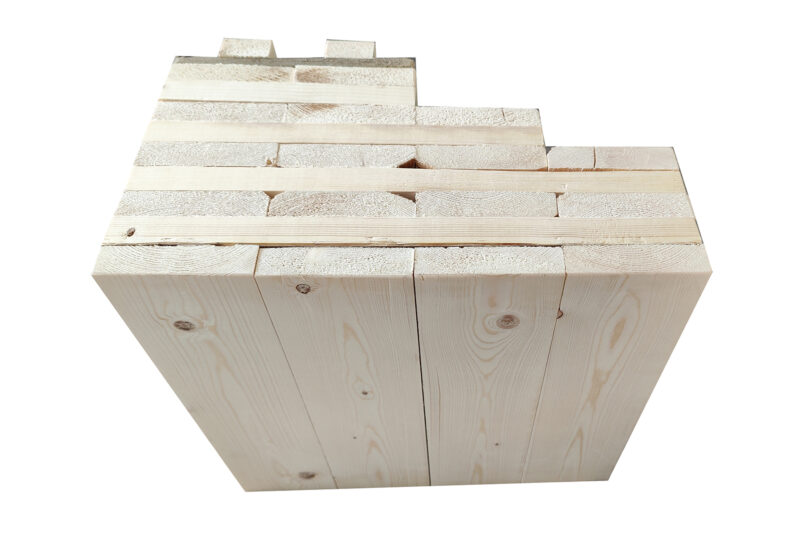
The Raikas EKO massive wood element makes use of sidestreams from the sawmill industry. A simplified wall structure helps solve the environmental challenges of the construction sector as well as indoor air problems.
Construction activity is a significant consumer of natural resources and creates a substantial share of climate emissions. The recycling and re-using construction waste continue to be difficult, and the rate of wastage in the manufacturing of construction materials is high. At the same time, indoor air problems are increasing, which affects people’s health and is costly for society.
The response to these challenges is the Raikas EKO massive wood element. Designed for wall structures, this construction product can be used for both load-bearing and non-load-bearing structures.
The massive wood element is made of sawmill industry sidestreams: unedged boards, storm-felled trees, recycled timber and, for example, blue-stained wood. Using them means giving a new life to these materials and ensures that natural resources are used more efficiently.
The element contains no adhesives or chemicals; instead, the boards are connected with steel nails. The result is a fully non-toxic and recyclable structure, which also functions as a long-term carbon storage.
The single-material massive wood element combined with the facade and the interior surface forms a breathing structure and significantly reduces the risk of moisture damage. This helps prevent indoor air problems, which are among the most common and expensive health risks in buildings.
At the end of its life span, the Raikas EKO massive wood element can be re-used as is, chipped for energy, or processed into biogenic carbon. The other materials in the wooden structure can be recycled through existing systems. In this way, the element is a strong component of circular economy. In terms of business activity, it has potential especially in more rural areas, where small sawmills will be able to process storm- or insect-damaged timber.
Forest.fi and New Wood are initiatives of the Finnish Forest Association.