European Forest Statistics
Forests in numbers: Europe’s forests grow faster than they are used
How are Europe’s forests used, and what is their economic and ecological significance? This page brings together key statistics on forest resources, forest use, and their impacts across European countries.
The data are based on the latest State of Europe’s Forests report published by Forest Europe. The statistics service is produced by MTK, The Central Union of Agricultural Producers and Forest Owners in Finland, and funded by Finnish Forest Foundation.
In addition to the statistical highlights presented on this page, the European Forest Statistics tool allows you to explore data on Europe’s forest resources by country or for the continent as a whole, according to your interests.
+11%
Forest area grown 1990–2025
80.7%
Felling utilisation rate · Pan-Europe
11.9 bn m³
Growing stock increase 1990–2025
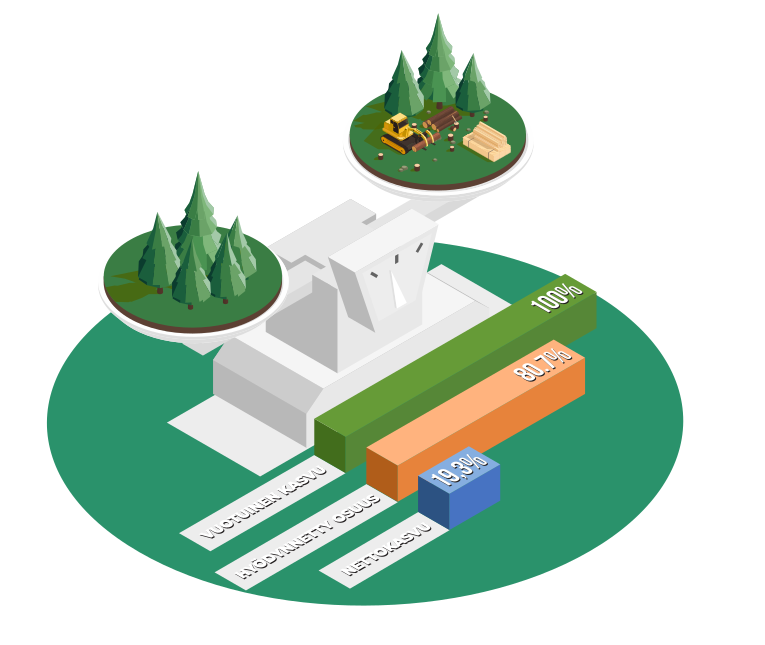
Forest balance
“Is forest being used more than it regenerates, and is wood availability secured for the future?”
The forest balance tracks how much forests grow versus how much wood is removed through fellings, natural mortality and disturbances. In 2020 Europe’s net annual increment (NAI) was 682 Mm³ and fellings 550 Mm³.
The utilisation rate was 80.7%, 91.3% in the EU-27 and 90.6% in Finland (FAWS basis). Over the long term the utilisation rate rose from around 60% (1990) to 81% (2020); in the EU-27 the rise was steeper, from 54% to 92%.
- Europe’s total forest area 232 M ha
- Growing stock volume 38,326 million m³
- Forest biomass carbon stock 15,396 Mt C
Meanwhile the growing stock expanded by 11.869 billion m³ and the forest biomass carbon stock rose from 10,260 to 15,396 Mt C (1990–2025). Annual accumulation still slowed, from 1.51% (1990–2000) to 0.77% (2010–2025). Forests stay within sustainable limits, but at a higher utilisation rate than before.
Protection in perspective
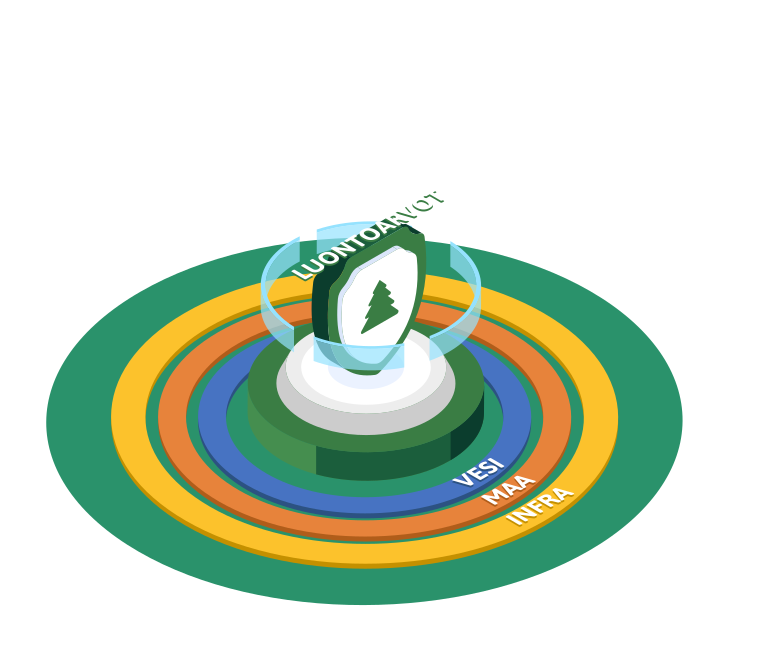
“How are forests protected for biodiversity and climate?”
Protection operates at several levels. Protected forest area totals 50.4 million ha, or 26.4% of reporting countries’ forest area. Only 2.2% is in a near-natural, non-intervention state; in total 16.9% (32.2 million ha) is protected for biodiversity, and most protection allows active habitat management.
Cl. 1.1
Cl. 1.3
Cl. 2
Certified forest area reached 117.5 million ha in 2024 and has grown steadily over 25 years. Deadwood averages 14 m³/ha, or 8.6% of the growing stock. Protective forests safeguard soils, waters and infrastructure and cover 38.7% of reporting countries’ forest area.
Bioeconomy flows
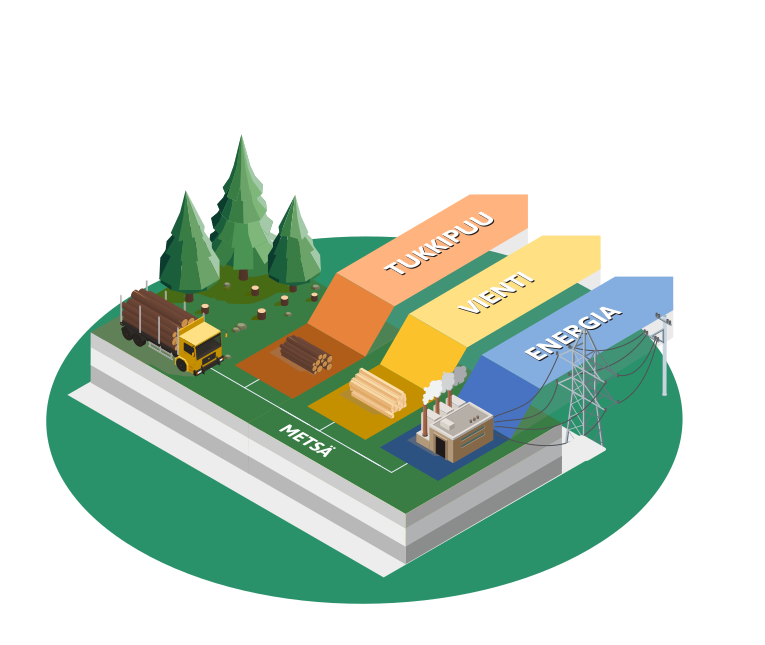
“Where does wood go and what is its economic role?”
Europe’s forest sector is one whole: wood flows from the forest to processing, export and energy. Over 2017–2022 roundwood production in Europe averaged 625.8 million m³/yr; the largest producers were Germany (78.6 Mm³), Sweden (75.2 Mm³) and Finland (64.9 Mm³).
The sector employs around 2.4 million people. Gross value added (GVA) was €113.3 billion (2020), up from about €100 billion in 2000–2010.
The forest sector’s share of GDP fell from 1.13% to 0.83%. Wood makes up around 6% of total energy consumption, often as a by-product of other processing.
Risks and health
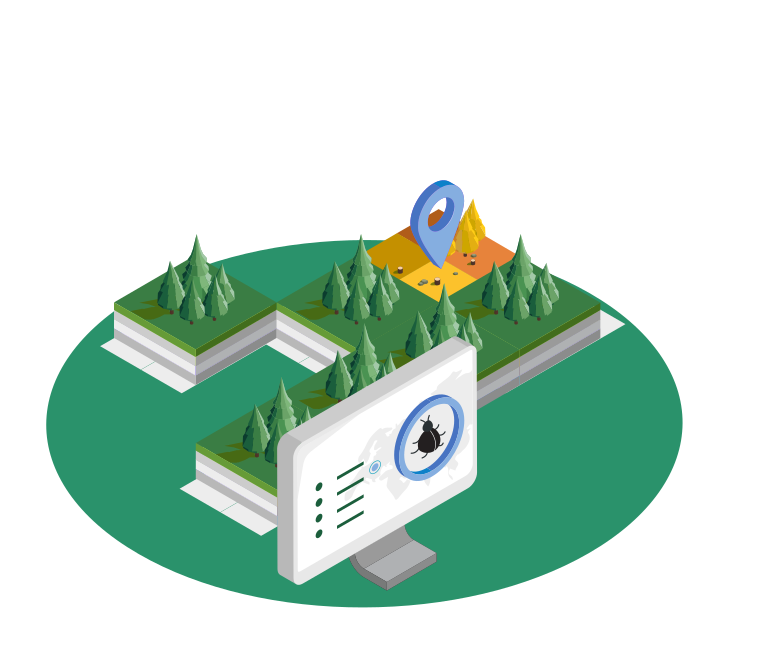
“What are the real threats to forests?”
In 2020 about 2.1% of the forest area (4.7 million ha) suffered some form of damage. The main drivers are insects and diseases, storms and forest fires, often triggered by drought.
Insect and disease damage has increased over recent decades, especially through bark-beetle outbreaks after drought and storms. Storm damage peaked sharply in Central Europe in 2018–2019. The tree-condition indicator shows that 31.1% of assessed trees were moderately to severely defoliated (more than 25% needle or leaf loss) in 2024.
Future and ownership
“Who takes care of forests, and is there investment in them?”
Europe’s forests split almost evenly between private and public owners: 48.8% private, 51.2% public. In Northern Europe private ownership is clearly more common, up to 72%. Finland has 4.06 hectares of forest per capita, the highest in Europe.
Forestry is long-term. Annual investment in the capital stock averaged €26.5/ha (2020), around €4.3 billion across the reporting countries (nominal values, not inflation-adjusted).
Forest-sector employment fell about 25% between 2000 and 2020. Around 64% of forests are even-aged and 36% uneven-aged.

“Private forest owners make long-term decisions that ensure forests are passed on from one generation to the next.”